Canada has a reputation as a high-quality country to live in. It also has a reputation for being expensive — and in 2026, that reputation is largely deserved, especially in major cities. Here is what the numbers actually look like so you can plan realistically.
The Honest Baseline: Monthly Costs by City
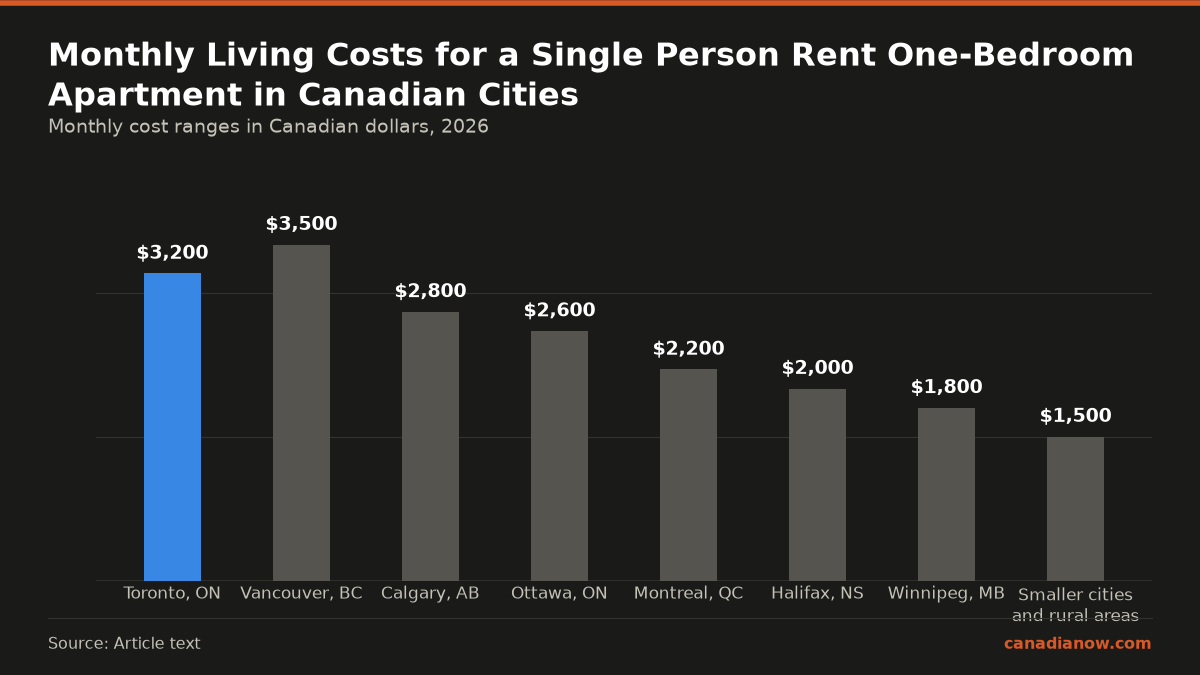
For a single person renting a one-bedroom apartment:
- Toronto, ON: $3,200–$4,500/month (rent ~$2,300–$3,000 + living costs)
- Vancouver, BC: $3,500–$4,800/month (rent ~$2,400–$3,200 + living costs)
- Calgary, AB: $2,800–$3,800/month (rent ~$1,800–$2,400 + living costs)
- Ottawa, ON: $2,600–$3,500/month
- Montreal, QC: $2,200–$3,000/month (significantly cheaper than Toronto/Vancouver)
- Halifax, NS: $2,000–$2,700/month
- Winnipeg, MB: $1,800–$2,400/month
- Smaller cities and rural areas: $1,500–$2,000/month is achievable
Where Your Money Goes
The biggest expenses for most Canadians and newcomers:
- Rent: Typically 35–50% of take-home pay in major cities. This is the biggest variable in your budget.
- Groceries: $300–$500/month for one person in 2026. Canada’s food prices rose 4–6% in 2026, making this a growing expense.
- Transportation: Public transit in major cities runs $100–$160/month for a monthly pass. Owning a car adds $600–$1,200/month when you factor in insurance, fuel, and maintenance.
- Utilities: Electricity, heat, and water average $100–$200/month depending on province and season. Alberta and Ontario tend to be higher.
- Internet and phone: $100–$180/month combined. Canada has notably expensive mobile plans compared to most countries.
- Healthcare: Provincial health coverage is free once you are enrolled, but there is typically a waiting period for newcomers (up to 3 months in some provinces). Private supplemental coverage for dental and vision runs $50–$150/month.
What Salary Do You Need?
As a general benchmark:
- In Toronto or Vancouver: You need to earn at least $65,000–$80,000/year to live comfortably alone without financial stress.
- In mid-sized cities (Calgary, Ottawa): $55,000–$70,000/year is more manageable.
- In smaller cities or rural areas: $45,000–$60,000/year can provide a comfortable lifestyle.
For families, these numbers roughly double — but you also benefit from child benefit payments (Canada Child Benefit / CCB) that can offset some costs.
Tips for Reducing Costs as a Newcomer
- Consider smaller cities: Kitchener-Waterloo, Hamilton, London, Saskatoon, and Victoria offer good job markets with significantly lower living costs than Toronto or Vancouver.
- Share accommodation: Shared rentals can cut housing costs by 40–60%, which makes a dramatic difference in major cities.
- Use the public library: Free internet, computers, language classes, and cultural programs — Canada’s public library system is excellent.
- Apply for benefits: As a PR holder or citizen, you may qualify for GST/HST credits, Canada Child Benefit, and provincial support programs.
Frequently Asked Questions
Q: How much money should I bring to Canada when I arrive?
A: IRCC recommends having sufficient settlement funds — amounts vary by family size. As a general rule, having 3–6 months of living expenses saved before arriving gives you a safety net while you find employment.
Q: Is Canada more expensive than the US?
A: It depends on the comparison. Canadian cities are generally cheaper than New York or San Francisco, but comparable to or slightly more expensive than mid-sized US cities. Healthcare costs significantly less in Canada for residents.
Q: Is Quebec (Montreal) really cheaper?
A: Yes, notably so. Montreal has some of the lowest rental costs among major Canadian cities, and Quebec subsidizes childcare heavily — making it particularly affordable for families.
Bottom Line
Canada is not cheap — especially Toronto and Vancouver. But the cost of living varies enormously by city. If you have flexibility in where you settle, choosing a smaller or mid-sized city can dramatically reduce your financial pressure without sacrificing quality of life. Plan your budget honestly before you arrive, not based on what you hope things will cost.
You can find the current official information on Statistics Canada.
Related Reading
If you'd rather have this mapped out for your exact situation instead of piecing it together yourself, our personalized report covers eligibility, CRS score, and next steps.