Section 1 of 2Study notes and practice quiz
G1 Road Signs Practice Test: Every Ontario Sign Explained
Half of the G1 knowledge test is about road signs. Learn the five sign groups by shape and colour, see every sign in our question bank, then test yourself.
- 9 minreading
- 57questions
- 16/20to pass
- Oct 2026updated
Would you pass today?
The real test has 20 road-sign questions and you need 16 correct. See how you score on all 57 of ours first.
Your best score: not taken yet
Start the quiz →- Free
- No sign-up
- Retake any time
Each retake of the knowledge test costs $16 at DriveTest. Practise here until you pass comfortably.
Key facts in 60 seconds
- The G1 knowledge test has 40 questions: 20 on road signs and 20 on the rules of the road.
- You need 16 of 20 (80%) in the signs section to pass it.
- Signs fall into five groups: regulatory, warning, temporary condition, information and direction, and other signs.
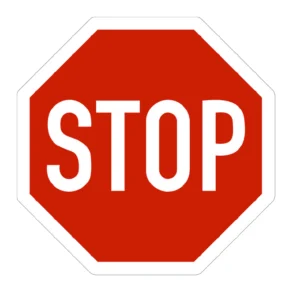
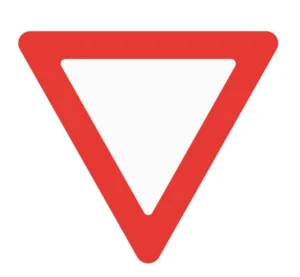
- An octagon is always stop and a downward triangle is always yield.
- Yellow diamonds warn of hazards; orange signs mark construction, where speeding fines double when workers are present.
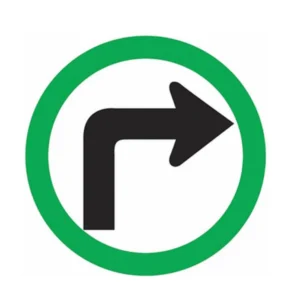
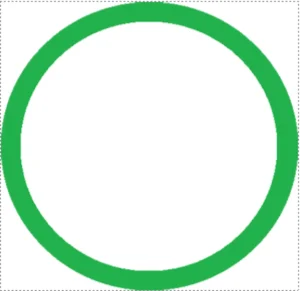
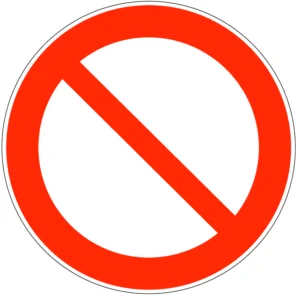
- A green circle means allowed; a red circle with a slash means not allowed.
How are Ontario road signs grouped?
Ontario signs fall into five groups: regulatory, warning, temporary condition, information and direction, and other signs. Shape and colour tell you the group before you can read the words.
| Shape or colour | Group | Examples |
|---|---|---|
| Red octagon | Regulatory | Stop |
| Red and white triangle, point down | Regulatory | Yield |
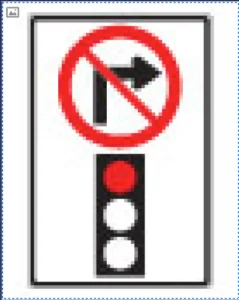
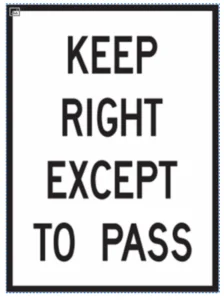
| White rectangle or square | Regulatory | No right turn on red, keep right except to pass |
| Green circle / red circle with a slash | Regulatory | Permitted / not allowed |
| Yellow diamond | Warning | Curves, hills, merging traffic, signals ahead |
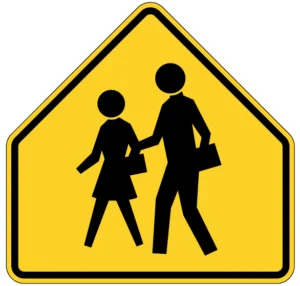
| Five-sided (pentagon) | Warning | School zone, school crossing |
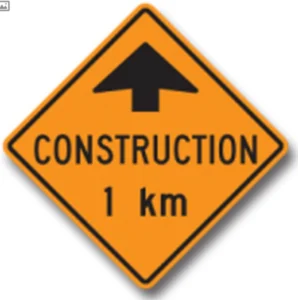
| Orange diamond | Temporary condition | Construction, traffic control person ahead |
| Green rectangle | Information and direction | Distances and destinations |
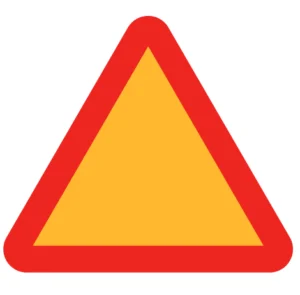
| Orange triangle with red border | Other | Slow-moving vehicle |
Some questions show only a shape. The octagon is always stop, the downward triangle is always yield, and a yellow diamond is always a warning.
What do regulatory signs tell you to do?
Regulatory signs give rules you must obey: stop, yield, turns, lanes, parking and speed. Breaking them is an offence, not just poor driving.
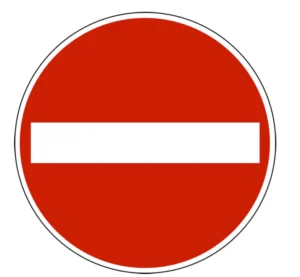
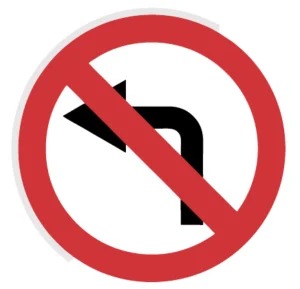
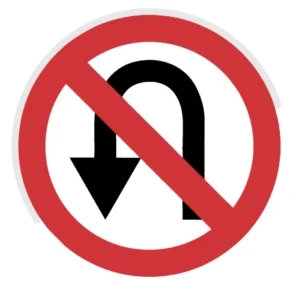
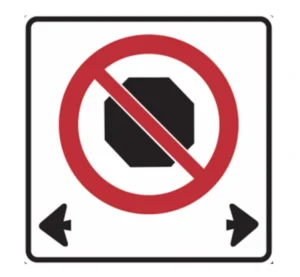
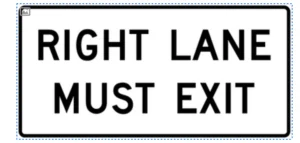
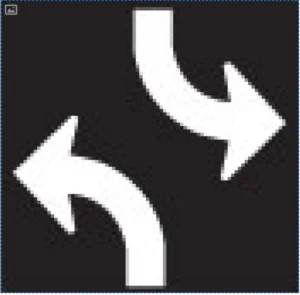
Most are rectangular or square with a white or black background. Stop and yield are the two exceptions with their own shapes. These are the regulatory signs in our practice bank:
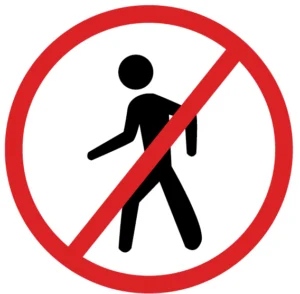
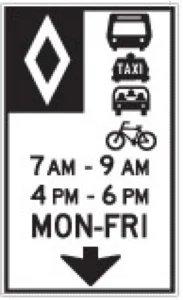
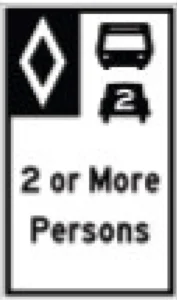
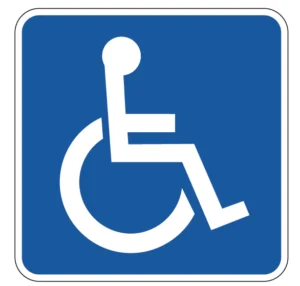
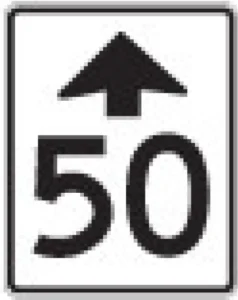
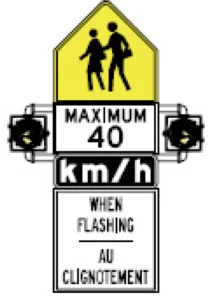
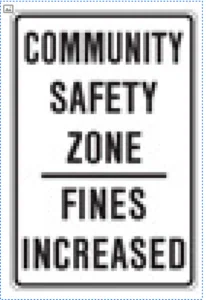
The handbook describes these as areas with a special risk to pedestrians, chosen by the community. Traffic offences there carry increased fines.
What do yellow warning signs mean?
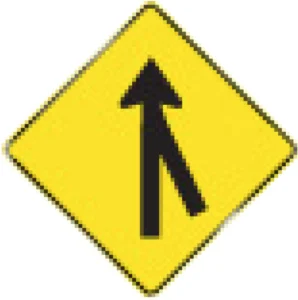
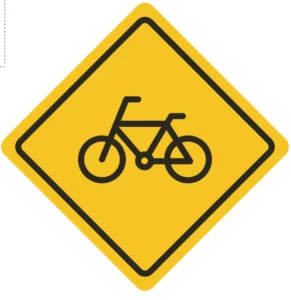
Yellow diamond signs warn you about a hazard ahead, such as a curve, a hill, a narrow bridge or merging traffic. Slow down and get ready to react.
Warning signs do not set a rule by themselves, but the test often asks what you should do when you see one, not only what it shows.
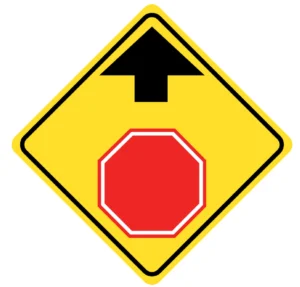
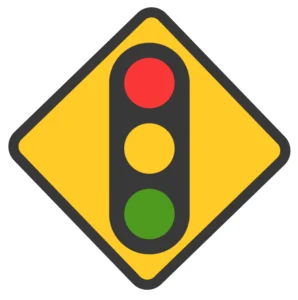
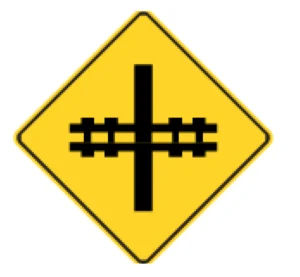
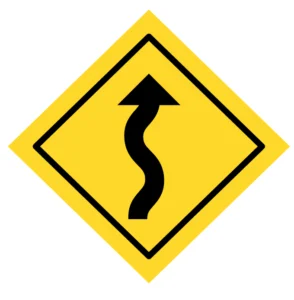
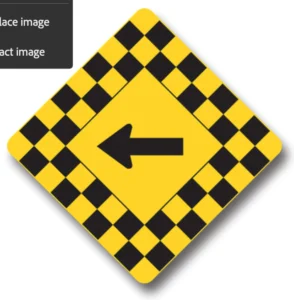
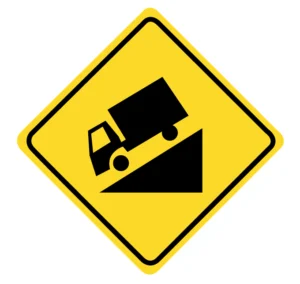
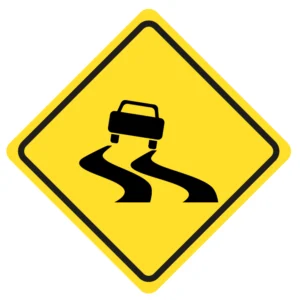
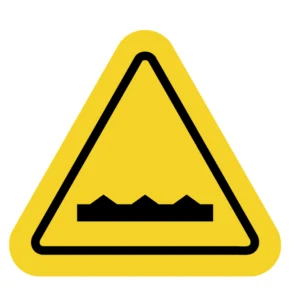
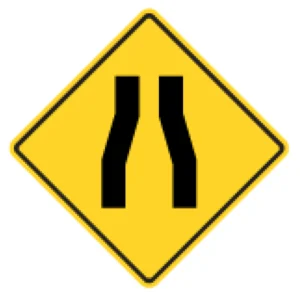
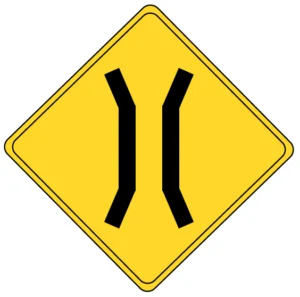
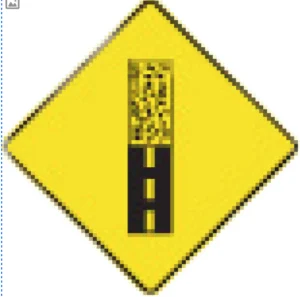
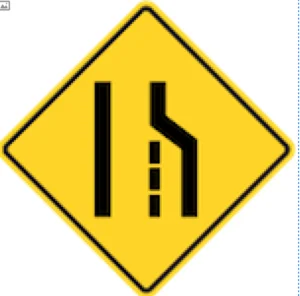
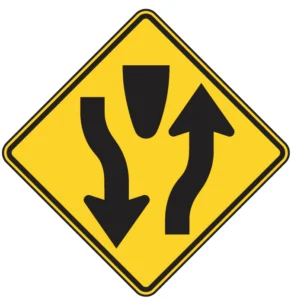
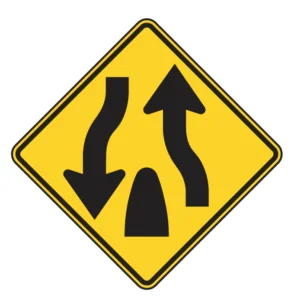
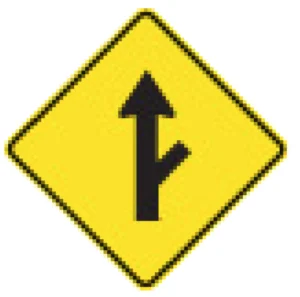
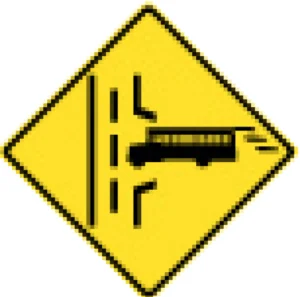
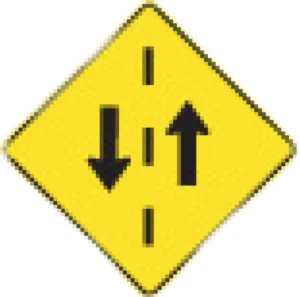
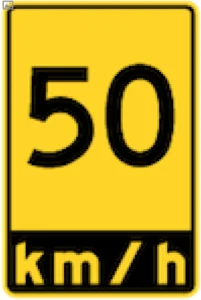
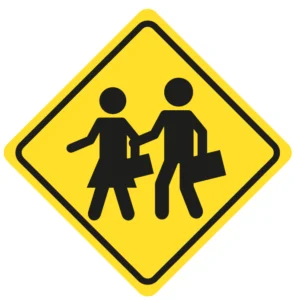
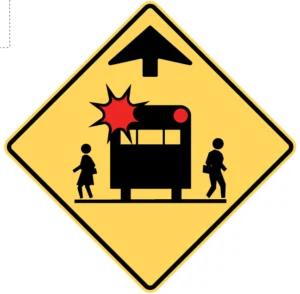
Five-sided signs mark a school zone or a school crossing. A posted 40 km/h limit applies when the yellow lights are flashing, and you must stop for crossing guards until everyone has cleared the road.
What do orange signs mean?
Orange signs mark temporary conditions: construction, road work, detours, lane closures and traffic control people. Speeding fines double in a construction zone when workers are present.
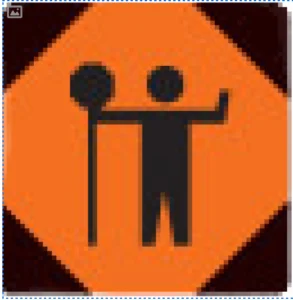
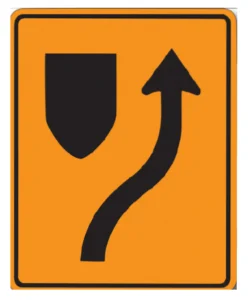
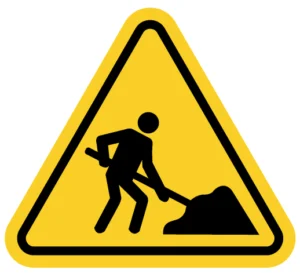
Obey a traffic control person holding a STOP or SLOW sign, do not change lanes inside the zone, and be ready for sudden stops. If it is safe, move over a lane to give workers more room.
What other signs and signals can come up on the test?
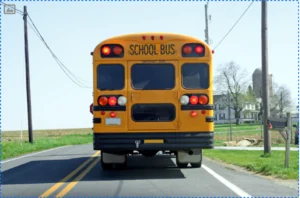
Green signs show directions and distances. The test also uses the slow-moving vehicle sign, the school bus stop arm and the three hand signals drivers use when their lights fail.
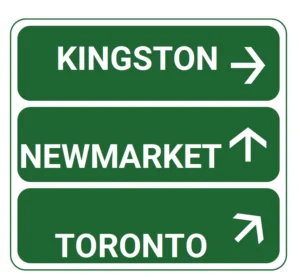
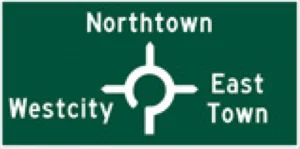
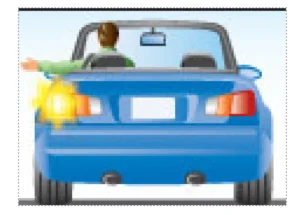
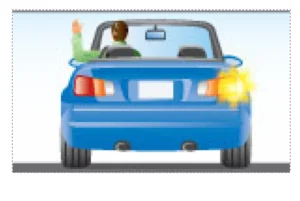
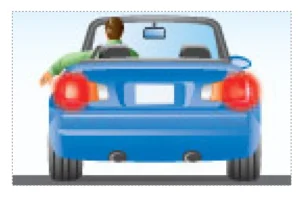
Arm straight out is a left turn. Arm out and bent up is a right turn. Arm out and bent down means you are slowing or stopping.
What do the lines on the road mean?
Yellow lines separate traffic going in opposite directions and white lines separate traffic going the same way. A solid line on your side means it is unsafe to pass; a broken line means you may pass when the way is clear.
| Marking | Meaning |
|---|---|
| Broken yellow line on your left | You may pass if the way is clear and there is room to finish |
| Solid yellow line on your side | Unsafe to pass |
| White line across the road | Stop line at an intersection |
| Two parallel white lines across the road | Crosswalk |
| Double parallel lines with an X in each lane | Pedestrian crossover: stop and yield until people are off the road |
| Wide, closely spaced broken line on your left | Continuity line: your lane is ending or exiting |
| White arrow in a lane | You may only go in the direction shown |
Quick review before the quiz
If you remember shape and colour first, you can answer most sign questions even when you have never seen the exact sign.
- Octagon = stop. Downward triangle = yield. Crossbuck = railway crossing.
- Yellow diamond = warning. Orange = temporary conditions. Green = directions.
- Green circle = allowed. Red circle with a slash = not allowed.
- Speeding fines double in construction zones when workers are present.
- Stop at least 20 m behind a school bus with red lights flashing.
Test yourself on all 57 road-sign questions.
Sources
These notes are an independent summary written to help you study. The Official MTO Driver’s Handbook is the authoritative source for the test. Canadianow is not affiliated with the Ministry of Transportation, ServiceOntario or DriveTest.
Road signs practice quiz
Questions