You are in Canada on a work permit and you are wondering if buying a home is possible — or even allowed. The legal answer is yes, with conditions. The practical answer requires more nuance.
The Legal Situation: Foreign Buyer Rules in 2026
Canada introduced the Prohibition on the Purchase of Residential Property by Non-Canadians Act in 2023, which restricted foreign nationals from buying residential property. However, work permit holders are generally exempt from this prohibition, provided they meet specific conditions.
To be exempt as a work permit holder, you must:
- Have at least 183 days remaining on your work permit at the time of purchase
- Not have previously purchased a property in Canada under this exemption
- Have filed Canadian income taxes for the preceding two calendar years (where required)
Note: This legislation is subject to change — always verify current rules before making a purchase decision.
Mortgage Eligibility for Work Permit Holders
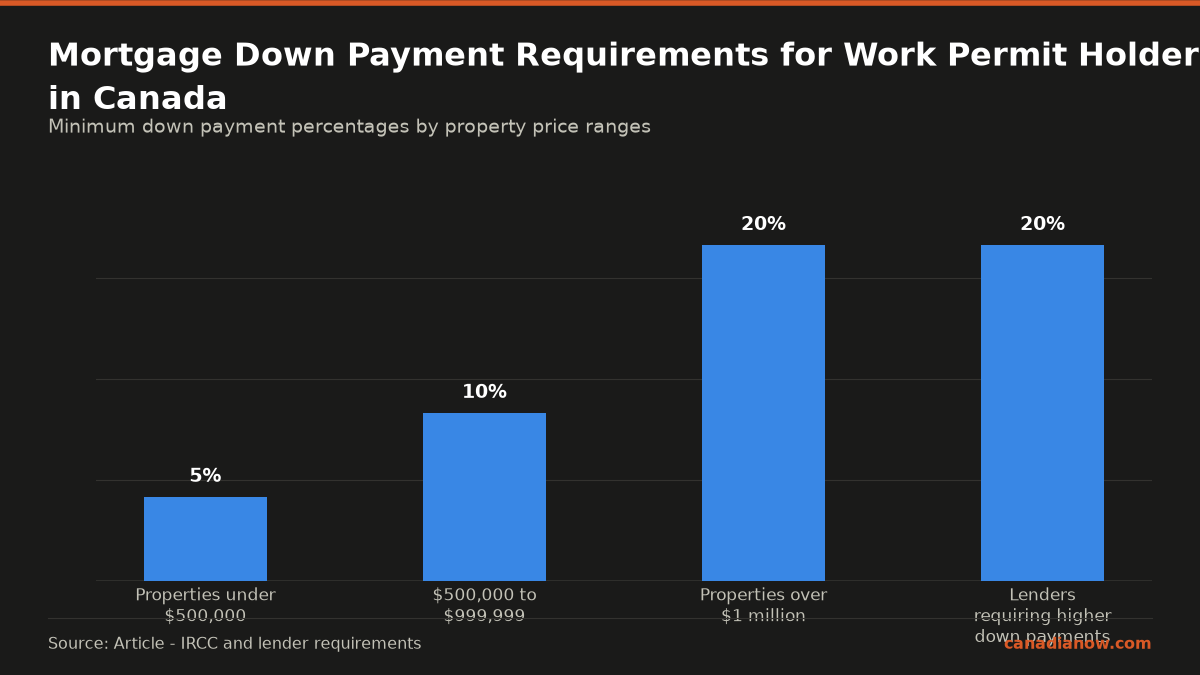
Canadian banks and lenders do offer mortgages to work permit holders — but with stricter requirements than for citizens or PRs:
- Down payment: Minimum 5% for properties under $500,000, 10% for the portion between $500,000 and $999,999, and 20% for properties over $1 million. Work permit holders may face higher minimum down payment requirements at some lenders — some require 20–35%.
- Canadian credit history: Most lenders require at least 2 years of Canadian credit history. With no or thin credit history, you may need a larger down payment or a co-signer.
- Stable Canadian income: Lenders want to see your Canadian employment income — typically 2+ years of Canadian tax returns and current pay stubs
- CMHC insurance: If your down payment is less than 20%, you need mortgage default insurance (CMHC). Work permit holders can access CMHC-insured mortgages under certain conditions.
Practical Considerations Before Buying
Even if you are legally allowed and financially eligible, consider:
- How long is your permit valid? If your permit expires in 18 months and PR is uncertain, the risk of being forced to sell is real.
- What is your PR timeline? If PR is likely within 1–2 years, buying can make sense. If it is uncertain, the transaction costs of buying and selling within a few years can be significant.
- Market conditions: Canadian housing markets — particularly Toronto and Vancouver — have been volatile. Buying at a peak and selling under pressure can result in significant losses.
Property Taxes and Foreign Buyer Taxes
Some provinces have additional taxes for non-residents or non-citizens:
- Ontario: Non-Resident Speculation Tax (NRST) — work permit holders who live in the property and meet residency criteria may be exempt
- BC: Additional Property Transfer Tax for foreign nationals — work permit holders living in BC may be eligible for an exemption
Tax rules are complex and province-specific. Consult a real estate lawyer before completing any purchase.
Frequently Asked Questions
Q: Can I buy a house in Canada if I just arrived on a work permit?
A: Legally, possibly — if you meet the exemption criteria. Practically, it is difficult without Canadian credit history and two years of Canadian income for mortgage qualification.
Q: Will buying a house affect my immigration status?
A: No — property ownership does not affect your work permit or PR application status.
Q: Should I wait until I get PR to buy?
A: PR removes all foreign buyer restrictions, typically makes mortgage approval easier, and eliminates uncertainty about your right to stay in Canada. Many people wait for PR before buying for these reasons.
Bottom Line
Work permit holders can legally buy property in Canada if they meet the exemption criteria and have sufficient permit validity remaining. The bigger challenges are practical: building Canadian credit history, qualifying for a mortgage, and weighing the risk of buying before your long-term status in Canada is confirmed. PR first, house second is the more financially conservative path — but it is a personal decision based on your timeline and risk tolerance.
You can find the current official information on IRCC.
Related Reading
- How to Extend Your Work Permit in Canada: Step-by-Step Guide
- IRCC Extends Policy Allowing IEC Participants to Receive Subsequent Work Permits from Inside Canada
- LMIA Explained: What It Is, Who Needs It, and How It Works
Want to know exactly where you stand? Our personalized report covers your CRS score, the PNP and Express Entry categories you actually qualify for, and a realistic next-step plan.