Last reviewed by Canadianow editorial team: May 18, 2026. Always confirm immigration, tax, healthcare, driving, and employment rules with official sources before acting.
A Canadian work permit allows a foreign national to work legally in Canada for a specified period. If you are in Canada on a work permit right now, this guide covers everything you need to know — from extending your permit to understanding your rights and the path toward permanent residence.
Open Work Permits vs. Employer-Specific Work Permits
There are two main types of Canadian work permits:
- Open work permits — Allow you to work for any employer in Canada, in almost any job. You are not tied to one company. Examples include the Post-Graduation Work Permit (PGWP), spouse/common-law partner open work permits, and International Experience Canada (IEC) permits.
- Employer-specific (closed) work permits — Tie you to a specific employer, location, and often a specific position. Most LMIA-based work permits are employer-specific. Changing jobs requires a new work permit application.
Types of Work Permits
Post-Graduation Work Permit (PGWP)
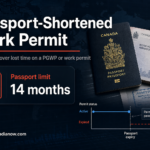
If you graduated from an eligible Canadian post-secondary institution, you can apply for a PGWP. The duration is typically equal to the length of your program, up to a maximum of 3 years. A PGWP is an open work permit — you can work for any employer.
LMIA-Based Work Permits
Many employer-specific work permits require a Labour Market Impact Assessment (LMIA). An LMIA is a document that proves no Canadian citizen or permanent resident was available to fill the job. The employer must apply for the LMIA before you can apply for the work permit.
LMIA-Exempt Work Permits
Some work permits do not require an LMIA. These are typically covered by international trade agreements (such as CUSMA/USMCA for US and Mexican citizens), intracompany transfers, or special programs. Certain provincial nominee recipients also qualify for LMIA-exempt bridging permits.
Bridging Open Work Permit (BOWP)
If you have applied for permanent residence and your current work permit is about to expire, you may be eligible for a Bridging Open Work Permit. This allows you to continue working while your PR application is being processed. Eligibility depends on meeting specific criteria at the time of application.
Maintained Status (Implied Status)
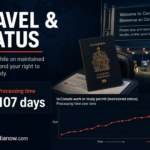
If you applied to extend your work permit before it expired, you can continue working under the same conditions while IRCC processes your application. This is called maintained status or implied status. You are not in violation of your conditions as long as you applied before the expiry date.
How to Extend Your Work Permit
You must apply to extend your work permit before it expires. Apply through your IRCC account online. Key points:
- Apply at least 30 days before expiry (earlier is better)
- If applying for an employer-specific extension, your employer may need to provide a new LMIA or job offer letter
- Processing times for in-Canada work permit extensions change regularly. Check IRCC’s official processing time tool before planning travel, job changes, or status deadlines.
- Once you submit before expiry, you are covered by maintained status
Working in Canada and Your Path to PR
Canadian work experience is one of the strongest assets for permanent residence applications. The Canadian Experience Class (Express Entry) specifically rewards Canadian work experience. Every year you work in Canada in a skilled occupation (NOC TEER 0, 1, 2, or 3) builds your eligibility.
See the Express Entry Guide and TR to PR Pathways for your options.
Your Rights as a Work Permit Holder
Regardless of what your employer says, you have legal rights in Canada. Your work permit does not prevent you from:
- Reporting workplace violations to provincial labour authorities
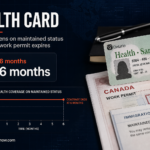
- Accessing provincial healthcare once eligible
- Changing employers if you have an open work permit
- Applying for permanent residence while working
Frequently Asked Questions
Can I change jobs on a closed work permit?
No. An employer-specific work permit ties you to the employer listed on the permit. You must apply for a new work permit before starting work with a different employer. If you have an open work permit, you can change employers freely.
What happens if my work permit expires while IRCC is processing my extension?
If you applied for an extension before your permit expired, you are on maintained status and can continue working under the same conditions until IRCC makes a decision. Keep your proof of application safe.
How long can I stay in Canada after my work permit expires if I did not apply to extend it?
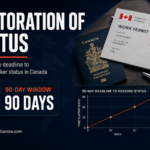
If you did not apply before expiry, your status has expired. You must either leave Canada or restore your status. Restoration applications must be submitted within 90 days of the expiry date and require a fee.
Can my spouse work in Canada on my work permit?
Your spouse may be eligible for an open work permit if you hold certain types of work permits — including PGWP holders, LMIA-based high-skill workers, and some others. Eligibility rules changed in 2024 and should be verified at canada.ca before applying.
General information only. Always verify at canada.ca. See our Immigration Disclaimer.