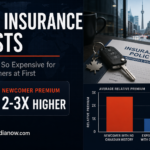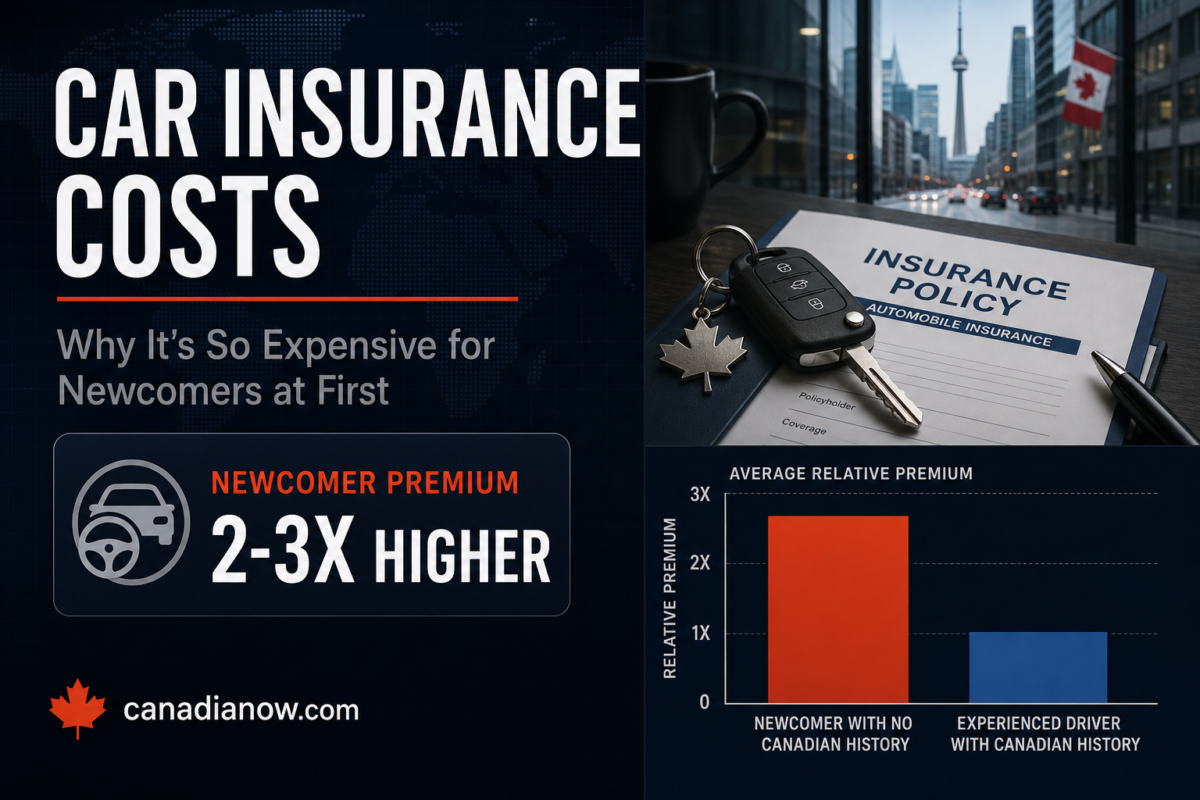
Few first-year expenses catch newcomers as off guard as car insurance. Someone who drove for fifteen years without an accident back home can land in Canada and get quoted a premium that looks more like what a new teenage driver would pay — and for a specific, frustrating reason: Canadian insurers price risk almost entirely on Canadian driving history, and you don’t have any yet.
Why Your Foreign Driving Record (Mostly) Doesn’t Count
Canadian insurers build their rates around claims data tied to Canadian roads, Canadian winters, and driving records they can actually verify through Canadian databases. A clean record from another country isn’t invisible to them, but it isn’t treated the same as a clean Canadian record either, because they have no direct way to confirm it against the systems they normally use. Some insurers will give you partial credit — typically up to three years of experience — if you can produce a formal letter of experience from your previous insurer confirming your claims history. Not every insurer offers this, and the amount of credit varies, so it’s worth calling around rather than accepting the first quote as the ceiling.
What a Letter of Experience Needs to Include
Request this from your previous insurer before you leave your home country if at all possible — it’s far harder to get once you’ve already moved and closed out the relationship. A usable letter typically states your name, the policy period, the vehicles insured, and confirms whether you had any at-fault claims during that time. Without it, you’re relying entirely on your own word, which most Canadian insurers won’t price against.
The Real Cost Drivers, Beyond “Being New”
| Factor | Effect on Premium |
|---|---|
| No Canadian driving history | Largest single factor; often 2–3x the rate of an equivalent experienced driver |
| Licence stage (G1/G2/N vs full licence) | Restricted-stage drivers pay more; rates drop meaningfully at each graduation |
| Province | Ontario and Alberta tend to run higher than Atlantic Canada; Quebec’s public system differs structurally |
| Vehicle choice | High-theft or high-repair-cost models can add hundreds per year regardless of your driving record |
Six Ways to Bring the Number Down
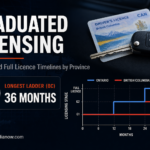
Complete your graduated licensing as efficiently as possible — see our breakdown of the G1/G2/G timeline by province — since every stage you clear typically lowers your rate, independent of how long you’ve technically been driving. Shop through an independent broker rather than a single insurer’s website; brokers can pull quotes from multiple companies at once, and rates for an identical driver profile can differ by hundreds of dollars between insurers. Ask specifically whether the insurer offers newcomer or “new to Canada” discount programs — several major insurers run them, but they’re rarely advertised prominently and you often have to ask by name. Consider a higher deductible if you have the savings to cover it, since raising your deductible from $500 to $1,000 typically produces a noticeable premium reduction. Bundle auto with tenant or home insurance where possible, since multi-policy discounts commonly run 5–15%. And finally, take an accredited driver training course if you’re new to driving altogether, not just new to Canada — several insurers price course completion as a meaningful discount in your first year or two.
Quebec and Public Insurance Provinces Work Differently
Quebec, along with Manitoba, Saskatchewan, and British Columbia’s basic coverage, run publicly administered insurance systems rather than a fully private market, which changes both the pricing structure and the shopping process — you generally can’t broker-shop your way to a materially different base rate for the mandatory public portion the way you can in Ontario or Atlantic Canada. Newcomers to those provinces should still shop private insurers for optional add-on coverage (like collision or comprehensive, on top of the public basic plan), where competition and discounts still apply.
Don’t Skip Coverage to Save Money
Driving uninsured, or letting coverage lapse to save on premiums, creates a much bigger problem than the premium itself: a gap in coverage shows up on your insurance history and resets any progress you’ve made toward lower rates, on top of the legal risk of driving without valid insurance. If cost is genuinely a barrier, talk to a broker about minimum-coverage options and provincial low-income programs before considering going without coverage.