Newcomers who start freelancing or contracting soon after arriving often assume GST/HST registration works like income tax — something you sort out once a year, after the fact. It doesn’t. Miss the registration threshold and keep invoicing without charging tax, and you can end up owing the CRA money you never collected from your clients in the first place, which is a considerably worse position than simply registering on time.
The $30,000 Threshold, and What It Actually Measures
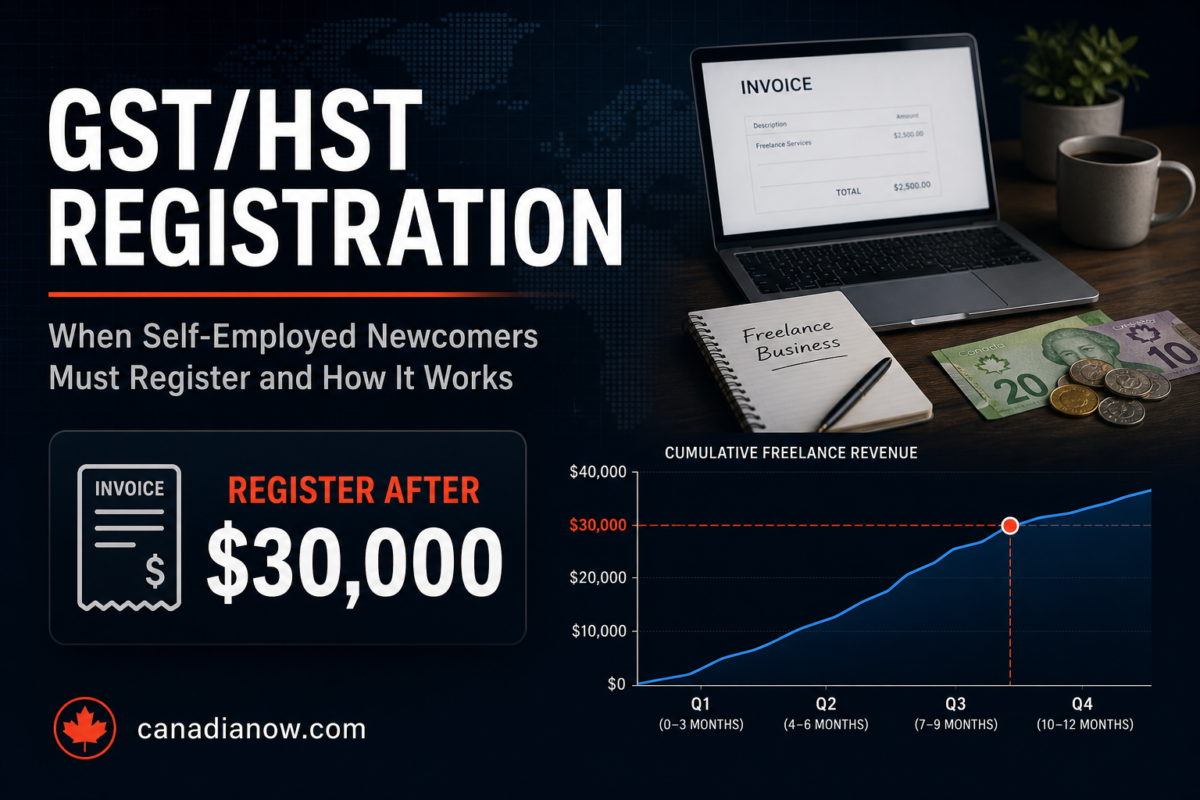
You’re required to register for GST/HST once your total taxable revenue from commercial activity exceeds $30,000 — but this isn’t a calendar-year test. It’s calculated on a rolling basis across four consecutive calendar quarters, and separately, on a single-quarter basis. If either measure crosses $30,000, you’ve triggered the requirement, even if your total for the actual calendar year to date looks lower. Employment income from a T4 job doesn’t count toward this threshold at all — only revenue from self-employment, freelance work, contracting, and other commercial activity counts, so someone working part-time on salary and freelancing on the side only needs to track the freelance portion against the threshold.
What Happens Once You Cross It
You have 29 days from the date you exceed the threshold to register. Critically, your obligation to charge GST/HST starts on the date you crossed $30,000, not on the date you actually complete registration — which means if you’re slow to register after crossing the line, you may owe the CRA tax on revenue you never charged your clients for in the interim, out of your own pocket. Set a simple running total of your invoiced revenue from the moment you start freelancing, specifically so you notice the threshold approaching rather than discovering after the fact that you crossed it two months ago.
Should You Register Voluntarily, Before You’re Required To?
| Consideration | Favors Voluntary Registration |
|---|---|
| You have significant upfront costs (equipment, software, home office setup) | Yes — lets you claim input tax credits on GST/HST you paid for those costs |
| Your clients are mostly GST/HST-registered businesses | Yes — they can claim back the tax you charge them, so it’s not a real cost to them |
| Your clients are mostly individuals or small unregistered businesses | No — the tax is a real added cost to them, which can affect pricing competitiveness |
| Your revenue is well under $30,000 and likely to stay there | Depends — weigh the added invoicing and filing complexity against the ITC recovery benefit |
Voluntary registration comes with a real tradeoff: once registered, you must charge and remit GST/HST on everything going forward, and you take on quarterly or annual filing obligations regardless of whether your revenue ever reaches $30,000. It’s not free administrative complexity — it’s a genuine decision, best made by actually running the numbers on your specific cost structure and client base rather than defaulting to “register early just in case.”
What Rate You Actually Charge
This depends on the province your client is in, not the province you live or work from — GST-only provinces charge 5%, while HST provinces charge a combined rate that’s higher (ranging by province), and if you invoice clients across multiple provinces regularly, you need to track and apply the correct rate per client rather than using one flat rate across your whole business.
Filing Once You’re Registered
Registered businesses file GST/HST returns on an assigned schedule — monthly, quarterly, or annually, based on revenue level — reporting tax collected from clients minus input tax credits on your own business expenses, and remitting the difference. Missing filing deadlines triggers penalties independent of whether you actually owe money that period, so mark your assigned filing dates as firmly as any other government deadline, not as a flexible administrative task.