Canada’s $10-a-day child care program gets mentioned constantly in immigration forums and Facebook groups, and newcomer parents often arrive expecting a flat national rate. The reality is messier: the program is a patchwork of provincial agreements moving at different speeds, and where you land changes both what you pay and how long the waitlist is.
The Basic Idea Behind the Program
Ottawa signed child care agreements with every province and territory, committing federal funding toward reducing licensed child care fees to an average of $10 a day, with the reduction phased in over several years rather than applied instantly everywhere at once. The money flows to licensed centres and home-based providers that opt into the program — unlicensed or informal care arrangements aren’t covered, which matters because a meaningful share of care, especially for infants, still happens outside the licensed system in most cities.
Where Things Actually Stand, Province by Province
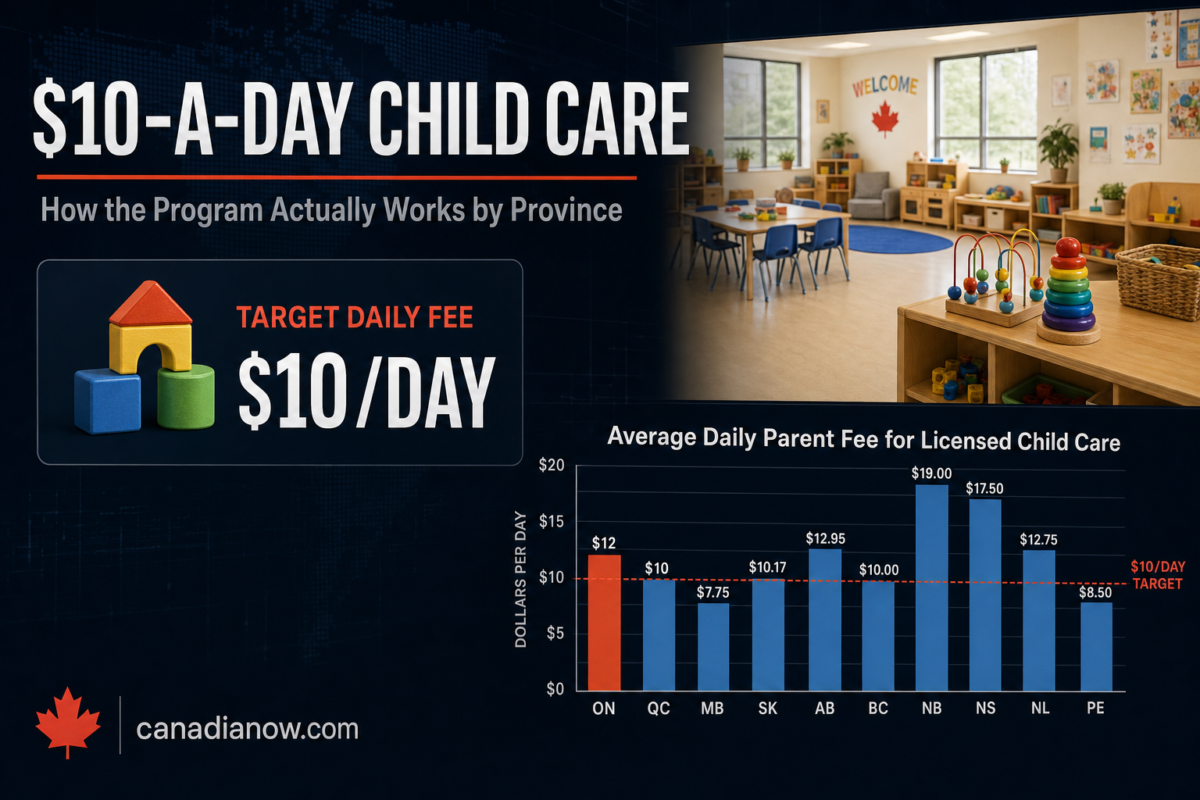
Progress has been uneven enough that the original national timeline effectively no longer applies uniformly. British Columbia and several Atlantic provinces have pushed many licensed spaces close to or at the $10-a-day target. Newfoundland and Labrador has confirmed the reduced-fee program continuing into the next fiscal year. Ontario, by contrast, is targeting a maximum of $12 a day under its version of the program, with its own timeline extended out to the end of 2026 — and in the meantime, many Ontario families are still paying well above that as their specific centre’s participation and fee reduction phases in gradually rather than all at once. Alberta and Nova Scotia are in similar positions, running behind the original national target. The federal government has since signed five-year extension agreements with most provinces and territories (running into the early 2030s), while Ontario and Alberta signed shorter one-year extensions — a signal that both are treating their reduced-fee rollout as still catching up rather than finished.
What This Means Practically for a Newcomer Family
Don’t budget around the national “$10-a-day” headline as if it applies to whatever centre you find first. Call the specific centres near you and ask directly: are they a participating fee-reduction site, what is the current daily or monthly rate for the age group you need, and — the question that actually matters most in cities like Toronto and Vancouver — how long is the waitlist. In high-demand urban centres, waitlists for infant and toddler spots commonly run into many months or longer, which means the realistic move for many newcomer families is to join multiple waitlists simultaneously and start well before you actually need the spot, not after your parental leave or savings runs out.
Fee Reduction vs Subsidy: Two Different Programs
It’s easy to conflate the $10-a-day fee reduction (which lowers the base price at participating centres for everyone) with income-based child care subsidies, which are a separate, older mechanism that further reduces your cost based on household income regardless of whether a centre participates in the federal program. Newcomer families with lower first-year income should check both — you may qualify for an income-based subsidy on top of an already-reduced base rate, and the application processes and eligibility rules are handled provincially, not federally, so they differ depending on where you live.
Finding Licensed Spaces
Each province runs its own child care finder or registry — searching “[your province] child care finder” alongside your municipality’s name is usually the fastest route to an actual list of licensed, program-participating centres near you, rather than relying on general web searches that often surface unlicensed or non-participating providers mixed in with the ones that matter.