Why the PGP Runs on an Interest to Sponsor Pool, Not a First-Come Application
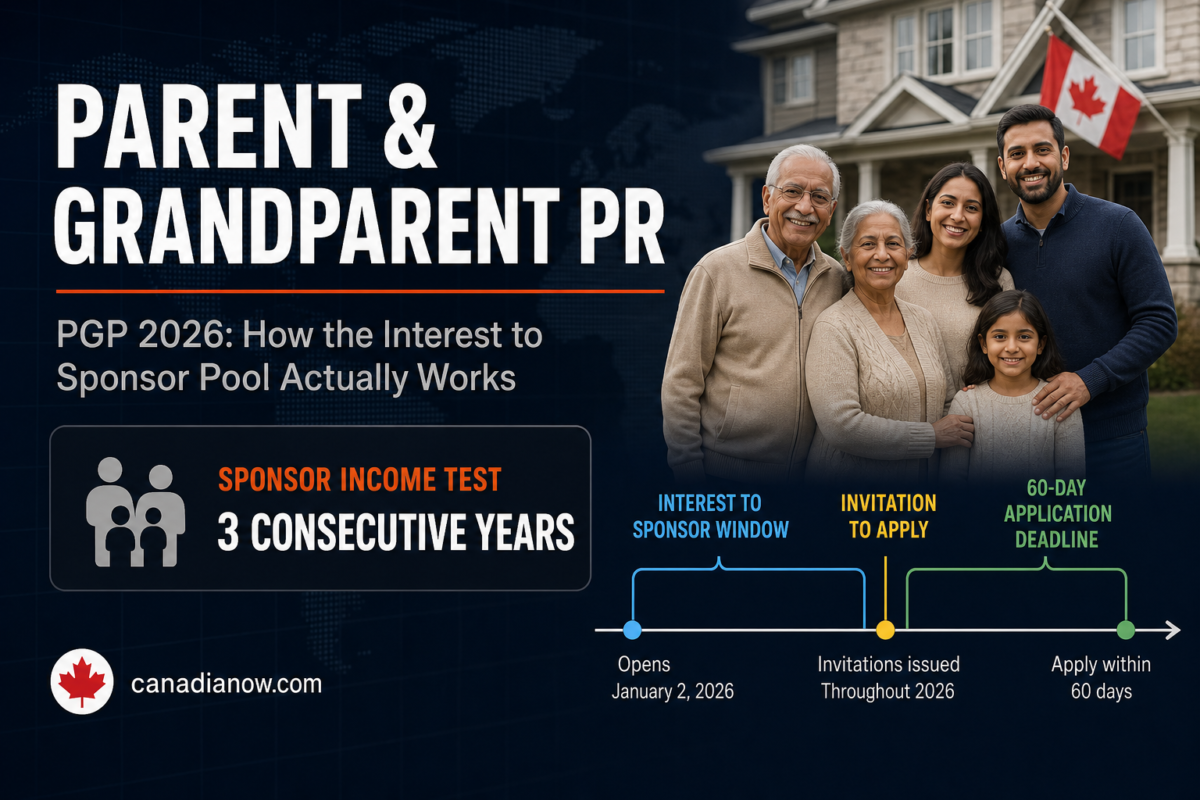
Unlike most immigration programs where you simply submit an application when you’re ready, the PGP has capped it since 2020 through a two-stage process. First, IRCC opens an “Interest to Sponsor” form for a limited window, usually just days, where prospective sponsors submit basic information — not a full application, just an expression of interest. From everyone who submits during that window, IRCC randomly selects a set number of people and invites them to submit a full sponsorship application within a fixed deadline, typically 60 days. This matters because being selected isn’t the same as being approved, and not being selected in a given intake doesn’t mean anything about your eligibility — it’s a lottery, not a ranking. IRCC has occasionally adjusted this format, including inviting people from a backlog of previous years’ interest submissions instead of running a brand new intake, so it’s worth checking IRCC’s current PGP page for the specific mechanism in use before assuming the classic random draw is how the current round works.Sponsor Eligibility: The Income Test That Actually Matters Here
This is where the PGP diverges sharply from spousal sponsorship. To sponsor a parent or grandparent, you need to meet the Minimum Necessary Income (MNI) threshold — a specific income level based on household size — for three consecutive tax years, and unlike some other sponsorship categories, there’s no exception for this one. IRCC checks this against your Notice of Assessment history with the CRA directly, so gaps or unfiled years show up immediately. If your income dipped below the threshold in any of those three years, even briefly, it can disqualify the application for that cycle. Co-signers are allowed if you’re a couple sponsoring together, which combines household income and is often the difference between qualifying and not for younger sponsors still building their earnings.What the Super Visa Does Instead
If you don’t get selected in the PGP pool, or you need a faster way to have a parent physically present sooner, the Super Visa is the practical alternative. It’s a multiple-entry visa allowing stays of up to five years at a time without needing to renew status from inside Canada, and it doesn’t require winning a lottery — it’s assessed on its own merits, based on proof of relationship, a private medical insurance policy meeting IRCC’s minimum coverage requirements, and evidence the sponsoring child or grandchild meets an income threshold. It’s not permanent residence, but for many families it’s the more realistic near-term option, and plenty of people use it while waiting to see if they’re selected for a future PGP round.The Application Itself, Once Invited
If you receive an invitation to apply, the sponsorship application includes the standard sponsorship undertaking (a 20-year commitment to financially support the sponsored parent or grandparent, which is significantly longer than the three-year undertaking for a spouse), proof of your relationship, and the principal applicant’s own application including medical exams, police certificates from every country they’ve lived in, and biometrics. The 20-year undertaking length surprises a lot of sponsors — it’s a genuinely long-term financial commitment, not a formality, and it’s worth thinking through seriously before submitting the interest form in the first place.Processing Time and What to Expect
PGP applications tend to run longer than spousal sponsorship, partly because of the volume of documentation required from the principal applicant and partly because of general processing capacity. IRCC’s published service standard is the number to check rather than relying on anecdotal timelines from forums, since capacity has shifted meaningfully between recent intake years. If your parent or grandparent needs to be in Canada sooner than a PGP application would realistically process, our Super Visa guide covers the faster interim option in detail.Frequently Asked Questions
Can I apply for the PGP without being invited from the Interest to Sponsor pool?
No. Under the current model, only sponsors selected from the pool and formally invited can submit a full application. Submitting an interest form is not itself an application, and unsolicited applications outside an invitation are not accepted.
What’s the difference between the PGP and the Super Visa in terms of outcome?
The PGP leads to permanent residence for the parent or grandparent. The Super Visa is a long-stay visitor visa u2014 it doesn’t grant status, and the person must eventually leave or renew, even though stays can run up to five years at a time.
Can I sponsor a parent if my income was below the threshold last year but not this year?
The Minimum Necessary Income test looks at three consecutive tax years, so a single low-income year within that window can disqualify the application for that cycle, even if your current income comfortably clears the threshold.