Step 1: Confirm You’ve Actually Met the Physical Presence Requirement
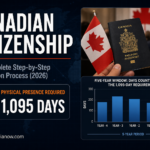
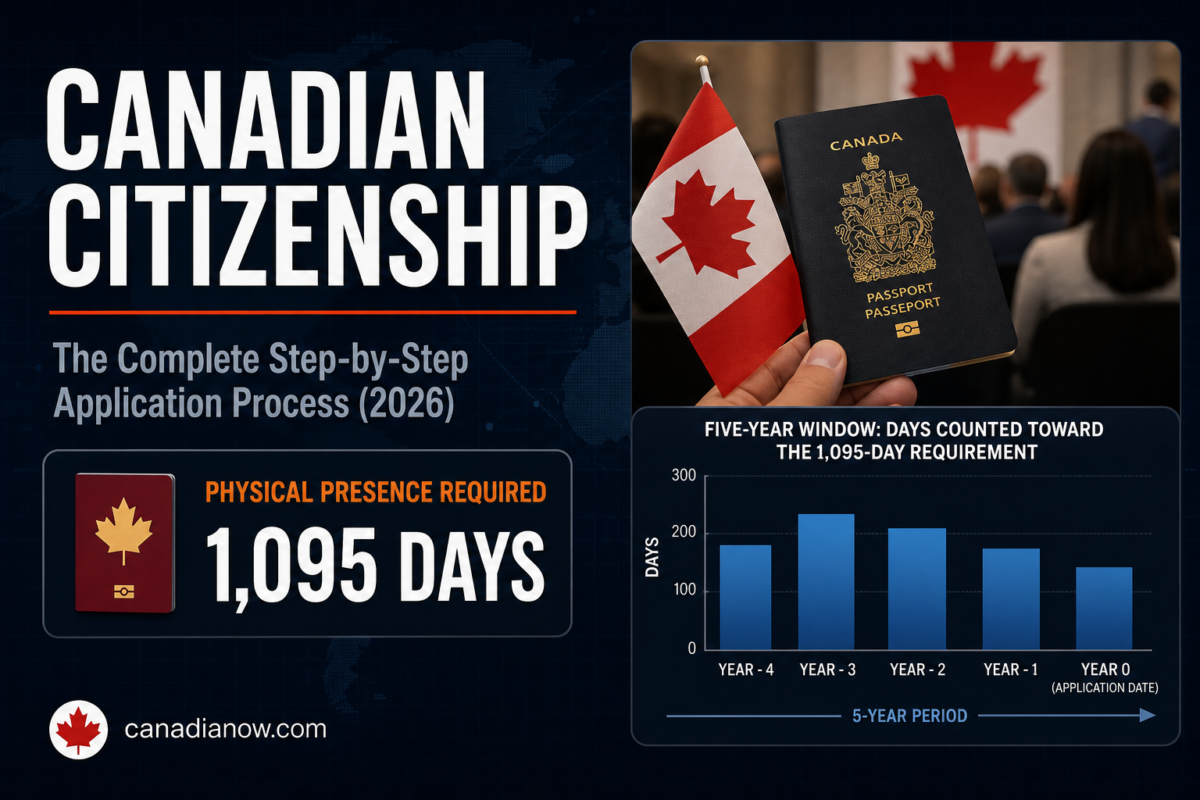
The core requirement is being physically present in Canada for at least 1,095 days within the five years immediately before you apply — that’s three years total, but they don’t need to be consecutive. IRCC counts this using a calculator on their website, and it’s worth running your own numbers there before you apply rather than trusting a rough mental estimate. Every trip outside Canada during that five-year window has to be declared with exact dates, and discrepancies between your declared travel and your actual travel history — which IRCC cross-references against CBSA entry records — are one of the most common reasons applications get flagged for additional review. Time spent in Canada before becoming a permanent resident counts too, but only partially: days spent as a temporary resident or protected person before your PR date count at half value, up to a maximum of 365 days credited toward the total. This matters a lot for former international students and work permit holders, since it can shave a real amount of time off the wait.Step 2: Check the Tax Filing Requirement
This trips up more applicants than almost anything else. You need to have filed personal income taxes for at least three of the five years in that same window, if you were required to file under the Income Tax Act. “Required to file” is doing a lot of work in that sentence — even newcomers with low or no income in their first year are often technically required to file, and skipping it because there was nothing owed is a common, avoidable gap. If you’re not sure whether you met the filing requirement for a given year, it’s worth confirming with the CRA or a tax professional before submitting the citizenship application rather than after IRCC flags it.Step 3: Gather Your Documents and Complete the CIT 0002 Form
The application itself runs through IRCC’s online portal now for most applicants, walking through the physical presence declaration, tax filing history, and a language proficiency section. Adults between 18 and 54 need to demonstrate proficiency in English or French, either through an approved third-party test result, evidence of study in one of the languages at the secondary or post-secondary level, or completion of a recognized government-funded language training program at the required benchmark. If none of those apply to your situation, the language requirement gets assessed as part of the knowledge test itself. You’ll also need a valid PR card or other proof of status, two identical passport-style photos meeting IRCC’s specific size and background requirements, and payment for the processing fee plus the right of citizenship fee, which are charged together at the time of application.Step 4: The Citizenship Knowledge Test
Applicants aged 18 to 54 are required to pass a knowledge test covering Canadian history, government structure, symbols, and the rights and responsibilities of citizenship, based on the official study guide IRCC publishes. It’s multiple choice, and while the pass mark isn’t punishing, the volume of specific facts — dates, named institutions, provincial capitals — trips up people who assume general knowledge will carry them through without actually working from the guide.Step 5: Biometrics, If Required
If your biometrics have expired or you’ve never provided them, IRCC will send a request during processing. Most PR holders already have valid biometrics on file from their immigration application, since the standard validity window is ten years, so this step often gets skipped entirely for people applying reasonably soon after landing.Step 6: The Interview or Test Appointment
IRCC schedules applicants for either an in-person or virtual appointment where the knowledge test happens, alongside a review of your application and, in some cases, a language interview conducted by an officer if your written application didn’t clearly establish proficiency. Bring the physical documents listed in your appointment notice — missing even one, like the original PR card, can mean rescheduling.Step 7: The Oath and Certificate
Once approved, you’re invited to a citizenship ceremony to take the Oath of Citizenship, which is the actual legal moment you become a Canadian citizen — not the date your application was approved. You’ll receive your citizenship certificate at the ceremony itself in most cases, and your existing PR card should be surrendered around this point since it’s no longer valid once you’re a citizen.How Long the Whole Thing Actually Takes
Processing times move around based on application volume and staffing, and IRCC’s published estimate is the most reliable current figure rather than anything fixed here — check it directly before you plan around a specific timeline, since it shifts throughout the year.Frequently Asked Questions
Can I apply for citizenship before I hit exactly 1,095 days?
No. IRCC will refuse an application submitted before the physical presence threshold is met, and applying too early just costs you the fee and the processing cycle. Run the calculator and wait until you’ve genuinely cleared it, ideally with a small buffer.
Do I need to retake the language test if I already used one for my PR application?
Not necessarily u2014 if your previous test result still meets the required benchmark and hasn’t expired, or if you qualify through one of the other accepted proof methods, you may not need a new one. Check the current accepted list of proof options before assuming you need to retest.
What happens if I fail the citizenship knowledge test?
You’re typically given another opportunity to take it, sometimes with a required interview first. Repeated failures can lead to a hearing with a citizenship official, so it’s worth studying from the official guide properly rather than treating the first attempt casually.