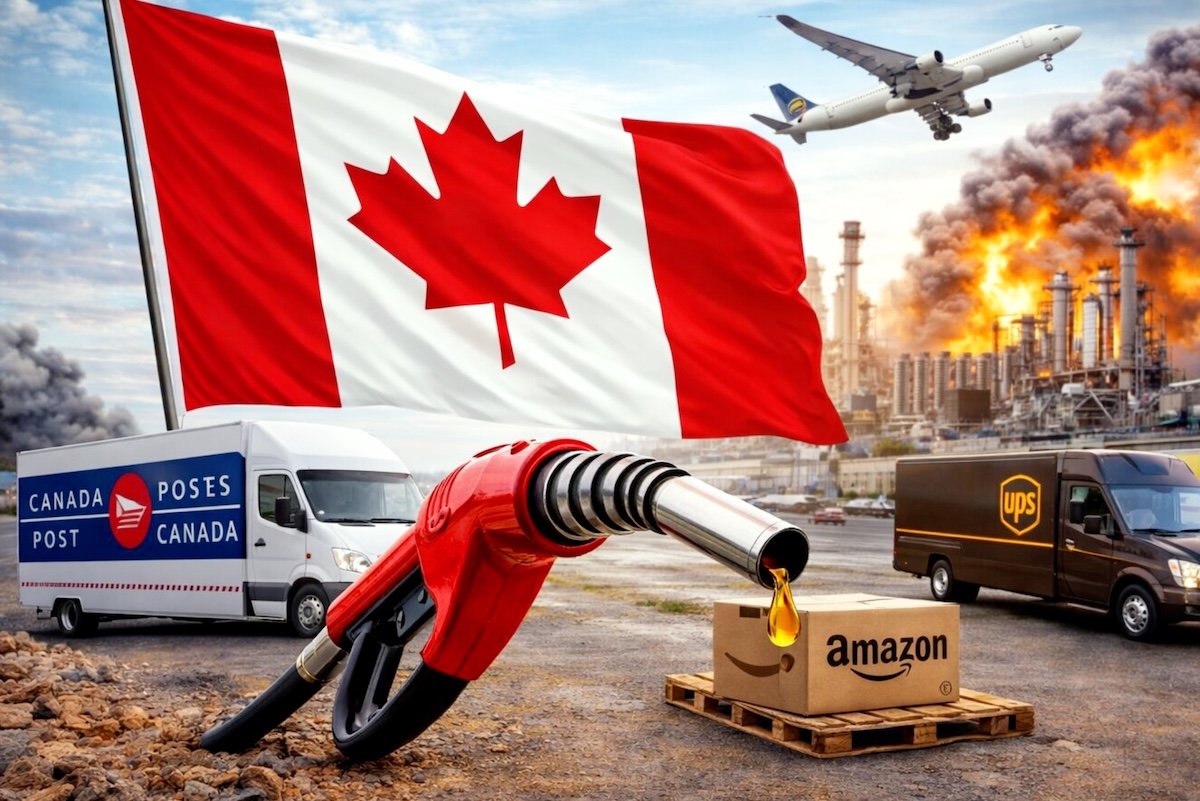
Updated July 2026. Since late February 2026, disruption to shipping through the Strait of Hormuz — tied to the conflict involving the United States, Israel, and Iran — has affected global oil markets and, in turn, fuel-related costs in Canada. Here’s an accurate picture of where prices actually stand now, several months on.
What Happened, in Brief
Shipping through the Strait of Hormuz, a route carrying a significant share of the world’s crude oil, was largely disrupted starting February 28, 2026, contributing to a sharp spike in oil prices. By the end of March 2026, Brent crude had risen roughly 65% to its highest monthly increase on record, and gas prices in several Canadian provinces climbed above $2 per litre at the peak.
Where Things Stand as of July 2026
The situation has moderated but remains unresolved. The U.S. and Iran signed a memorandum of understanding aimed at ending their conflict, and Brent crude has fallen substantially from its wartime peak of roughly $118 a barrel to around $73 a barrel — a decline of nearly 40%. Canadian gas prices eased alongside this, settling closer to $1.70 per litre in most areas by early July, though prices remain more volatile than usual and have ticked up again following incidents that have tested the fragile truce.
Canada and the U.S. have so far avoided the most severe consequences of the disruption, since most Strait of Hormuz oil shipments are destined for Asian markets rather than North America — but prices here still move with the broader global oil market regardless.
What This Means for Canadian Consumers
Expect continued price volatility at the pump and in fuel-dependent costs (shipping, freight, some airline fares) for as long as the underlying conflict remains unresolved. Because the truce is described as fragile rather than final, a single incident affecting Strait of Hormuz shipping can move prices again with little warning — budgeting for some ongoing fluctuation is more realistic than assuming a return to pre-conflict stability in the near term.
Where to Track Current Prices
Because fuel costs are moving with an active, unresolved situation, check current gas prices in your area directly rather than relying on any fixed figure — sites tracking daily Canadian gas prices by province, along with major business news outlets covering oil market movements, are more reliable for real-time numbers than a static article.