Updated July 2026. Fixed mortgage rates climbed in early 2026 as bond yields rose, squeezing over a million Canadian homeowners facing renewal this year. Since then, rates have eased somewhat — here’s the current picture and what it means if you’re renewing.
Why Fixed Rates Moved Independently of the Bank of Canada
The Bank of Canada’s overnight policy rate has held steady at 2.25% since October 2025 — but fixed mortgage rates track Government of Canada bond yields, not the overnight rate directly. Bond yields rose through the first part of 2026 on geopolitical tensions and elevated energy prices, pushing fixed rates up even while the Bank of Canada held its policy rate unchanged.
Where Rates Stand Now (July 2026)
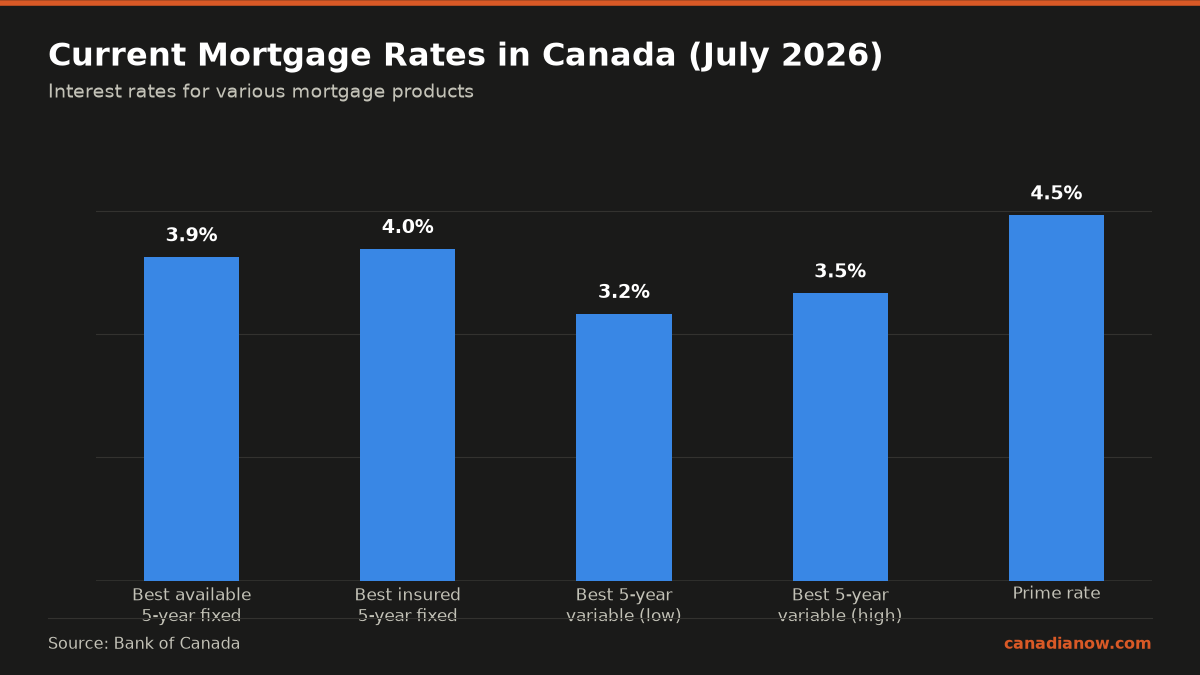
- Best available 5-year fixed: around 3.94%
- Best insured 5-year fixed: around 4.04%
- Best 5-year variable: around 3.25% to 3.50%
- Prime rate: 4.45%
This represents a meaningful improvement from the roughly 4.29% posted rates many major banks were offering in April 2026 — worth checking current numbers again if you assumed rates were still climbing.
What This Means If You’re Renewing This Year
If you locked in a rate during the historically low pandemic-era period, you may still see a payment increase at renewal even with rates having eased somewhat from their spring 2026 peak — the gap between pandemic-era rates and today’s rates remains substantial for many homeowners. The exact impact depends heavily on when your current term started and what rate you locked in.
Extra Considerations for Newcomers Buying a First Home
Beyond the rate environment itself, newcomers navigating a first purchase still need to clear the federal mortgage stress test, which qualifies you based on a rate higher than your actual contracted rate — meaning your approved borrowing amount is more conservative than the sticker rate alone would suggest. Building a strong credit history and having a clear picture of your actual affordability (not just the qualifying rate) matters more than chasing the single lowest advertised number.
Managing a Renewal in the Current Environment
- Compare current rates across at least a few major lenders and a mortgage broker — posted rates and best-available rates can differ meaningfully
- Start the renewal conversation with your lender well before your term expires, since rates can shift in the weeks between quote and closing
- Factor in whether a fixed or variable rate suits your risk tolerance given the current gap between the two
Source: Bank of Canada, Policy interest rate.