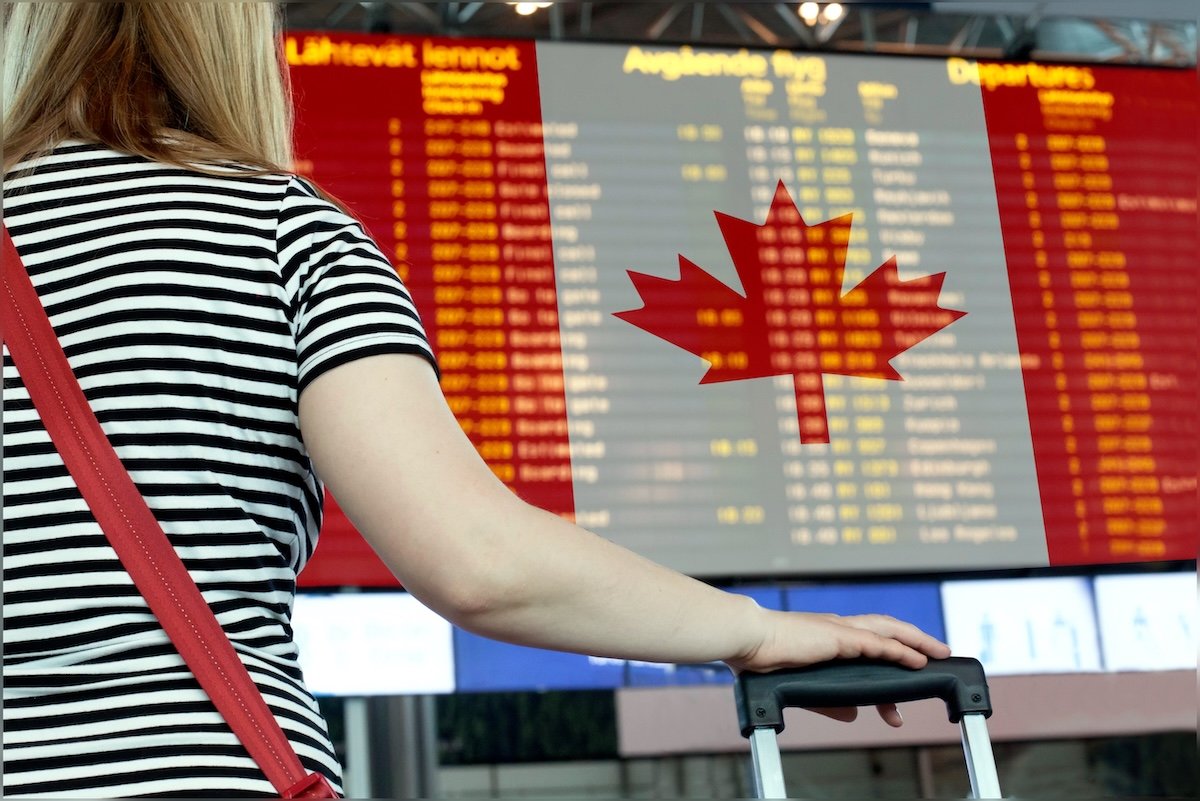
Updated July 2026. Holiday weekends like Easter Monday routinely bring flight disruptions across Canada and the U.S. — a combination of peak travel demand and weather can produce thousands of delays and cancellations in a single day. If you’re caught in one, here’s what you’re actually entitled to under Canadian law.
When Compensation Applies
Under the Air Passenger Protection Regulations (APPR), you may be entitled to compensation for inconvenience if all of the following apply:
- The delay or cancellation was fully within the airline’s control (not required for safety and not weather-related, which typically doesn’t qualify)
- You were notified 14 days or less before your original departure time
- You arrived at your final destination 3 hours or more late
- You file a written claim with the airline within 1 year of the disruption
This means weather-driven delays and cancellations — like the kind that often hit holiday travel weekends — usually don’t qualify for compensation, even though they’re just as disruptive to your plans.
How Much Compensation You Could Get
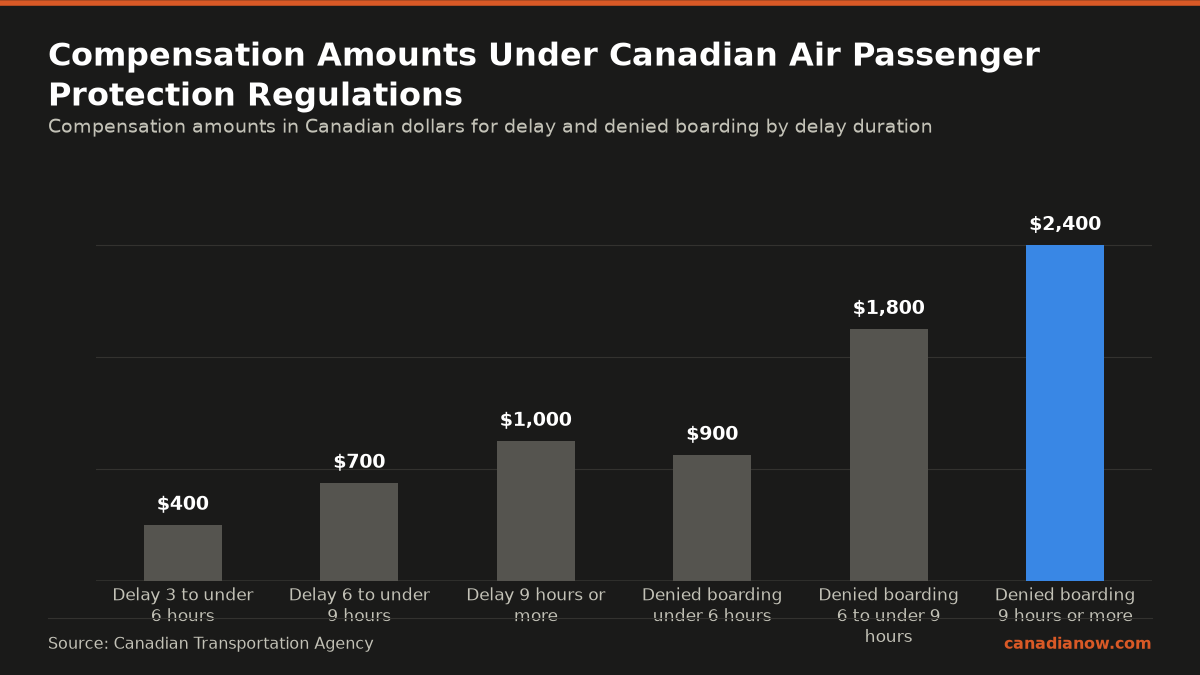
For large carriers, compensation for inconvenience is tiered by delay length:
- 3 to under 6 hours late: $400
- 6 to under 9 hours late: $700
- 9 hours or more late: $1,000
If you’re denied boarding due to overbooking, compensation is higher: $900 for under 6 hours, $1,800 for 6 to under 9 hours, and $2,400 for 9 hours or more.
What Airlines Owe You Regardless of Cause
Even for weather-related disruptions that don’t qualify for cash compensation, airlines still have minimum obligations under APPR whenever a flight is delayed or cancelled by at least 2 hours, denied boarding occurs, or your baggage is lost or damaged. These include standards of treatment (like food, communication, and accommodation for long delays) and either rebooking on a reasonable alternative or a refund — these obligations apply regardless of what caused the disruption.
How to File a Claim
You have one year from the date of the disruption to submit a written compensation claim directly to the airline. The airline then has 30 days to either pay out or explain in writing why it believes compensation isn’t owed. If you disagree with the airline’s response, the Canadian Transportation Agency can review the dispute.
Practical Tips for Holiday Travel
- Keep records of your original itinerary, boarding passes, and any communication from the airline about the delay or cancellation reason
- Ask airline staff directly what caused the disruption — this affects whether you’re likely to qualify for compensation
- Don’t assume a delay isn’t compensable just because it happened during bad weather elsewhere in the network — confirm the specific reason given for your flight
Source: Canadian Transportation Agency, Flight Delays and Cancellations: A Guide.