Inland or Outland: The Choice That Shapes Everything Else
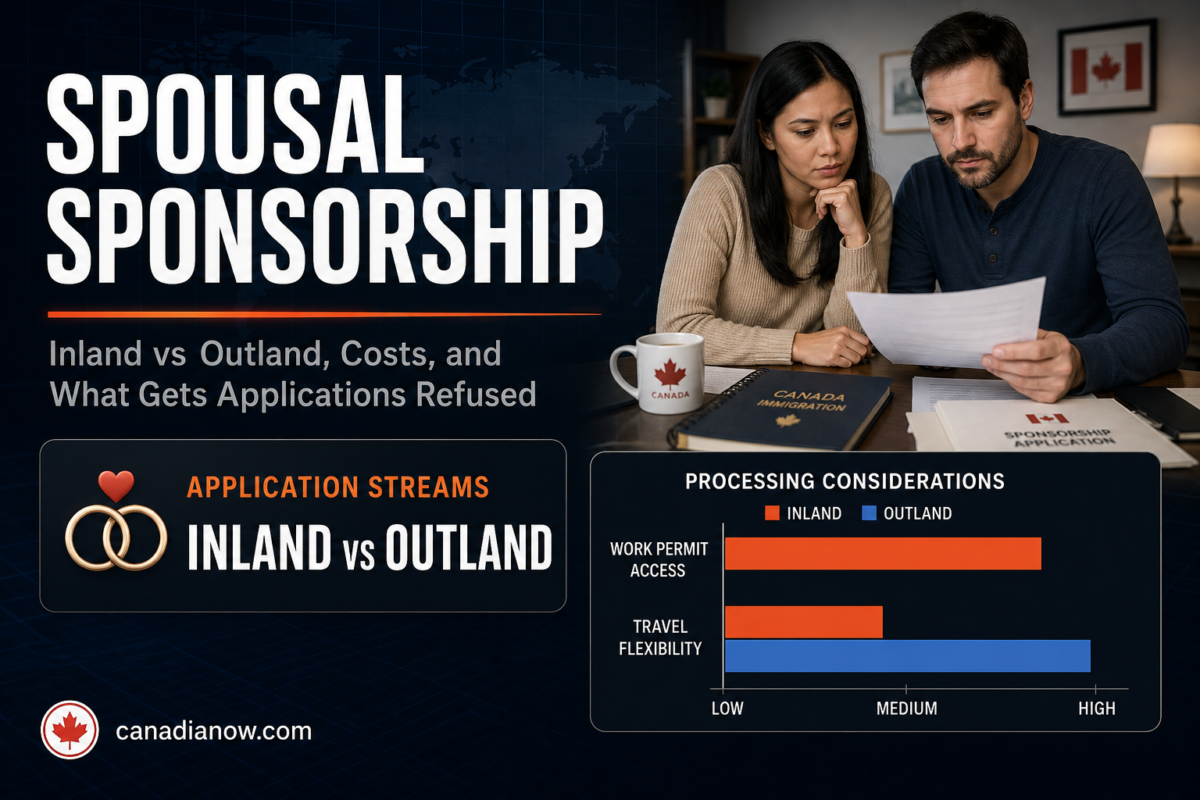
If the sponsored spouse or partner is already living in Canada, IRCC lets couples choose between two application streams, and the choice affects work authorization, travel, and how flexible IRCC is if something goes wrong. Inland sponsorship means the applicant applies from within Canada, on valid status, and can request an open work permit alongside the sponsorship application. That work permit typically starts processing before the PR application itself finishes, which is the main reason couples pick inland — it lets the sponsored spouse work almost immediately rather than waiting out the full sponsorship timeline unemployed. The tradeoff is travel: leaving Canada while an inland application is in process can complicate re-entry, and IRCC has discretion to ask questions about a lengthy absence. Outland sponsorship is processed through the visa office responsible for the applicant’s country of residence, regardless of whether that person happens to be in Canada on a visitor visa at the time. It’s generally the better fit when the couple doesn’t live together yet, when the applicant needs to keep traveling for work, or when the applicant is outside Canada already. Outland applicants can still request entry to Canada as a visitor while waiting, but there’s no equivalent open work permit built into the process the way there is inland. Neither stream is inherently faster. Processing time depends more on which visa office is handling the file and how complete the initial submission is than on which stream you pick.What Actually Counts as Proof of a Genuine Relationship
This is where most refusals originate, and it’s rarely because IRCC doubts the marriage certificate. Officers are trained to look for evidence that two people actually share a life, not just a legal status. Joint bank accounts, a shared lease or mortgage, both names on utility bills, beneficiary designations on insurance policies, photos spanning the relationship’s actual timeline rather than one trip, and messages or call logs showing regular contact all carry weight. Couples who married quickly or who spent much of the relationship apart — a common reality for people who met while one partner was studying or working abroad — should lean harder on communication records and travel history to fill that gap, since a thin paper trail during the early relationship is one of the most common refusal triggers. Common-law partners face a slightly higher bar procedurally, because the relationship itself has to be established before the sponsorship can proceed. IRCC generally wants to see twelve consecutive months of cohabitation, documented through overlapping addresses on official records — leases, driver’s licences, tax returns, mail. Short gaps for work or family reasons don’t necessarily reset the clock, but they need to be explained, not left for the officer to notice on their own.The Cost Breakdown
Sponsorship isn’t the cheapest immigration route, and the fees are split into a few separate charges rather than one lump sum:- The sponsorship fee, paid by the sponsor
- The principal applicant processing fee
- The Right of Permanent Residence Fee (RPRF), charged once the application is approved
- Biometrics for the applicant, if not already provided within the current validity window
- A per-child processing fee for any dependent children included, though they’re exempt from the RPRF
Frequently Asked Questions
Can I switch from outland to inland sponsorship after applying?
Generally no, not once the application is submitted under one stream. The choice needs to reflect the couple’s actual situation at the time of filing, since switching streams mid-process typically means withdrawing and resubmitting rather than converting the existing file.
Does the sponsored spouse need to be in Canada already for inland sponsorship?
Yes. Inland sponsorship specifically requires the applicant to be living in Canada, usually on valid temporary status, at the time of application. If they’re outside Canada, outland is the applicable stream regardless of past visits.
How long does spousal sponsorship take in 2026?
Processing time depends on the visa office handling the file and how complete the submission is, and it shifts throughout the year. Check IRCC’s published service standard for the current estimate rather than relying on an older figure.