How FSTP Differs From the Other Two Express Entry Programs
All three federal programs — FSW, CEC, and FSTP — feed into the same Express Entry pool and get ranked using the same CRS score. What changes is the eligibility gate you have to clear to get into the pool in the first place. FSW leans on education, language, and general skilled work experience. CEC requires Canadian work experience specifically. FSTP is built around a skilled trade, and it doesn’t require a university degree or the same depth of formal education points that can trip up tradespeople whose expertise came through apprenticeship rather than a classroom.The Eligibility Requirements That Actually Matter
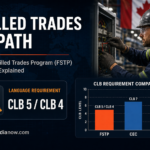
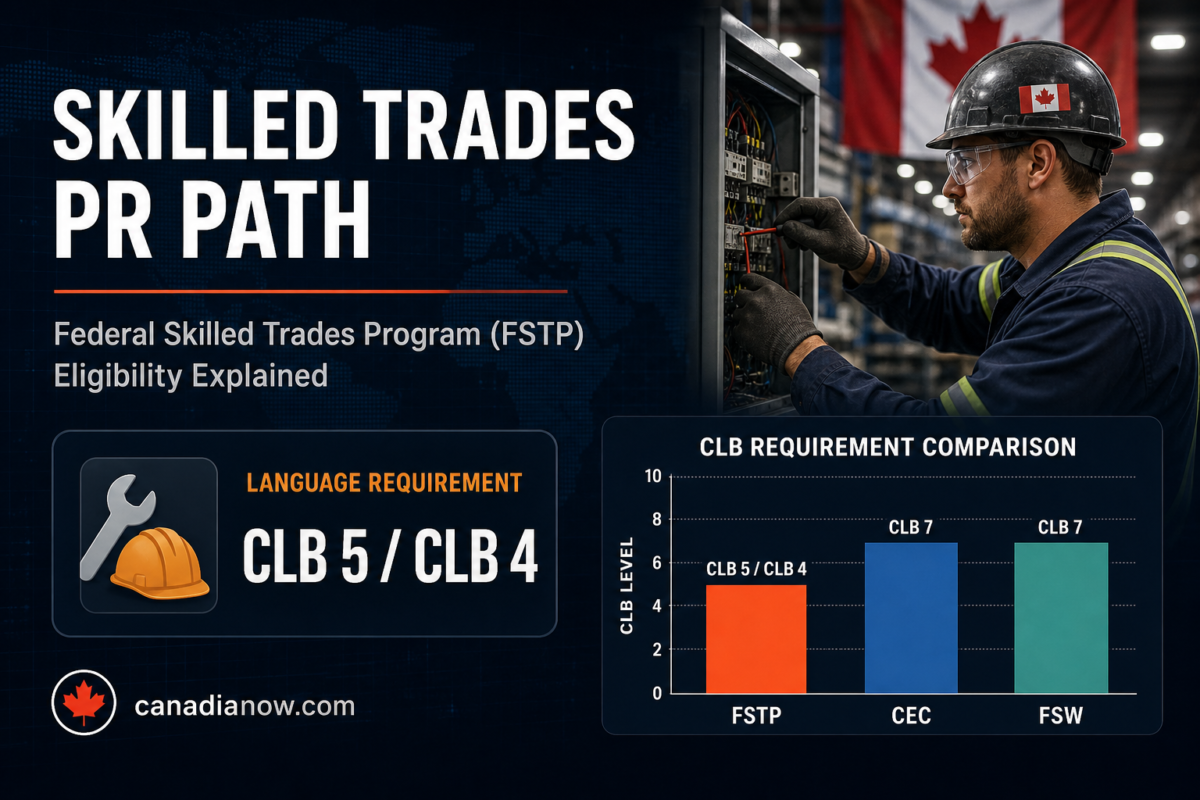
To qualify under FSTP, you need at least two years of full-time (or equal part-time) skilled trade work experience within the five years before you apply, in an eligible trade occupation classified under TEER categories that cover the skilled trades — things like industrial electricians, cooks, heavy equipment technicians, and machinists, among many others. You also need either a valid job offer of at least one year from a Canadian employer, or a certificate of qualification issued by a provincial or territorial regulatory body in that trade. That certificate of qualification path is the part that surprises people. If you’ve already gone through the process of getting your trade certified by a province — which usually involves a trade exam and sometimes additional practical assessment — you can qualify for FSTP without needing an employer’s job offer at all, which is a meaningfully different bar than what CEC or FSW ask for. Language requirements are lower than the other two streams as well: FSTP requires Canadian Language Benchmark (CLB) level 5 for speaking and listening, and CLB 4 for reading and writing, compared to CLB 7 typically expected for FSW.Where the CRS Score Tends to Land
Here’s the tradeoff: FSTP candidates often score lower on the standard CRS than FSW or CEC candidates, mainly because trades workers frequently have less formal education (fewer CRS points) and the program itself doesn’t reward advanced degrees the way FSW’s education criteria do. This doesn’t mean FSTP applicants get worse outcomes — it means the strategy is different. Trade-specific category-based Express Entry draws happen periodically, targeting occupations in short supply, and those draws often accept CRS scores meaningfully below what a general draw would require, because IRCC is deliberately trying to pull trades candidates out of the pool faster.Provincial Certification: The Step Worth Doing Early
Getting your trade certified provincially takes time — each province runs its own certification body, and the process usually involves submitting your training and work history for assessment, followed by a trade qualification exam if you’re applying based on experience rather than a recognized apprenticeship completed in Canada. Starting this process well before you plan to apply for Express Entry is worth it even if you already have a job offer lined up, because the certificate opens the no-job-offer pathway and can also boost your CRS score under the additional points some provinces award through their own nomination streams for certified tradespeople.PNP Overlap: Where Trades Get an Extra Boost
Several provincial nominee programs run dedicated skilled trades streams that align closely with FSTP eligibility, and a provincial nomination adds 600 CRS points, which functionally guarantees an invitation regardless of your base score. Ontario, British Columbia, Saskatchewan, and Manitoba all run trades-specific PNP categories at various points through the year, so it’s worth checking whether your specific trade and NOC code lines up with an active provincial stream rather than relying on federal Express Entry alone. Confirming your exact NOC code before applying under any of these streams matters — see our guide to finding your correct NOC code if you’re not certain yours matches the trade category you’re assuming.Frequently Asked Questions
Do I need a job offer to qualify for FSTP?
Not if you already hold a valid certificate of qualification from a provincial or territorial trade authority u2014 that certificate substitutes for the job offer requirement entirely. Without it, you generally need a valid job offer of at least one year.
Is FSTP available for every trade occupation?
No, only trades classified under the eligible TEER categories the program covers. Checking your specific NOC code against the current eligible occupation list is essential before assuming your trade qualifies.
Can I combine FSTP eligibility with a provincial nomination?
Yes, and it’s often the stronger strategy. Being FSTP-eligible doesn’t prevent you from also pursuing a provincial trades stream, and a nomination through either route adds the same 600 CRS points.