Why “No Credit History” Isn’t the Same as “Bad Credit”
Regular mortgage underwriting leans heavily on your Canadian credit score, which takes time to build regardless of how financially responsible you are. Newcomer mortgage programs exist precisely because banks recognize that a thin or empty Canadian credit file isn’t a red flag the way a low score is — it’s just an information gap, and one they can fill with different documentation instead.What These Programs Actually Look At Instead
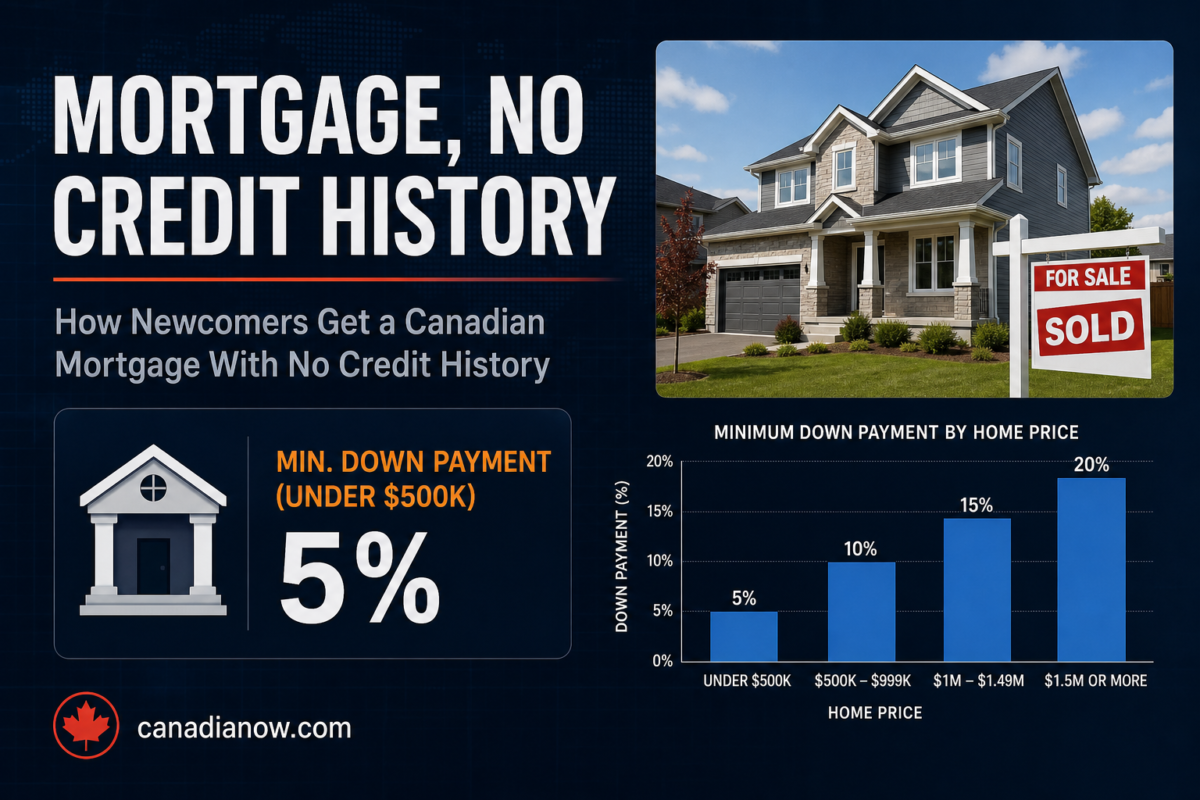
Rather than relying primarily on a credit score, newcomer mortgage streams at the major banks typically substitute in proof of stable income (a job offer letter, recent pay stubs, or an employment letter confirming salary and start date), a larger required down payment in many cases, and alternative credit references — things like an international credit report, or letters from utility providers, landlords, or your bank in your home country confirming a history of on-time payments. Some banks will also accept a foreign credit bureau report directly if it comes from a recognized agency, which can shortcut the need to build a Canadian file from scratch before applying at all. Down payment requirements vary by program and by how established you are. Newcomers with permanent residence and at least some Canadian employment history sometimes qualify for the standard minimum down payment tiers — 5% on homes under $500,000, scaling up from there — the same as any other applicant. Those with less Canadian history, particularly people on work permits without PR yet, more commonly need 10% to 20% down, and insured mortgages generally aren’t available to non-permanent residents in the same way, which pushes the required down payment higher.What Counts as “Newcomer Status” for These Programs
Most bank programs define eligibility as having landed in Canada within the past three to five years, though the exact window differs by institution — some go as high as five years, others cap it tighter. Permanent residents, protected persons, and in several cases work permit holders with a valid job offer or LMIA can qualify, though the specific document requirements shift depending on your status. It’s worth calling more than one bank directly, since the newcomer program isn’t always the first thing advertised on a general mortgage page, and eligibility details can differ meaningfully between institutions even when the marketing sounds similar.Getting Pre-Approved Before You’ve Built Canadian Credit
A mortgage pre-approval gives you a realistic budget before you start house hunting, and newcomer programs can typically issue one using the alternative documentation described above rather than waiting for a credit score to materialize. It’s worth doing this early, even a year or more before you plan to buy, because it tells you concretely what a lender considers your borrowing capacity to be, which is usually more useful than trying to estimate it yourself from online calculators that assume a standard credit profile.A Few Things That Trip Newcomers Up Specifically
Self-employed newcomers, and there are a lot of them in the first couple of years after arriving, often have a harder time here than salaried employees, since lenders want two full years of Canadian self-employment income before weighting it heavily — a foreign business record generally doesn’t count the same way. Large cash gifts from family abroad for a down payment are usually acceptable, but need to be documented with a gift letter and, in most cases, proof the funds have been sitting in your account for a minimum period before closing, since banks are required to verify the source of funds isn’t a disguised loan.Frequently Asked Questions
Do I need permanent residence to qualify for a newcomer mortgage program?
Not always. Several bank programs also accept work permit holders with a valid job offer or LMIA, though the required down payment is typically higher without PR, and terms vary by institution.
Will a foreign credit report actually help my application?
It can, if it comes from a recognized international credit bureau. It won’t replace a Canadian credit score entirely, but it gives the lender something concrete to assess your payment history against rather than an empty file.
Is it better to wait until I have a Canadian credit score before applying?
Not necessarily. Newcomer mortgage programs exist precisely so you don’t have to wait, and getting pre-approved early with alternative documentation is usually more useful than delaying a purchase to build credit history you may not strictly need.