What “Goods to Follow” Actually Means
When you immigrate to Canada, CBSA distinguishes between goods you bring with you when you land and goods that arrive separately — shipped by container, sent later once you’ve found permanent housing, or left behind temporarily with a plan to bring them within your first year. That second category is what “goods to follow” refers to, and it gets its own customs treatment specifically so you’re not taxed as if you were importing regular commercial goods.Form BSF186 and Why It Has to Be Done Before You Land
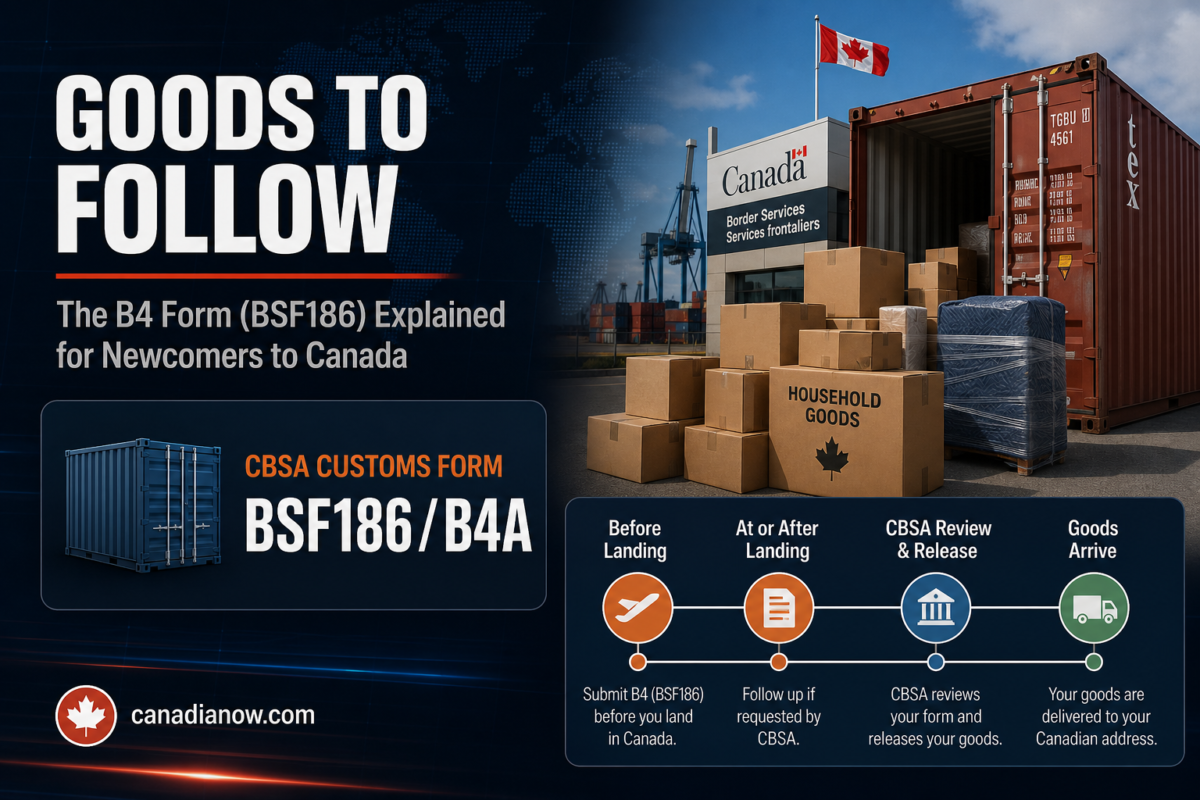
The document that makes this work is the Personal Effects Accounting Document, commonly called the B4 form (officially BSF186), and the critical detail is that you need to prepare it before or at the time you first arrive in Canada as a new resident, not after. The form has two parts — one lists items you’re bringing with you immediately, and the other, the B4A supplementary list, itemizes everything that will follow later. Both get presented to the CBSA officer at your port of entry, even though the goods-to-follow items obviously aren’t physically there yet. This is the part that trips people up most: if you don’t declare your goods to follow at the time you land, you generally lose the ability to import them later duty-free and tax-free under this provision. Arriving without having thought through this list, then trying to ship belongings six months later and claiming the exemption retroactively, typically doesn’t work the way people hope. If you’re not sure yet exactly what you’ll be shipping later, it’s better to list items broadly and in reasonable detail than to leave the B4A blank and assume you can amend it afterward.What Actually Qualifies for Duty-Free and Tax-Free Treatment
Personal and household effects that you owned and used before moving to Canada generally qualify — furniture, clothing, personal electronics, books, kitchenware, and similar belongings. The exemption is meant for genuine personal property, not new purchases or business inventory, so items still in original packaging or clearly bought shortly before the move can draw scrutiny and potentially get assessed duty and tax as regular imports rather than personal effects. Vehicles have their own separate and more complicated import rules layered on top of this, involving safety and emissions compliance in addition to the customs declaration, so treat a car as a distinct process rather than assuming it slots into the same B4 framework as furniture.Practical Sequencing: What to Do Before You Fly
Before departure, it’s worth making a written inventory of everything you’re leaving behind to ship later, with rough values, even if the list isn’t perfectly final. This gives you something concrete to work from when completing the B4A rather than trying to reconstruct the list from memory at the airport, which is when a lot of items get accidentally left off. If you’re using an international moving company, most have handled this specific form many times and can help you complete it correctly — it’s worth asking directly whether they’ll assist with B4/B4A documentation as part of the service, since not all movers volunteer this.What Happens If You Land Without Filing It
If you arrive and genuinely didn’t know about the form, talk to the CBSA officer at your port of entry about your situation before you leave the airport rather than after. There’s more flexibility to correct this in the moment than there is trying to fix it weeks later once you’ve already left the port of entry without having declared anything.Frequently Asked Questions
Do I need to list an exact dollar value for every item on the B4A?
A reasonable estimated value is generally sufficient for personal effects, rather than receipts for every single item. What matters more is that the list is genuine and reasonably complete at the time you declare it.
Does the goods to follow exemption apply to gifts I plan to bring later?
No u2014 the exemption is specifically for your own personal and household effects owned and used before the move, not new items purchased as gifts or for resale.
What if my shipment arrives more than a year after I land?
The goods to follow provision is generally intended for items arriving within a reasonable period after landing. A shipment arriving much later can face closer scrutiny, so it’s worth shipping as soon as reasonably possible rather than delaying indefinitely.