Updated July 2026. Ontario’s minimum wage increases every year on October 1 — not January, which is a common misconception — using an inflation-based formula built into the Employment Standards Act. The rate for October 1, 2026 has since been officially confirmed.
Confirmed October 1, 2026 Rates
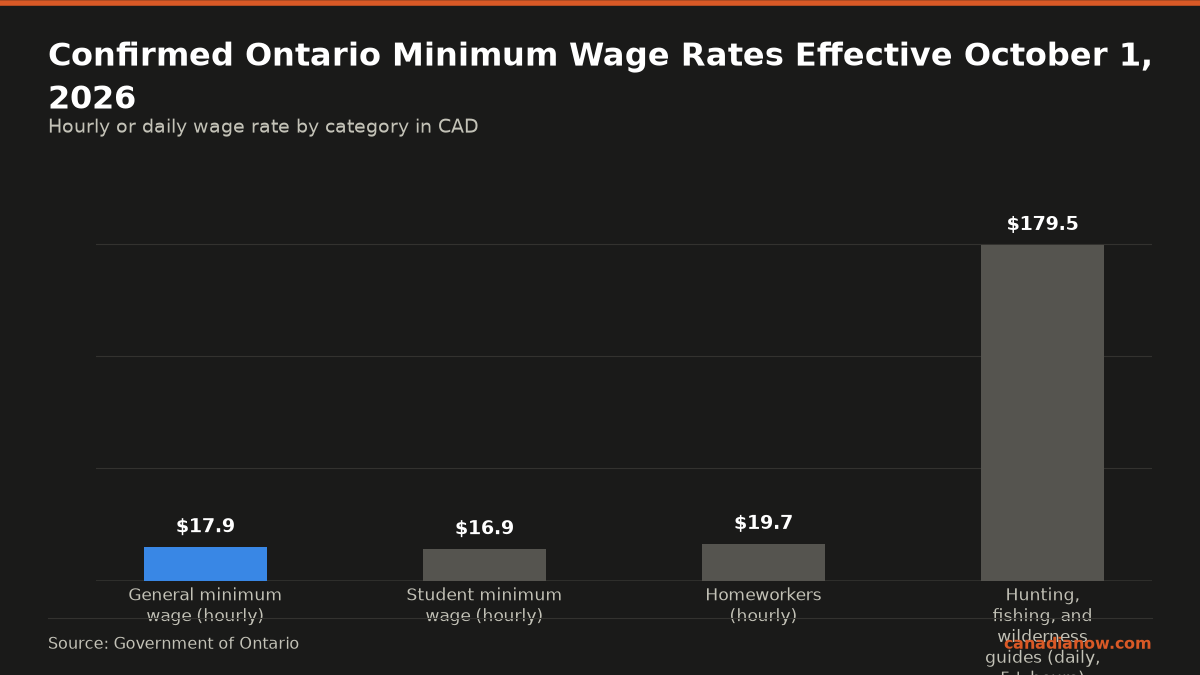
- General minimum wage: $17.95/hour (up from $17.60)
- Student minimum wage: $16.90/hour
- Homeworkers: $19.70/hour
- Hunting, fishing, and wilderness guides: $89.75/day (under 5 consecutive hours) or $179.50/day (5+ hours)
The $0.35 increase to the general rate works out to a 1.9% adjustment.
How Ontario Sets the Rate Each Year
Under the Employment Standards Act, minimum wage rates are adjusted annually on October 1 using the Ontario Consumer Price Index, then rounded to the nearest $0.05. The province is legally required to publish the confirmed rates by April 1 each year — giving employers a full six months’ notice before the new rate takes effect.
What the Increase Means for Your Pay
For a full-time worker at 40 hours a week, the $0.35/hour increase works out to roughly $728 extra per year before tax ($0.35 × 40 × 52). If you’re currently earning minimum wage, your employer is required to move you to the new rate starting October 1, 2026 — this isn’t optional or something you need to request.
Why This Matters for Newcomers
Many first jobs in Ontario for newcomers pay close to minimum wage, so this annual adjustment directly affects take-home pay for people just starting out in the job market. If your employer hasn’t adjusted your pay by October 1, that’s worth raising directly, since Ontario’s minimum wage rates apply automatically and aren’t dependent on your employer choosing to implement them.
Source: Government of Ontario, Minimum wage.