Updated July 2026. Registering a vehicle in Nova Scotia is handled by the Registry of Motor Vehicles (RMV) through Access Nova Scotia centres. The process is different depending on whether you bought a car in the province, brought one from another province, or are just renewing your plates. This guide walks through each scenario with the current fees and documents you’ll actually be asked for at the counter.
Quick Facts
- Renewal cycle: passenger vehicle plates renew every 2 years
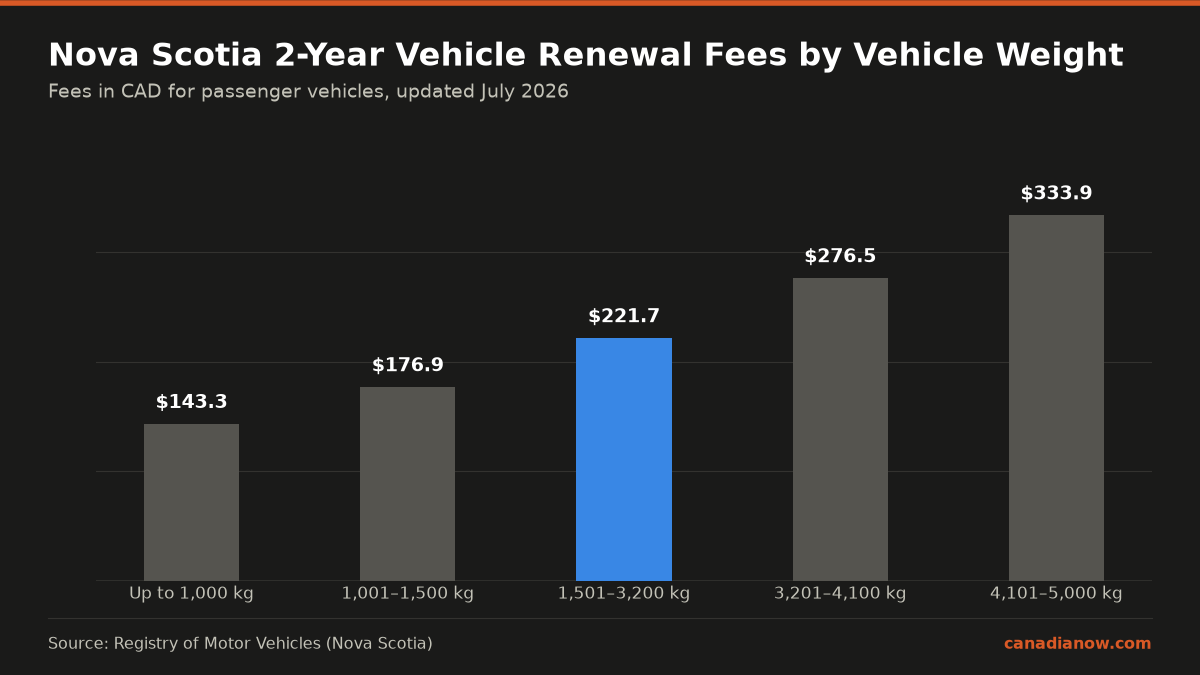
- Renewal fee: $143.30 to $333.90 per 2-year cycle, based on vehicle weight (most sedans and small SUVs fall in the $143.30–$221.70 range)
- Transfer/recording fee: $13.20 when you buy a vehicle or transfer ownership
- New residents: 30 days to register an out-of-province vehicle after establishing residency
- Insurance: mandatory before you can register — bring your pink slip
- Where: Access Nova Scotia centres in person, or online for renewals
Scenario 1: You Bought a Used Vehicle in Nova Scotia
This is the most common case, and it has the most steps:
- Get a Motor Vehicle Inspection (MVI). Used vehicles need a valid safety inspection before they can be registered in your name. Any licensed inspection station (most garages and dealerships) can do it — expect to pay roughly $55–$75 plus any repairs needed to pass. The seller may already have a valid MVI sticker; check the date before you buy.
- Get insurance first. You cannot register without proof of insurance. Call your insurer with the VIN and get coverage bound before your Access NS visit.
- Bring the paperwork to Access Nova Scotia:
- Bill of sale (signed by the seller, showing price, date, VIN)
- The vehicle permit (registration) signed over to you by the previous owner
- Proof of insurance
- Your driver’s licence or government ID
- Pay the transfer fee ($13.20), the plate fee, and tax. On private used-vehicle sales, provincial tax is charged at registration, calculated on the greater of the purchase price or the vehicle’s book value — so a $500 bill of sale for a car worth $8,000 won’t reduce the tax. Vehicles gifted between immediate family members can be tax-exempt with a signed family gift affidavit.
- Leave with plates and your new permit. If you’re transferring your existing plate from an old vehicle, mention it — plates in Nova Scotia stay with the owner, not the car.
Scenario 2: You Bought From a Dealership
Much simpler: dealerships in Nova Scotia typically handle registration and plating for you, collect the tax (HST applies on dealer sales), and give you the vehicle ready to drive. Confirm the registration fee is itemized on your purchase agreement so you’re not paying it twice.
Scenario 3: You Just Moved to Nova Scotia
New residents must register their out-of-province vehicle within 30 days of establishing residency. You’ll need:
- Your current out-of-province registration/title
- A Nova Scotia safety inspection (MVI) — required even if your previous province’s inspection is still valid
- Proof of Nova Scotia insurance
- Proof of identity, and proof of residency if requested
Good news on tax: if you owned the vehicle in your previous province and are moving to Nova Scotia (not buying), you generally don’t pay tax again on your own vehicle when you bring it with you as part of moving. Bring proof of prior ownership (your old registration going back at least a few months).
While you’re at it, you’ll also need to swap your driver’s licence — see our guide to exchanging a licence in Canada, province by province.
Renewing Your Plates
Nova Scotia passenger plates renew on a 2-year cycle. You’ll get a reminder notice by mail before expiry. Three ways to renew:
- Online (fastest): through Access Nova Scotia online services, up to two months before expiry. You confirm your insurance electronically and pay by credit card; your receipt works as a 10-day interim permit while the new one arrives by mail.
- By mail: send the reminder notice, a completed Statement of Insurance form, and payment to Registry of Motor Vehicles, P.O. Box 1652, Halifax, NS B3J 2Z3.
- In person: at any Access Nova Scotia / RMV office.
Current 2-Year Renewal Fees by Vehicle Weight
- Up to 1,000 kg — $143.30
- 1,001–1,500 kg (most compact/mid-size cars) — $176.90
- 1,501–3,200 kg (larger sedans, SUVs, pickups) — $221.70
- 3,201–4,100 kg — $276.50
- 4,101–5,000 kg — $333.90
Fees are set by the province’s official schedule of fees — check it before you go, as amounts can change with provincial budgets.
Common Problems and How to Avoid Them
- Buying a car without a valid MVI. You can’t register it until it passes inspection, and if it needs $2,000 of brake work to pass, that’s your cost. Ask for the MVI status before handing over money.
- Bill of sale too vague. It should include names and addresses of both parties, VIN, odometer reading, price, and date. A handwritten one is fine if complete.
- Insurance not active yet. Access NS will turn you away without proof of insurance. Get it bound first, even same-day by phone.
- Waiting past the 30-day window as a new resident. Driving on out-of-province plates after the deadline can void insurance coverage and lead to fines.
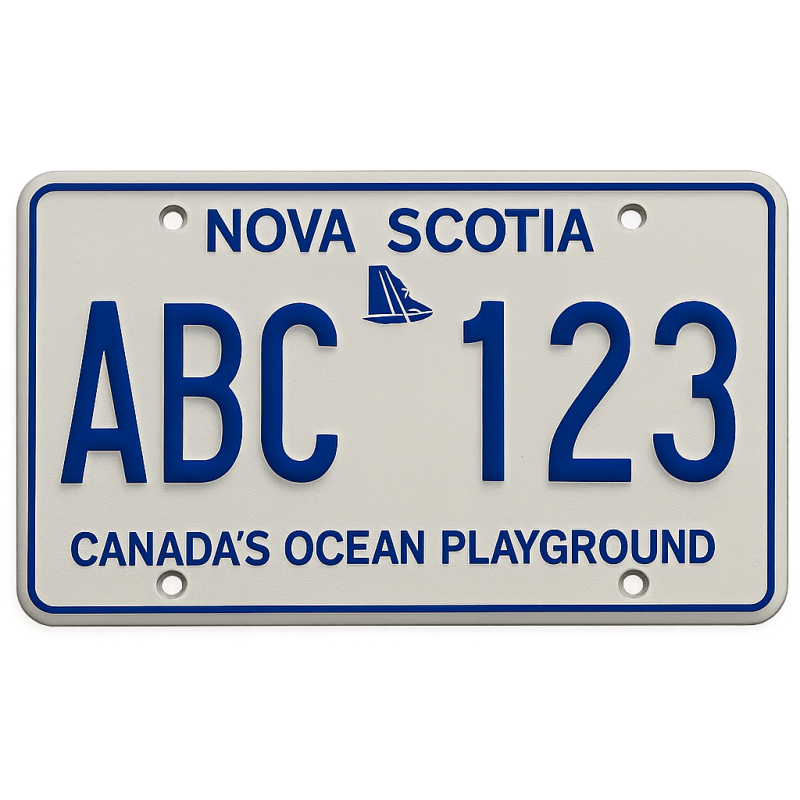
- Assuming the plate comes with the car. In Nova Scotia the seller keeps their plate. You need your own plate — either a new one or one transferred from your previous vehicle.
Frequently Asked Questions
Can I register a vehicle online in Nova Scotia?
Renewals, yes. First-time registrations and ownership transfers must be done in person at an Access Nova Scotia centre, because original documents need to be verified.
How much tax do I pay on a private used car purchase?
Provincial tax is collected at registration on the greater of the purchase price or the vehicle’s average book value. Dealer sales are taxed through HST at the point of sale instead. For the current rate and valuation rules, confirm with Access Nova Scotia when you register.
Do I need a Nova Scotia inspection if my car passed one in another province?
Yes. Out-of-province vehicles need a Nova Scotia MVI when they’re first registered here.
What happens if my plates expire?
Driving with expired plates can bring a fine and, more importantly, complications with insurance claims. Renew online up to two months early — it takes minutes.
Can I transfer my old plate to my new car?
Yes — plates belong to the owner in Nova Scotia. Bring your old plate details when registering the new vehicle and pay the transfer fee.
Related Guides
- Driving in Canada: licence conversion, G1 test and road rules
- Cost of living in Canada: what newcomers actually pay
Fees and rules are set by Service Nova Scotia and can change. Verify current amounts on the official pages linked above before visiting an Access Nova Scotia centre.
Want to know exactly where you stand? Our personalized report covers your CRS score, the PNP and Express Entry categories you actually qualify for, and a realistic next-step plan.