Updated July 2026. Becoming an immigration lawyer in Canada takes roughly 7-8 years of education and training after high school. Here’s the realistic step-by-step path.
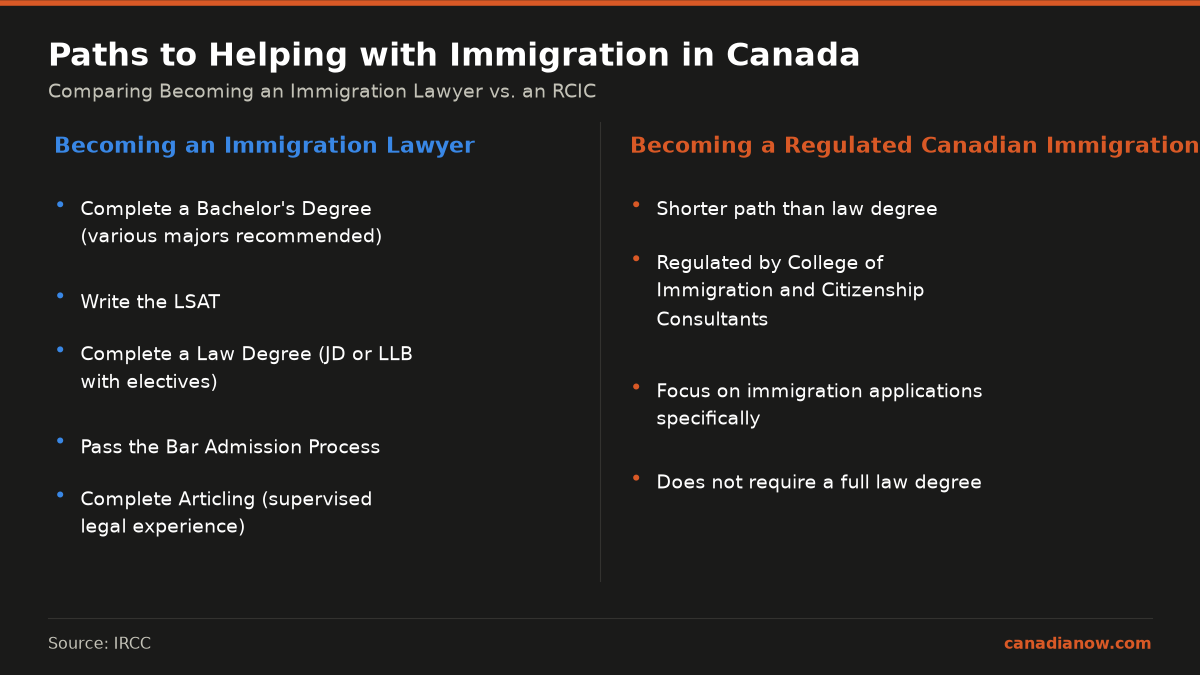
1. Complete a Bachelor’s Degree
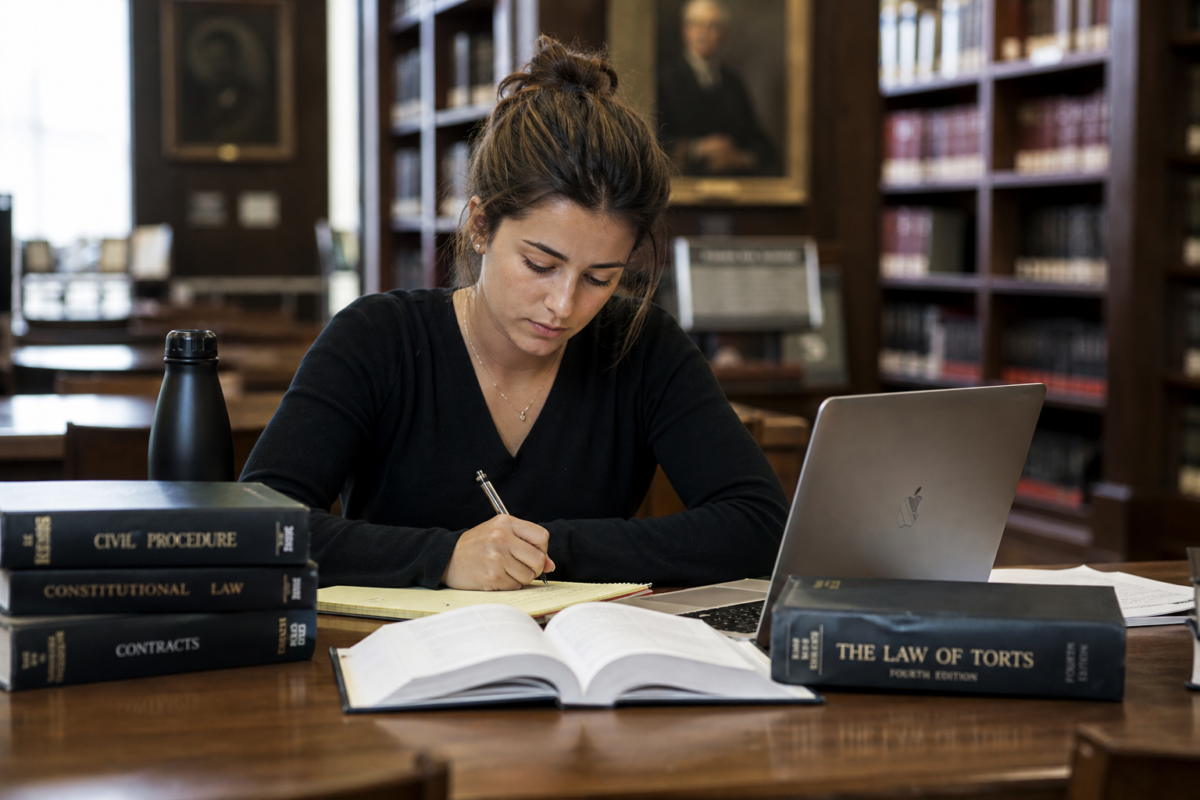
There’s no mandatory undergraduate major, but political science, history, economics, social sciences, and international relations provide a strong foundation for law school.
2. Write the LSAT
The Law School Admission Test evaluates reading comprehension, analytical reasoning, and logical reasoning — a required step before applying to Canadian law schools.
3. Complete a Law Degree (JD or LLB)
Many Canadian law schools offer elective courses specifically in immigration law, international human rights, and refugee law. Taking these electives — and getting involved in immigration-focused clinics, internships, or volunteer work — builds the specialization you’ll need later.
4. Pass the Bar Admission Process
After graduating, you must pass the bar exams administered by the law society in the province or territory where you intend to practice.
5. Complete Articling
Bar admission also requires a period of articling — working under the supervision of a licensed lawyer to gain supervised, practical legal experience before being fully licensed.
6. Build Immigration-Specific Experience
Employers and clients look for real exposure to immigration law specifically — through clinics, internships, externships, clerkships, and pro bono work, on top of your law school coursework.
7. Join a Professional Network
Associations for immigration lawyers connect you with practitioners who can guide you toward firms, agencies, or solo practice paths that fit your interests.
A Faster Alternative: Becoming an RCIC
If your goal is to help people with immigration applications specifically (rather than practice law broadly), becoming a Regulated Canadian Immigration Consultant (RCIC) is a shorter path, regulated by the College of Immigration and Citizenship Consultants, and doesn’t require a full law degree.
Check IRCC directly for the latest official guidance.
Related Reading
- Quebec Reopens Family Sponsorship July 2, 2026: New 15,700 Cap and the Adult-Child Exemption
- How to Become a Successful Immigration Consultant
- Police Clearance Certificate for Canadian Immigration: Country-by-Country Guide
If you'd rather have this mapped out for your exact situation instead of piecing it together yourself, our personalized report covers eligibility, CRS score, and next steps.