Updated July 2026. Starting in April 2026, the CRA began conducting post-assessment reviews of individual tax returns on a year-round basis — a shift from the more seasonal review pattern of previous years. With over 33 million returns expected this filing season, more Canadians than usual received requests for supporting documentation instead of the refund deposit they expected.
What a CRA Review Actually Is
A review is a standard verification step, not an audit. Each year, the CRA checks a portion of returns to confirm that reported deductions, credits, and income match what employers, banks, and other third parties reported. Reviews typically focus on specific claims rather than the entire return. If you’re selected, you’ll get a letter — by mail or in your CRA My Account inbox — specifying exactly what’s under review and a deadline (usually 30 days) to submit supporting documents. Your refund and Notice of Assessment stay on hold until the CRA processes what you send.
Why More Refunds Got Held Up This Season
- Electronic filing has no paper trail: with the vast majority of Canadians filing online, returns don’t come with attached receipts, pushing more verification into pre- and post-assessment review rather than upfront document checks.
- Automated risk flagging: algorithms now flag unusually large claims before a Notice of Assessment is even issued.
- New mandatory backup MFA: starting February 2026, the CRA required all My Account users to set up a backup multi-factor authentication method. If you hadn’t done this before tax season, you could be locked out of checking your refund status — and unusual login patterns can trigger additional identity verification holds.
- More complex filing profiles: a rise in gig economy income reporting, cryptocurrency transactions, and first-time filings from newcomers has increased the volume of returns needing closer examination.
What to Do If You’re Selected for Review
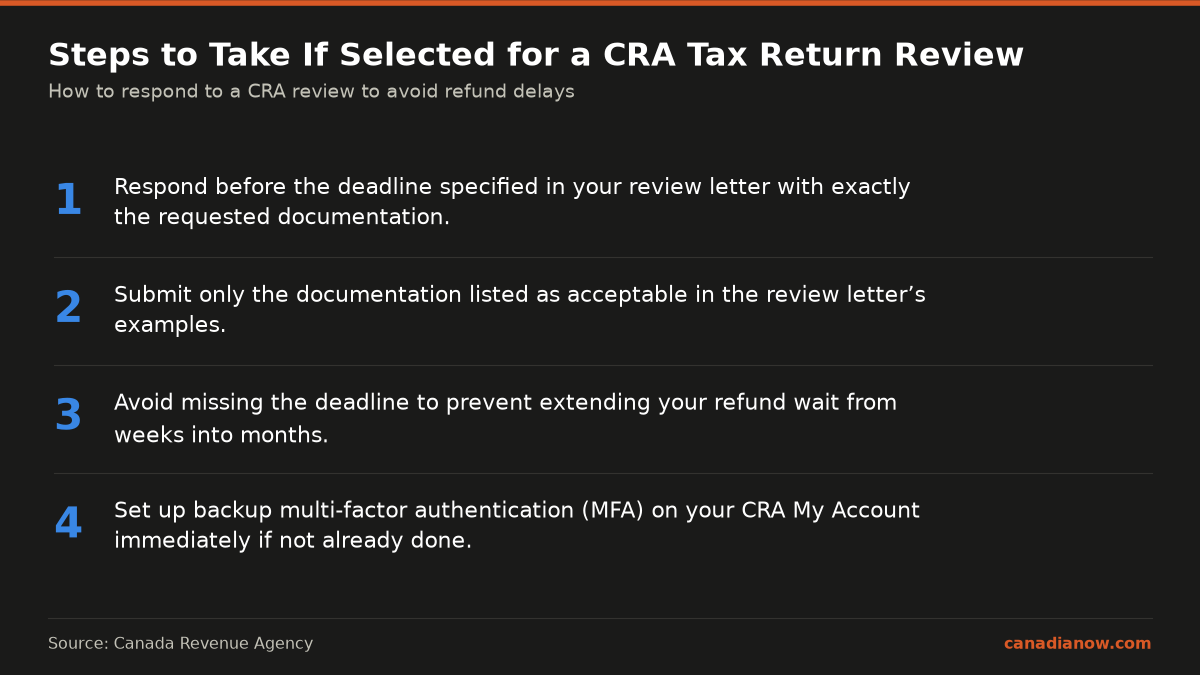
Respond before the deadline in your review letter with exactly the documentation requested — nothing more, nothing less. If you’re not sure what qualifies as acceptable supporting documentation for a specific claim, the CRA’s review letter typically lists examples. Missing the deadline can extend your wait from weeks into months, since your file simply sits until the CRA receives what it asked for.
If you haven’t set up backup MFA on your CRA My Account, do that now regardless of whether you’re mid-review — it’s required, and not having it set up can lock you out of your own account when you’re trying to check your refund status.
Source: Canada Revenue Agency.