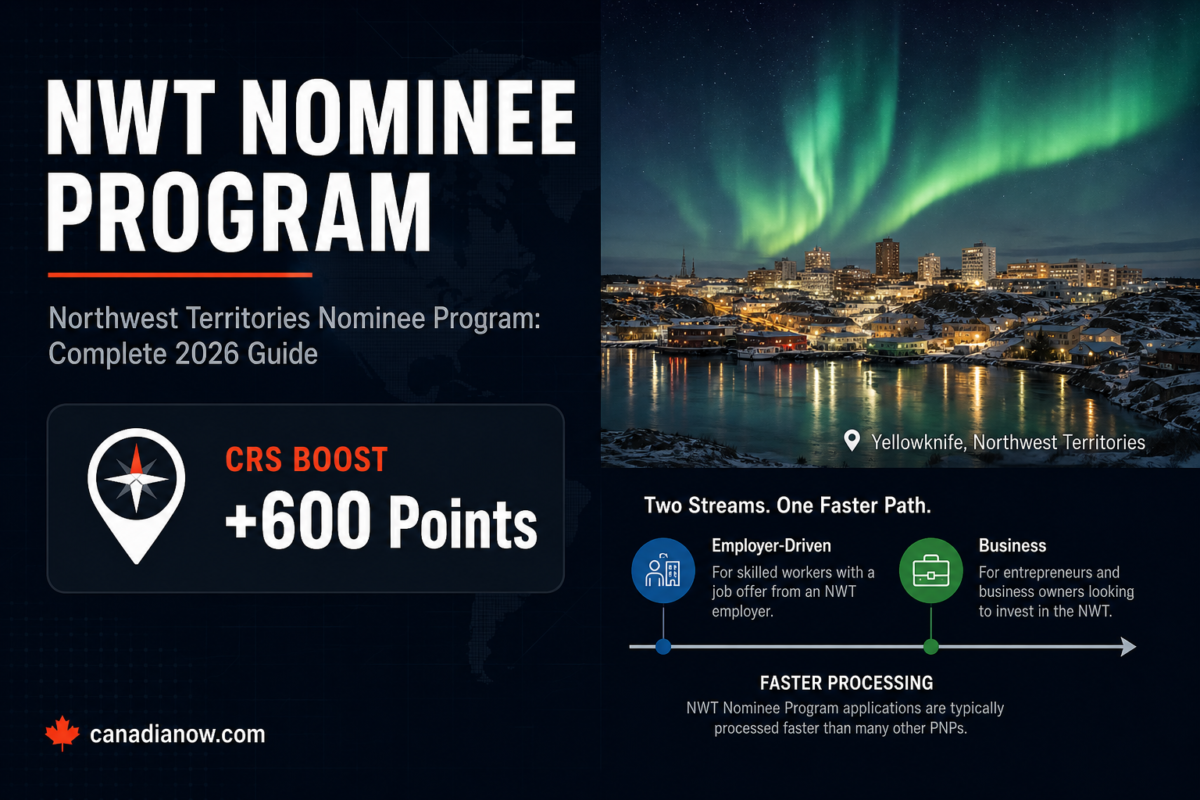
How the NTNP Is Structured
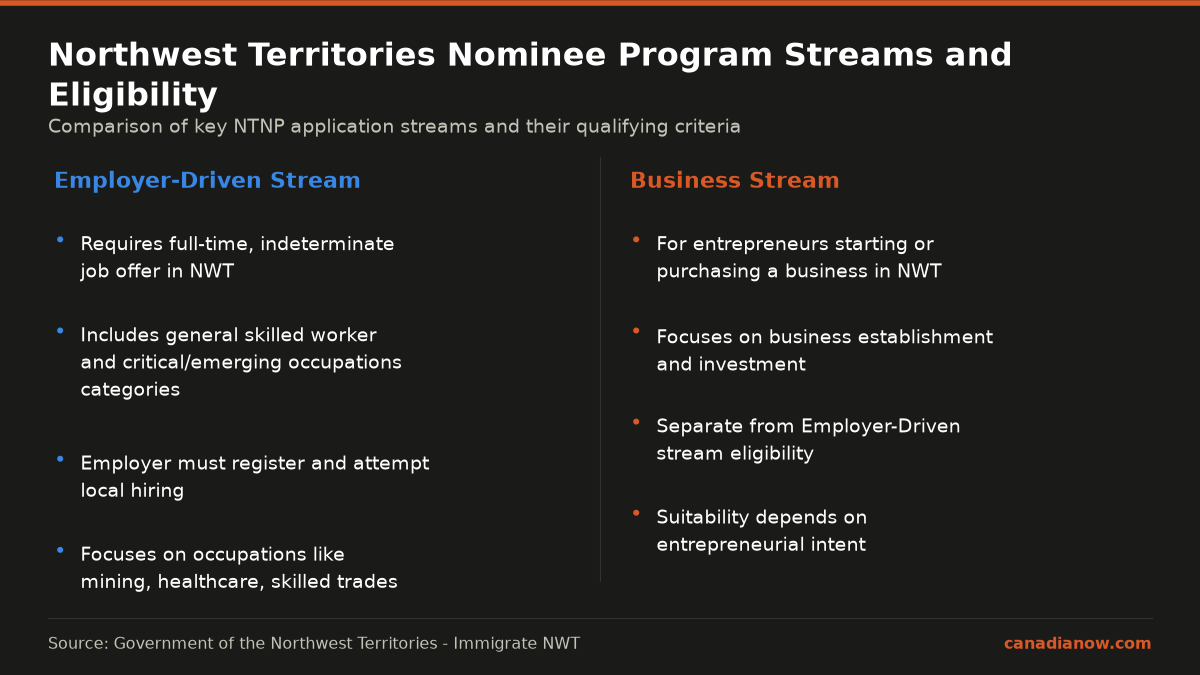
The Employer-Driven Stream in Practice
This is the route most applicants use. It requires a full-time, indeterminate (not seasonal or short-term) job offer from an employer physically operating in the Northwest Territories, along with meeting minimum work experience and education requirements tied to the specific occupation. Because the territory’s economy leans heavily on resource extraction, healthcare, skilled trades, and public sector roles relative to a diversified southern economy, the occupations that tend to see nominations reflect that — mining and related trades, healthcare professionals, and skilled trades workers show up disproportionately compared to office and professional services roles that dominate demand in bigger provinces. Employers need to register with the NTNP and demonstrate genuine effort to hire locally before supporting a nomination, similar in spirit to LMIA-style labour market testing, though the specific process is run through the territorial program rather than through ESDC.Why the Population Reality Matters for Your Decision
The Northwest Territories has a small population spread across a vast, sparsely connected territory, with Yellowknife as the clear population and economic center and most other communities significantly smaller and more remote. This isn’t a criticism of the territory — for the right person, it’s part of the appeal, with genuinely strong wages in in-demand occupations partly reflecting the cost and difficulty of attracting workers to a remote, cold-climate location. But it’s worth being honest with yourself before pursuing this pathway about whether you can realistically commit to living somewhere this different from a major Canadian city, since your nomination and eventual PR are tied to an actual intention to reside in the territory, not just to use it as a faster entry point before relocating elsewhere.Processing Speed: The Real Advantage
Because application volume is so much lower than the major provincial programs, NTNP nominations and the associated territorial processing steps often move faster than equivalent applications through BC PNP or OINP, where demand routinely outstrips available nomination spaces. This is one of the more legitimate reasons candidates consider the NTNP even without a pre-existing connection to the territory — for candidates in occupations the territory actually needs, it can be a genuinely quicker route to a nomination and the accompanying 600 CRS points than fighting for space in a much larger, more competitive program.What Happens After Nomination
An NTNP nomination doesn’t grant PR directly — it adds the 600-point CRS boost if you’re nominated through the Express Entry-aligned stream, functionally guaranteeing an invitation to apply in the next Express Entry round, or in some cases proceeds through a separate non-Express Entry application process depending on which stream nominated you. Confirming which track your specific nomination falls under matters for how you plan your next steps and timeline.Frequently Asked Questions
Do I need to already be working in the NWT to apply?
No, but you do need a genuine full-time, indeterminate job offer from an NWT employer before applying through the Employer-Driven stream. The offer needs to be real and current, not speculative.
Is the NTNP a good option if my occupation isn’t resource-sector related?
It depends on current territorial demand. Healthcare and public-sector roles also see nominations regularly, so it’s worth checking the current critical and emerging occupations list rather than assuming only mining and trades qualify.
How does NTNP compare in speed to Ontario or BC’s PNP?
Lower application volume in the NWT generally means faster nomination processing once you have a qualifying offer, though exact timelines shift with program capacity u2014 check the territory’s current published estimates.