What DLI Actually Means and Why It’s Non-Negotiable
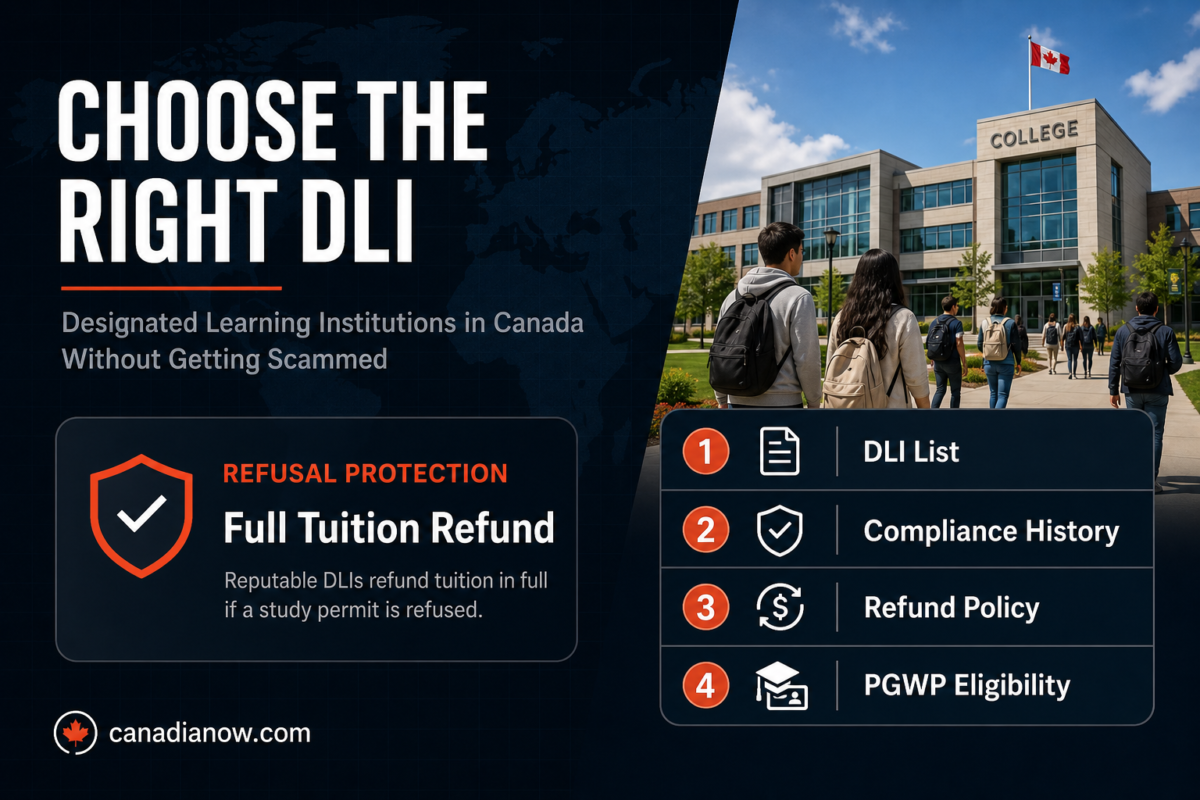
A Designated Learning Institution is a school approved by a provincial or territorial government to host international students, and it’s the only kind of institution IRCC will issue a study permit for. Every DLI has a unique DLI number, and it needs to appear correctly on your study permit application and acceptance letter. This isn’t a formality — enrolling at a school without valid DLI designation, or one that loses its designation while you’re studying there, can directly affect your immigration status and your future PGWP eligibility, since only study at a DLI counts toward it.The Distinction That Actually Matters: PGWP-Eligible DLIs
Here’s where it gets more specific than most students realize: being a DLI at all doesn’t automatically mean graduating makes you eligible for a PGWP. IRCC maintains a further requirement around institution type and program length, and it has tightened the list of PGWP-eligible institutions and programs in recent years, particularly affecting certain private career colleges and shorter programs that used to route through a public college’s curriculum licensing arrangement. If PGWP eligibility is part of your reason for choosing Canada — and for most international students it is, since it’s the primary bridge to Canadian work experience and eventually PR — verifying that your specific program at your specific institution currently qualifies is essential before you enroll, not after you’ve already paid a deposit.How to Actually Verify a School Before You Pay Anything
Recruiter Red Flags Worth Knowing
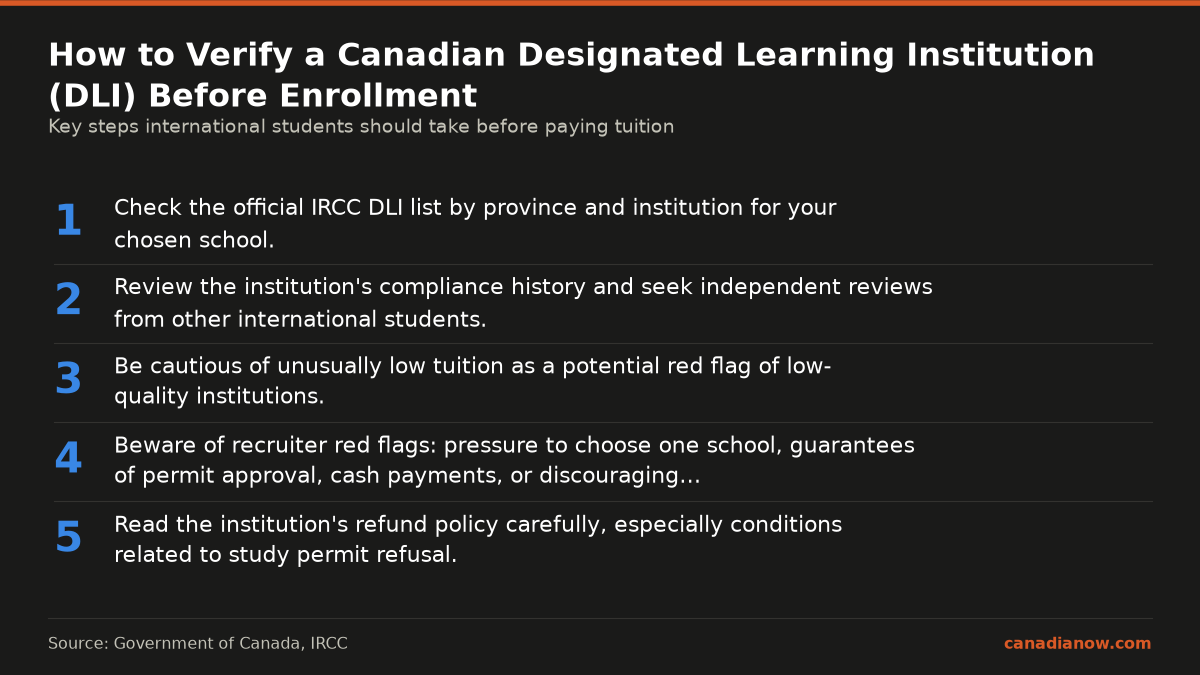
A significant share of study permit fraud and disappointment traces back to education agents and recruiters, not the schools themselves. Warning signs include a recruiter who pressures you toward one specific school regardless of your stated goals, guarantees a study permit approval (nobody can legitimately guarantee this — approval is IRCC’s decision, not the recruiter’s), asks for payment in cash or to a personal account rather than the institution directly, or discourages you from independently verifying the school’s DLI status and reputation. Legitimate recruiters are transparent about their commission structure and don’t discourage independent research — if anything, a school confident in its own standing welcomes you checking it against IRCC’s list yourself.The Financial Angle: Refund Policies Matter More Than People Assume
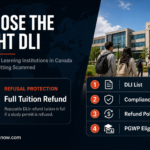
Before committing tuition, read the institution’s refund policy carefully, specifically what happens if your study permit is refused. Reputable DLIs generally offer a substantial or full refund in that scenario, since a refusal isn’t the student’s fault. A school that keeps most or all of your tuition regardless of permit outcome is a meaningful red flag about how the institution treats international students generally, not just about that one policy.Frequently Asked Questions
Is every private career college a bad choice?
No, but private institutions vary more widely in quality and PGWP eligibility than public colleges and universities, which makes independent verification more important, not a reason to rule them out automatically.
Can a school lose its DLI status while I’m already enrolled?
It’s uncommon but possible. If it happens, IRCC generally provides guidance for affected students, though it can still disrupt your studies and status u2014 another reason to choose an institution with a stable, established track record.
Where can I check if a program is currently PGWP-eligible?
IRCC publishes program and institution eligibility criteria directly, and it’s worth confirming against the current published rules rather than relying on what the school’s admissions team tells you, since criteria have changed in recent years.