What RCIP Replaced and Why
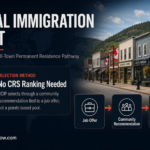
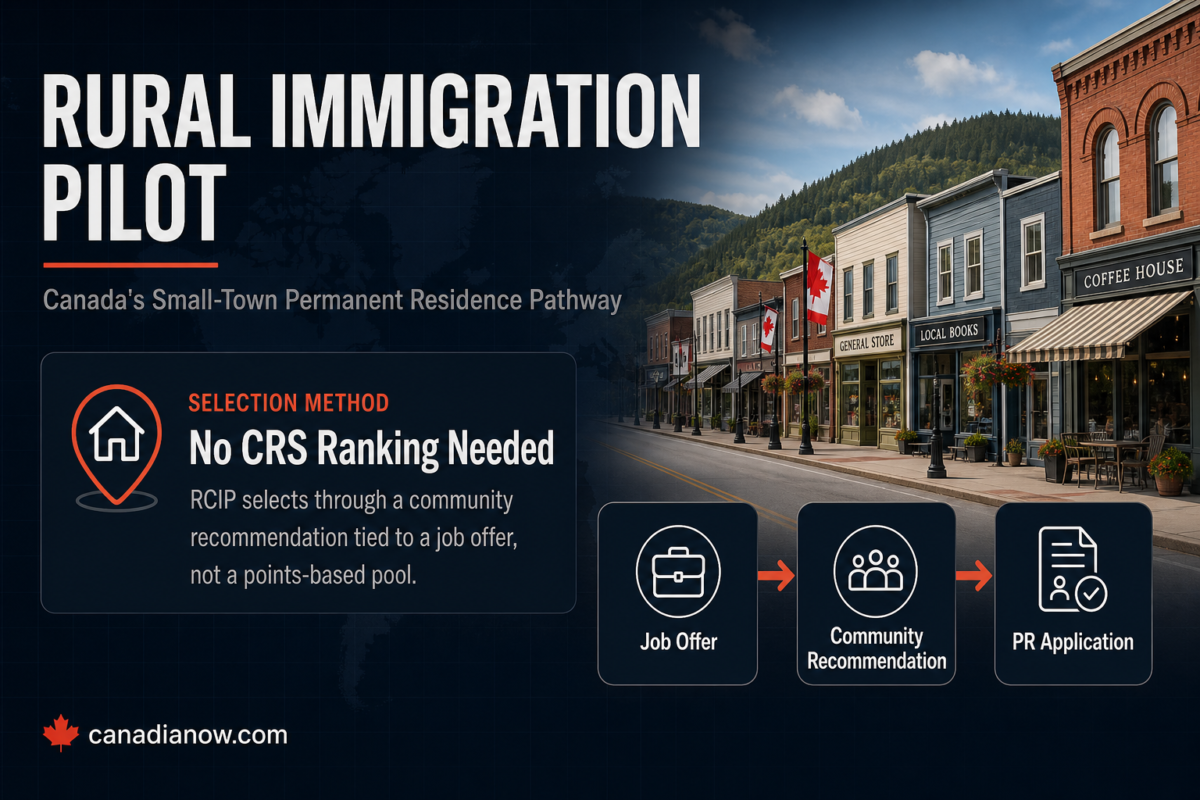
RCIP is the successor to the earlier Rural and Northern Immigration Pilot, redesigned as a more permanent federal-community partnership rather than a time-limited pilot. The structure is community-driven: participating communities apply to be part of the program, identify local employers with genuine hiring needs, and recommend candidates for permanent residence based on those specific job opportunities. It’s a fundamentally different mechanism than Express Entry’s points-based pool — you’re not competing on CRS score, you’re being recommended by a community that has decided it wants you.How the Process Actually Works
It starts with a genuine job offer from an employer in one of the designated communities, in an occupation the community has identified as a local need. From there, the candidate applies for a community recommendation, which involves demonstrating an intention to actually live in that community — not just work there on paper while living somewhere else — along with meeting minimum work experience, education, and language requirements set for the pilot. Once recommended by the community, the candidate applies to IRCC for permanent residence using that recommendation as the basis for the application. This sequencing matters: you need the job offer and community recommendation before you can apply for PR under this pathway, which is different from Express Entry, where you build a profile first and the job offer, if you have one, is just one input into your score.Which Communities Are Participating
Participating communities span multiple provinces, generally smaller cities and towns that have made a deliberate case for why they need immigration to support local economic growth — places facing aging populations, employer labour shortages, or a need for population growth to sustain local services. The specific list of participating communities and their designated occupations changes as the program evolves, so checking IRCC’s current list directly is essential before assuming a particular town is or isn’t part of the pilot at any given time.Why the Tradeoff Is Often Worth It
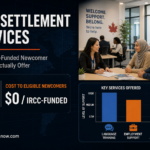
The obvious hesitation is settling somewhere smaller and less familiar than a major city, and that’s a real consideration worth thinking through honestly rather than dismissing. But the practical upside is significant: less competition for the pathway itself compared to the Express Entry pool, often lower cost of living and housing than major metros, and communities that have specifically opted into welcoming newcomers tend to have more accessible settlement support and a genuinely more personal onboarding experience than arriving cold in a city of several million people. For candidates whose occupation or education doesn’t score well under standard CRS criteria, RCIP can be a faster route to the same outcome — permanent residence — even if the town itself wasn’t the original plan.What to Verify Before Committing
Since your PR eligibility is tied to actually intending to reside in the community, it’s worth being realistic with yourself about whether you can commit to living there, at least initially — this isn’t a program designed for landing PR and immediately relocating elsewhere. It’s also worth researching the specific employer and role as carefully as you would any job offer tied to immigration, since the same LMIA-adjacent scam patterns that show up elsewhere can appear here too, particularly around fees charged for “guaranteed” community recommendations.Frequently Asked Questions
Do I need to already be in Canada to apply through RCIP?
No, candidates outside Canada can apply, provided they have a qualifying job offer from a designated employer in a participating community and meet the pilot’s work experience, education, and language requirements.
Is RCIP faster than Express Entry?
It can be, particularly for candidates whose CRS score isn’t competitive in general draws, since RCIP doesn’t rely on points-based ranking against the entire pool u2014 it’s based on a community recommendation tied to a specific job offer.
Can I move to a different city after getting PR through RCIP?
Once you have permanent residence, you generally have the same mobility rights as any other PR. But applying with a genuine intention to leave immediately can raise concerns about the application’s good faith, so this should be a real commitment, not a technicality.