This question comes up constantly from people weighing a longer stay in Canada without going through the work permit process — can you just keep doing your existing remote job for a foreign employer while living here as a visitor? The honest answer is more permissive than most people expect, but it comes with tax and status complications that get glossed over in the online chatter that treats this as a simple yes.
IRCC’s Actual Position
Under Canadian immigration law, “work” is defined specifically as an activity that would normally be performed by a Canadian citizen or permanent resident in the Canadian labour market, for which you’re compensated, or that competes directly with Canadians for employment. IRCC has clarified that remote work performed for a foreign employer, where your income doesn’t come from a Canadian source and you’re not entering the Canadian labour market at all, generally doesn’t meet that definition of “work” requiring a permit. In plain terms: if your employer, your paycheck, and your client base are all outside Canada, and you happen to be physically doing that job from inside Canada, you’re not taking a job away from a Canadian or a permanent resident, which is the entire policy rationale behind requiring work permits in the first place.
This means someone visiting Canada on a visitor visa or eTA can, in most cases, continue working remotely for their existing foreign employer without needing a separate work authorization — but this only covers genuinely remote work for a genuinely foreign entity. The moment you start providing services to a Canadian client, get paid by a Canadian company, or take on local work alongside your remote job, you’ve crossed into activity that does require authorization.
Where This Gets Complicated: Tax Residency
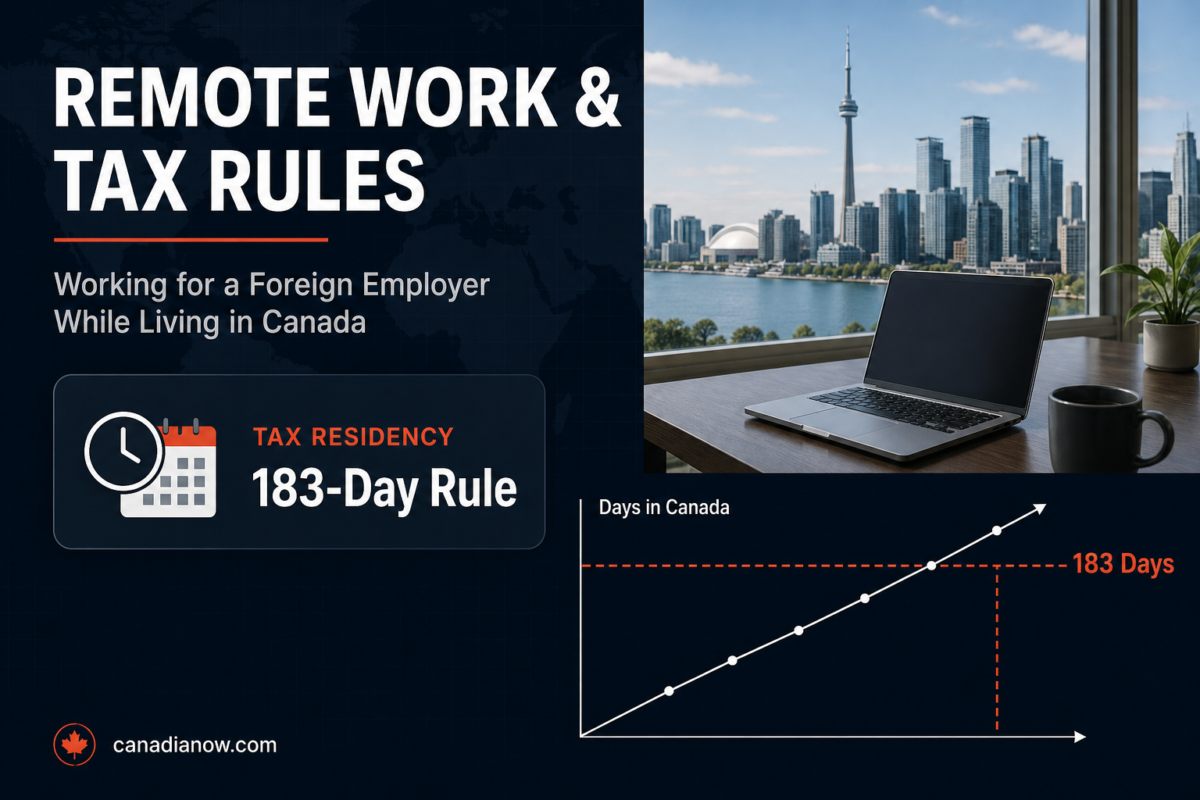
Immigration status and tax residency are governed by completely different rules, and this is where a lot of people run into an unexpected problem. Spending extended time in Canada, even as a visitor with no local income, can trigger Canadian tax residency depending on the length of stay and the strength of your ties here — and Canada assesses tax residency based on facts and circumstances, not just a fixed day count, though the 183-day rule is a commonly cited threshold that increases scrutiny significantly once crossed. If you become a Canadian tax resident, you’re generally required to report and potentially pay tax on your worldwide income in Canada, even though it’s coming from a foreign employer, which can create a real double-taxation risk depending on whether Canada has a tax treaty with your home country and how that treaty allocates taxing rights.
This isn’t a hypothetical edge case — it’s the single most common thing people in this situation get wrong, assuming that because their employer and income are foreign, none of it is Canada’s business tax-wise. It absolutely can be, once residency ties are established.
What This Doesn’t Give You
Working remotely as a visitor doesn’t build toward permanent residence the way Canadian work experience under a valid work permit does — it’s not counted for Canadian Experience Class or most other programs that require authorized Canadian work history, because the income and employer relationship exist entirely outside the Canadian system despite you being physically present. It also doesn’t extend your visitor status on its own; you still need to maintain legal visitor status through the normal rules, whether that’s an initial entry period, an extension application, or periodic border crossings depending on your situation, and it doesn’t provide access to provincial health coverage, which is generally tied to residency status, not physical presence alone.
Documenting Your Situation If You’re Questioned
Since this arrangement can look unusual to a border services officer who isn’t used to seeing it, it’s worth being able to clearly explain and, if needed, document your employment relationship — an employment letter confirming the foreign employer and remote arrangement, proof the income is paid into a foreign account, and a clear explanation of your intended length of stay all help demonstrate you’re not working in the Canadian labour market. Being vague or evasive about your situation at the border tends to create more suspicion than the arrangement itself warrants.
Frequently Asked Questions
Related Guides
Sources