Visitor status in Canada has a hard expiry date, and unlike some countries where overstaying by a few days is a minor administrative issue, letting it lapse in Canada creates real problems for future applications — including, eventually, permanent residency. If your circumstances have changed and you need more time, the process to extend is manageable, but the timing window is tighter than most people assume.
Who This Applies To
This covers people already inside Canada as a visitor — whether you entered visa-free, on a Temporary Resident Visa, or through an eTA — who now want to stay longer than their original authorized period allows. It does not cover switching to a study or work permit from visitor status, which is a related but separate application with its own requirements; this is specifically about extending your visitor status as a visitor.
The 30-Day Rule
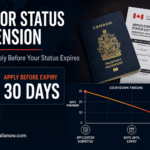
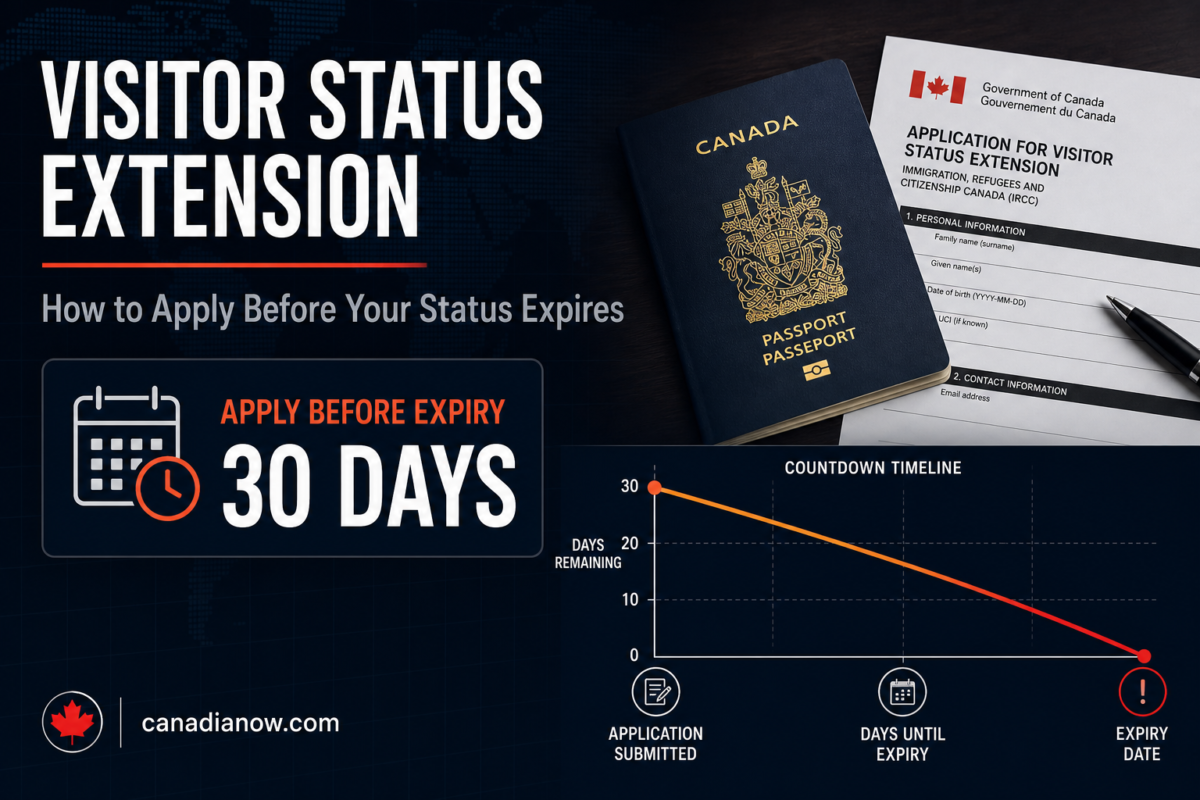
Apply at least 30 days before your current authorized stay expires. This isn’t a hard legal cutoff — you can technically apply closer to the deadline — but applying with 30 days or more of buffer is what gives you the practical benefit of implied status: if you apply before your status expires, you’re generally allowed to remain in Canada under your existing conditions while IRCC processes the extension, even if that processing runs past your original expiry date. Apply too close to the deadline and you risk your application still being in queue when your original authorization lapses, without the same implied-status protection.
How to Apply
The application — Application to Change Conditions, Extend My Stay or Remain in Canada as a Visitor (form IMM 5708) — is submitted online through your IRCC secure account, from inside Canada. It cannot be filed from outside the country or requested at a port of entry; if you’ve already left Canada, this specific process doesn’t apply to you. You’ll need to demonstrate the same things you did on your original entry: sufficient funds to support your extended stay, a clear reason for staying longer, and ties to your home country that support your intent to eventually leave. The government processing fee is $100 CAD, paid online as part of the application.
What Happens If You Miss the Window
| Situation | What You Can Do |
|---|---|
| Applied before status expired | Generally protected by implied status while your extension is processed |
| Status already expired, within 90 days | Can apply for restoration of status, plus the extension itself; restoration fee applies on top of the extension fee |
| More than 90 days past expiry | Restoration is no longer available; you are out of status with limited options, and this can affect future applications |
The restoration route (if you’re within the 90-day window) costs a separate $246.25 restoration fee in addition to the $100 extension fee, so letting status lapse even briefly is meaningfully more expensive than applying on time — beyond the added stress and processing risk of being out of status while waiting.
Why This Matters Beyond the Immediate Extension
An unexplained gap in legal status, or a past instance of overstaying, is something IRCC officers can and do look at in future applications — a work permit, a study permit, or eventually a permanent residence application. It doesn’t automatically disqualify you, but it’s a flag that can slow down or complicate later processing, and it’s entirely avoidable by tracking your expiry date and applying with real buffer, not right at the deadline.
If You’re Actually Trying to Switch Status, Not Just Extend It
If your real goal is converting from visitor to worker or student rather than simply staying longer as a visitor, that’s a different application built around a job offer or study permit eligibility rather than the visitor extension form — applying for the wrong one wastes both time and the fee. Talk to a licensed immigration consultant or lawyer if you’re unsure which category actually fits your situation, especially if your circumstances changed after you already entered as a visitor.