Provincial Nominee Programs are, for a lot of applicants, a faster route to Canadian permanent residence than the federal Express Entry pool on its own — but “faster” only holds if you apply to the right stream for your actual profile, and each province runs its own eligibility criteria, occupation lists, and draw schedule. This page organizes everything on the site by province so you can go straight to the program that actually applies to you.
How PNPs Work, and How They Connect to Express Entry
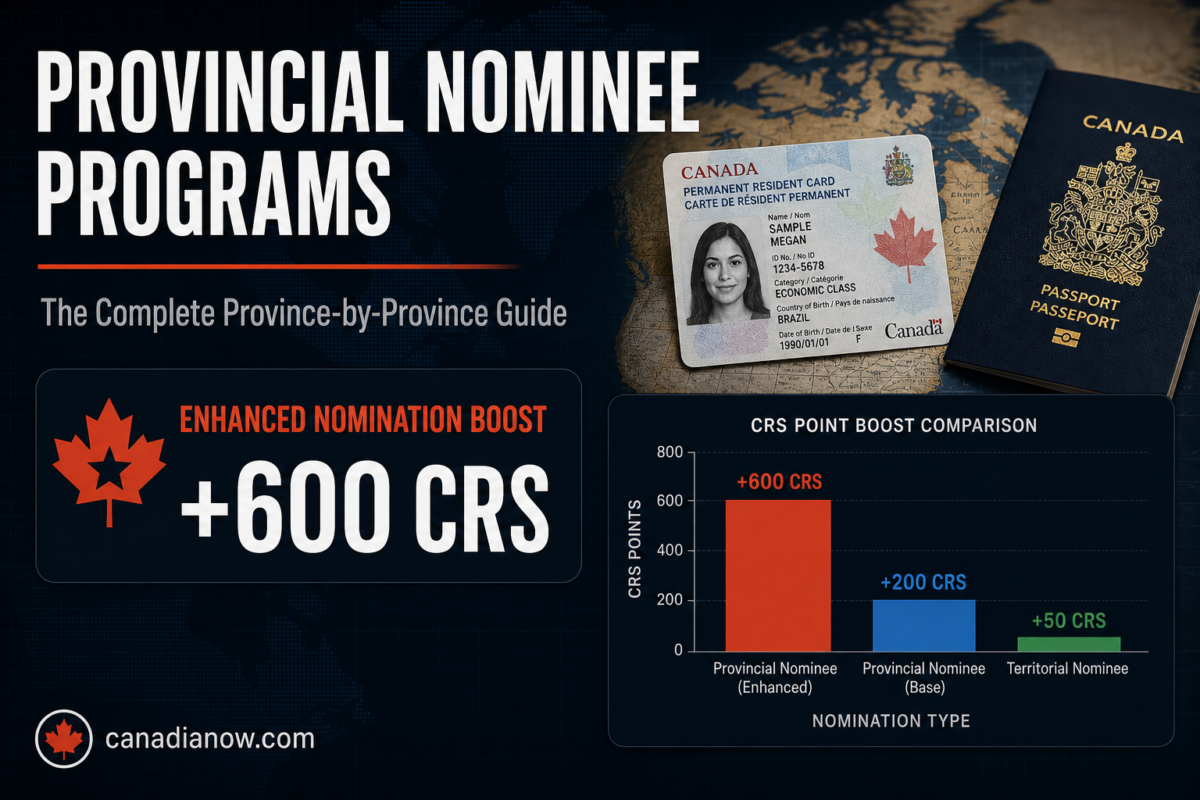
Every PNP works one of two ways: as an “enhanced” nomination that adds 600 CRS points and effectively guarantees an Express Entry invitation, or as a “base” nomination processed entirely outside Express Entry with its own application and processing timeline. Provinces set their own occupation priorities, so a background that scores poorly for one province’s stream can be exactly what another province is actively recruiting for in a given draw cycle.
British Columbia (BC PNP)
BC selects candidates through BC Skills Immigration and its Express Entry BC option, mainly by invitation. The Entry Level and Semi-Skilled (ELSS) stream closed in April 2026, and the home care worker pilots were paused, which leaves few options for TEER 4 and 5 workers in BC.
Ontario (OINP)
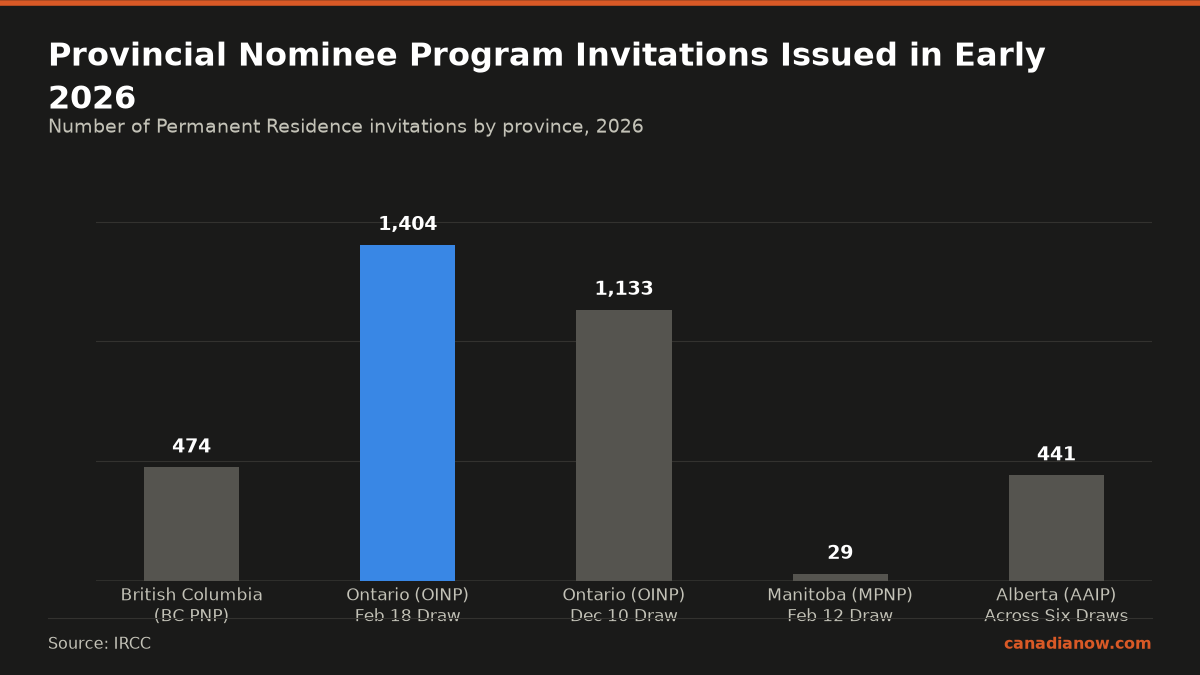
On June 26, 2026, Ontario replaced its previous streams with the Ontario Workforce Priority stream. The expression-of-interest portal opened on August 4, 2026 and uses a 130-point scoring system. We track invitations in the OINP draws tracker.
Alberta (AAIP)
Alberta’s main worker streams are the Alberta Opportunity Stream for people already working in Alberta and the Alberta Express Entry stream. Both use expressions of interest and periodic draws.
Manitoba (MPNP)
Manitoba selects skilled workers already in Manitoba, skilled workers overseas with a strong Manitoba connection, and graduates of Manitoba institutions through expressions of interest and regular draws. Check the MPNP website for current draw criteria, as they target specific occupations and regions.
Saskatchewan (SINP)
Quebec
Quebec runs its own separate immigration system rather than a standard PNP, with its own selection criteria administered independently of federal Express Entry.
Atlantic Canada (AIP, PEI, Nova Scotia, Newfoundland & Labrador)
The four Atlantic provinces share the employer-driven Atlantic Immigration Program and also run their own PNPs. New AIP instructions from July 23, 2026 set a 90-day deadline for some candidates to submit an updated endorsement — see changing employers under the AIP.
Rural and Community Pathways
If Your Situation Changes After Nomination
- Lost your job or changed employers? Rules differ by province — see lost your job after a PNP nomination.
- Want to move to another province? Your intention to live in the nominating province matters until you land — see moving province after a nomination.
- In a TEER 4 or 5 job? Few PNP streams are open to you — see PR pathways for TEER 4 and 5 workers.
- Ontario: the OINP replaced its streams with the Ontario Workforce Priority stream in 2026 — follow invitations in our OINP draws tracker.
- Quebec: the PEQ reopened on July 2, 2026 alongside the PSTQ — see PSTQ and PEQ for temporary workers.