The Canada Workers Benefit is a refundable tax credit for low-income workers, and most of it arrives when you file your return. But you can also receive up to half of it in advance during the year, paid quarterly — and that advance payment is the part with dates attached.
ACWB Advance Payment Dates 2027
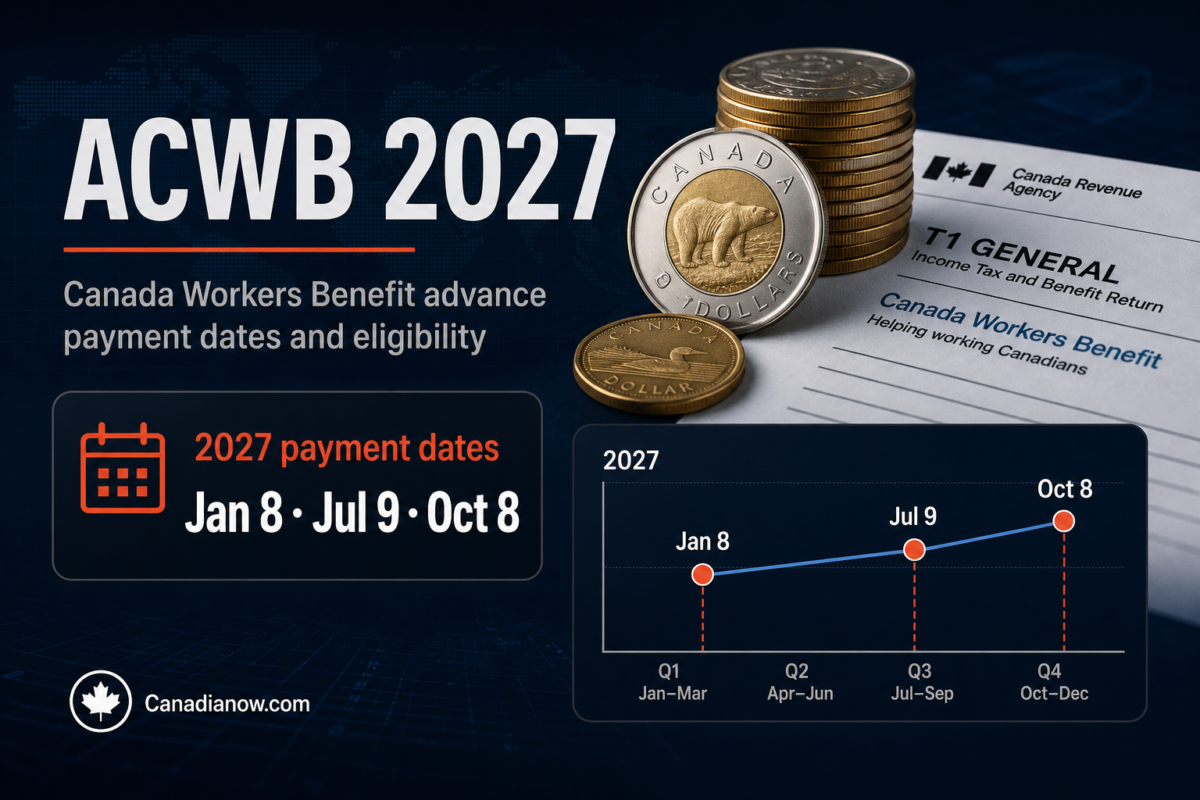
Advanced Canada Workers Benefit payments are issued three times a year:
- January 8 — Friday
- July 9 — Friday
- October 8 — Friday
All three shift earlier in 2027 because the standard date falls on a weekend. As with every CRA payment, the date moves to the preceding business day rather than being delayed.
The remainder of your entitlement is settled when your tax return is assessed, which is why the amount you receive at filing time is smaller if you took advance payments during the year.
You No Longer Have to Apply for Advance Payments
This changed and many people have not caught up. Advance payments used to require a separate application form. Now, if you were entitled to the CWB on your previous year’s return, the CRA issues advance payments automatically — no form, no request.
The practical consequence is that some people receive money they were not expecting and assume it is an error. It is not. It is your own credit, paid earlier.
Who Qualifies
The CWB is aimed at people who are working but earning modest amounts. In broad terms you need to:
- Have working income above a minimum threshold
- Have net income below the phase-out threshold, which differs for single people and families
- Be a resident of Canada for the full year
- Be 19 or older on December 31, or living with a spouse, partner, or child
Full-time students enrolled for more than a set number of months are generally excluded unless they have an eligible dependant. There is also a disability supplement for those approved for the Disability Tax Credit.
Why Amounts Differ Between Provinces
Quebec, Alberta and Nunavut have negotiated variations to the standard CWB design. If you compare your payment against a figure quoted by someone in another province, the difference may be structural rather than an error.
The Filing Requirement Applies Here Too
Like every CRA benefit, the CWB is calculated from your filed return. No return means no credit — and unlike some benefits, this one is specifically aimed at people who worked, which makes the missed-filing case especially costly.
If you worked a low-income year and did not file, you can generally still file late and receive the credit retroactively.