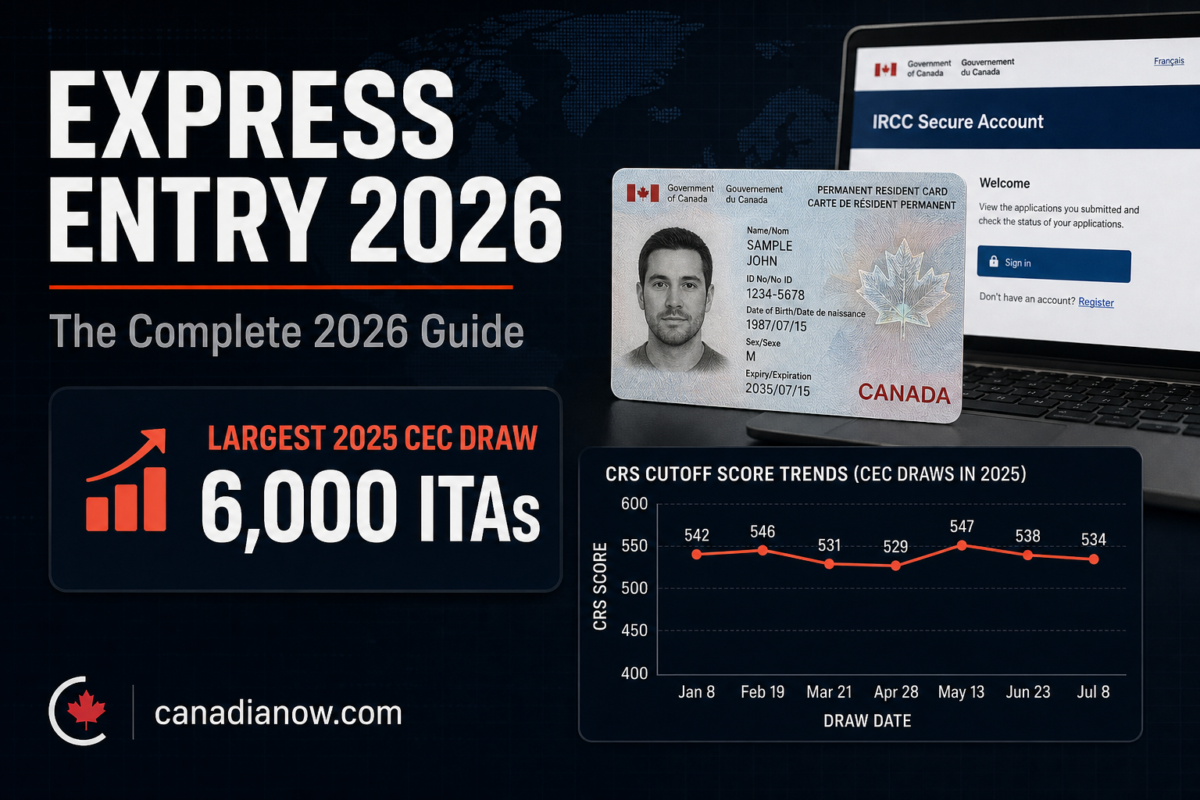
Express Entry is the system that decides most economic immigration to Canada, and it’s changed enough in 2026 — merged categories, a new one-year work experience minimum, category-based draws targeting specific occupations — that guides written even a year ago are already out of date on the mechanics. This page pulls together everything on the site about how the system works now, organized so you can jump straight to the part you actually need instead of digging through 35 separate articles.
How Express Entry Works, in Practice
Express Entry isn’t a program itself — it’s the online system that manages three federal economic immigration programs (Federal Skilled Worker, Canadian Experience Class, and Federal Skilled Trades) plus the Provincial Nominee Program stream that runs through it. You create a profile, get ranked by the Comprehensive Ranking System (CRS), and IRCC periodically invites the highest-ranked profiles to apply for permanent residence through “draws.” As of 2026, IRCC also runs category-based draws that invite specific groups — healthcare workers, French speakers, trades, and others — ahead of general draws, which is why your CRS score alone doesn’t fully determine your odds anymore; which categories you qualify for matters just as much.
How to Apply for Express Entry: Step by Step
- Check that you qualify for a program. Express Entry manages the Federal Skilled Worker, Canadian Experience Class and Federal Skilled Trades programs. You must meet at least one program’s minimum requirements. (A proposal to merge them into one class was under consultation in 2026 and is not yet law — see the Express Entry merge proposal.)
- Get your documents first: a valid passport, approved language test results (valid for 2 years), an Educational Credential Assessment for education from outside Canada, and proof of funds if you are not applying under the CEC and have no valid job offer.
- Create your profile in your IRCC account. You have 60 days to finish and submit it once you start. Enter information exactly as it appears in your documents — misrepresentation can lead to a 5-year ban.
- Enter the pool and get your CRS score. Your profile stays in the pool for up to 12 months; if you are not invited, create a new one. Estimate your score with our CRS calculator.
- Improve your score while you wait — language retests, more skilled work, French, or a provincial nomination.
- Watch the draws. IRCC holds general, program-specific (for example CEC or PNP-only) and category-based rounds.
- Receive an Invitation to Apply (ITA). You then have 60 days to submit a complete PR application with documents and fees. Keep your job and circumstances stable, or update IRCC if they change (lost your job after an ITA?).
- After you apply, you receive an Acknowledgement of Receipt, then requests for biometrics and medicals. If you are in Canada and your permit is expiring, look at a bridging open work permit.
Applying without an ITA isn’t possible, and being in the pool doesn’t guarantee an invitation.
Your CRS Score
Building Your Profile: Eligibility and Documents
Most of the delays and refusals in Express Entry trace back to documentation, not eligibility itself — get these right before you submit.
Category-Based Draws: What They Are and Who Qualifies
Category-based draws are IRCC’s way of pulling specific occupations and language groups ahead of the general pool, and the categories themselves have shifted as the government’s priorities changed through 2026.
After You’re Invited: Processing and PR
Draw History and Trends
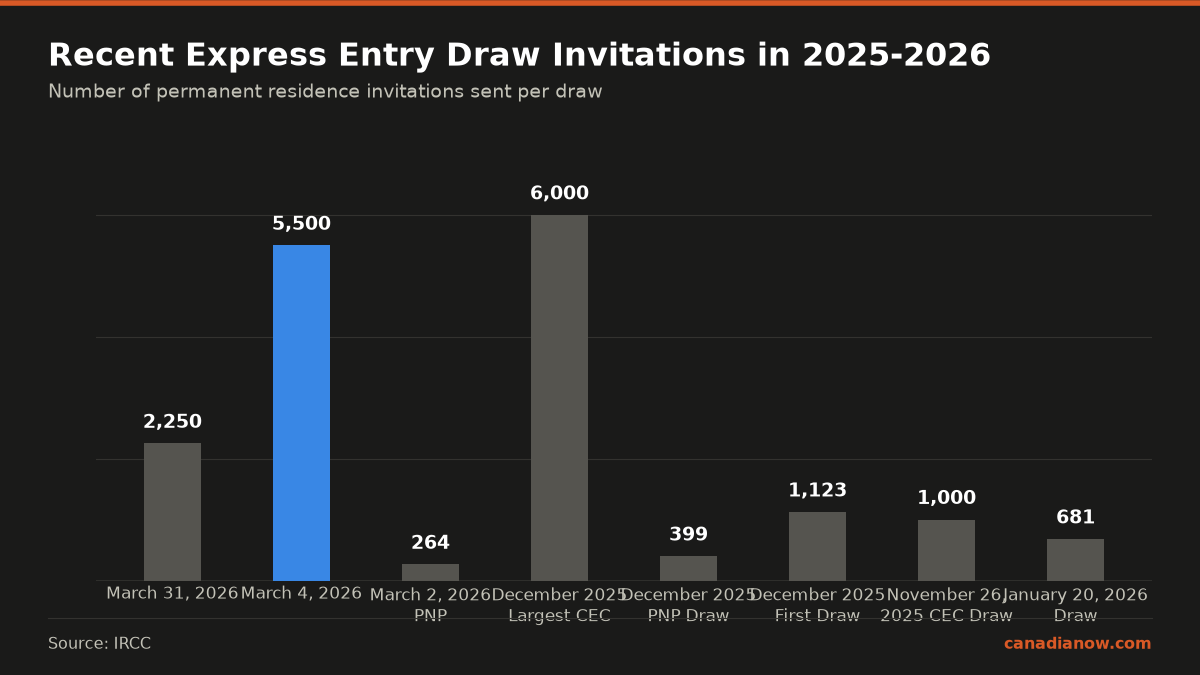
IRCC runs draws roughly every two weeks, and the CRS cutoff, invitation count, and targeted category shift from draw to draw. Rather than trying to track every individual draw here, we publish a recap after each month’s draws — these give you the actual pattern of what’s happening, which matters more for planning than any single draw’s number.