Quick Answer
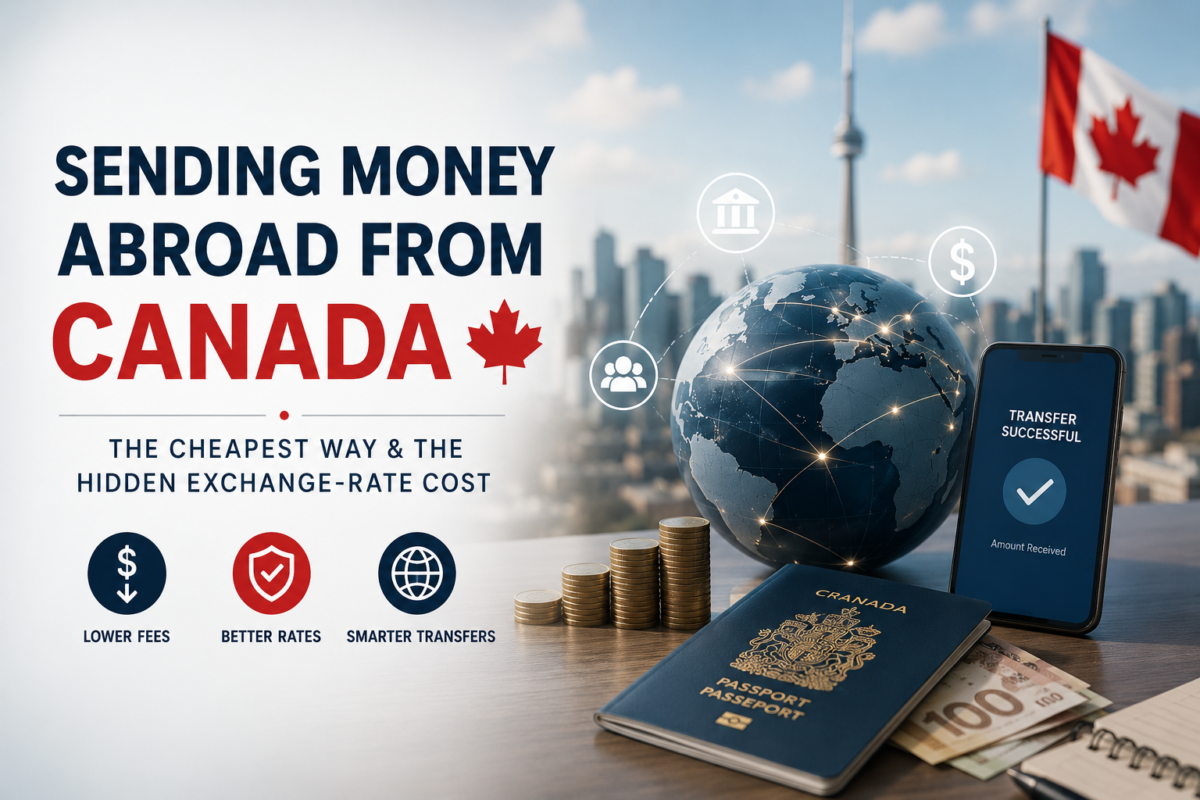
Sending money abroad from Canada is most expensive when you use a traditional bank wire (often $30–$50 in fees plus a poor exchange rate). Specialist services like Wise, Remitly, and others usually cost far less and show the real mid-market rate. The hidden cost is almost never the upfront fee — it’s the exchange rate markup, which can quietly cost more than the visible fee. Always compare the total amount that lands, not the advertised fee.
The Two Costs of Sending Money
| Cost | What it is | How visible |
|---|---|---|
| Transfer fee | Flat or percentage fee charged upfront | Visible |
| Exchange-rate markup | The gap between the real (mid-market) rate and the rate you’re given | Hidden — this is where banks make money |
A “$0 fee” transfer can be more expensive than a $5-fee transfer if the exchange rate is marked up 2–4%. Always compare the final amount the recipient receives.
This article is general information, not financial advice. Exchange rates and fees change constantly, and we don’t have an affiliate relationship with any provider mentioned. Always compare live quotes from multiple services for your specific corridor and amount before sending, and verify any provider is registered with FINTRAC.
Your Realistic Options
| Method | Typical total cost | Best for |
|---|---|---|
| Bank wire transfer | Highest ($30–$50 + rate markup) | Large, formal transfers where the recipient needs a bank wire |
| Wise | Low; transparent mid-market rate + small fee | Most personal transfers; transparency |
| Remitly / WorldRemit | Low–moderate; promo rates for first transfers | Remittances to specific countries; cash pickup options |
| Western Union / MoneyGram | Moderate–high | Cash pickup where recipient has no bank account |
| Bank-to-bank within networks | Varies | Some banks have low-cost corridors to specific countries |
How to Actually Compare (The Right Way)
- Decide the exact amount and destination country/currency
- Check the real mid-market rate (search “[CAD] to [currency]” on a search engine or xe.com) — this is your benchmark
- Get a quote from 2–3 services for that exact amount
- Compare the amount the recipient receives, not the fee
- Factor in speed and whether the recipient needs cash pickup or bank deposit
The Tax Angle Newcomers Forget
Money you send abroad is generally not taxed (it’s your already-taxed income). But two situations matter:
- Receiving money from abroad: gifts are generally not taxable in Canada, but large or regular incoming transfers can prompt questions. Keep documentation of the source (gift, inheritance, sale of property).
- Foreign income and assets: if you’re a Canadian tax resident, you must report worldwide income, and foreign property over $100,000 CAD requires Form T1135. Sending money to maintain foreign assets doesn’t remove this obligation.
Large Transfer Reporting
Transfers of $10,000 CAD or more are automatically reported to FINTRAC (Canada’s financial intelligence agency) by the institution. This is routine and not a problem for legitimate transfers — but it means you should be able to document the source of large sums. Structuring transfers to avoid the threshold is itself illegal.
Tips to Save Money
- Never use a bank wire for small personal transfers — the markup eats your money
- Compare the landed amount, not the fee
- Use first-transfer promo rates, but check the rate on your second transfer (promos end)
- Send larger amounts less often to reduce per-transfer fees, if your situation allows
- Avoid sending on weekends — rates can be worse when markets are closed
- Confirm the provider is FINTRAC-registered for your protection
Receiving Money in Canada
If family abroad sends you money:
- Provide them your full name, bank, account number, transit and institution numbers (or use a service that just needs your email)
- Keep proof of the source for amounts that could prompt CRA or bank questions
- Genuine gifts are not taxable income — but be ready to show they are gifts
FAQ
What’s the cheapest way to send money from Canada?
For most personal transfers, a transparent specialist service that uses the mid-market rate beats a bank wire. The “cheapest” depends on your corridor and amount — always compare the landed amount.
Is there a limit on how much I can send?
No legal limit, but transfers of $10,000+ are reported to FINTRAC, and you should document the source of large sums.
Do I pay tax on money I send to my family abroad?
Generally no — it’s your already-taxed income. The tax issues arise with foreign income you earn and foreign assets you hold, not money you send.
Canadianow is an independent publisher, not a financial advisor. Compare live quotes before sending. Last reviewed: June 2026.
Sources
- FINTRAC — money services business reporting requirements
- CRA — foreign income and Form T1135
- Financial Consumer Agency of Canada — sending money abroad
Written by Caglar Aybas. Last reviewed: June 2026.
You can find the current official information on the CRA.
If you'd rather have this mapped out for your exact situation instead of piecing it together yourself, our personalized report covers eligibility, CRS score, and next steps.