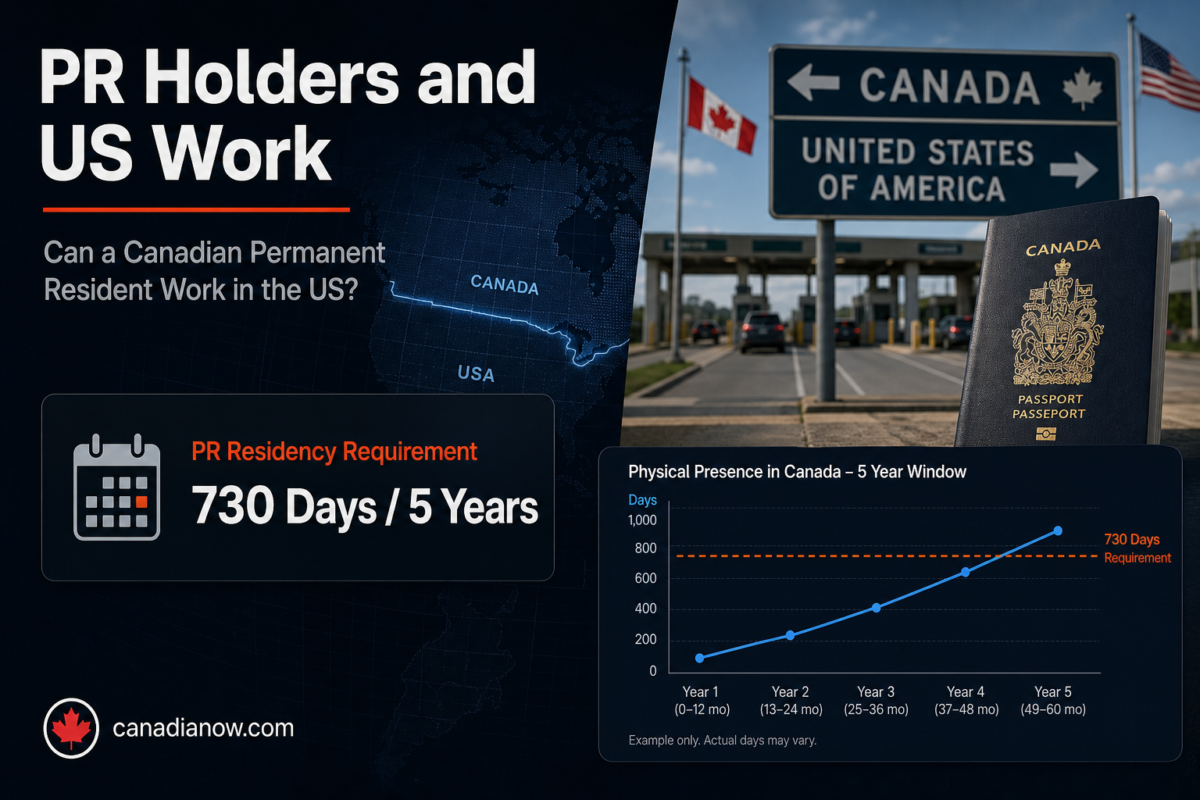
Canadian permanent residence and the ability to work in the United States are two completely separate legal systems, and confusing them is one of the more consequential mistakes a newcomer can make. Holding Canadian PR tells you nothing about your US work eligibility — that’s determined entirely by US immigration law, which treats a Canadian permanent resident the same as any other non-US-citizen, regardless of your Canadian status.
Why Canadian PR Status Doesn’t Grant US Work Rights
Permanent residence is a status conferred by Canada, valid within Canada’s own immigration system. It has no legal standing under US immigration law. The only exception involves Canadian citizens, who benefit from certain streamlined US work visa categories under NAFTA’s successor, CUSMA (the TN visa, most notably) — a benefit tied specifically to Canadian citizenship, not permanent residence. A Canadian PR holder who is a citizen of another country is treated, for US immigration purposes, according to their citizenship, not their Canadian residency status.
This distinction catches many newcomers off guard, particularly those who assumed that reaching PR status in Canada functions as a kind of “North American” work authorization. It doesn’t — each country’s work authorization is entirely separate, and Canadian PR is not a stepping stone to US work rights in any legal sense.
TN Visa, H-1B, and Other Options PR Holders Still Need
If you want to work in the US as a Canadian PR holder, your path depends entirely on your own citizenship, not your Canadian status:
- The TN visa is off the table for you. It’s reserved for Canadian and Mexican citizens under CUSMA. Since Canadian PR is granted before citizenship, most PR holders are still citizens of their country of origin — and TN eligibility is based on citizenship, not residence.
- You apply based on your actual citizenship — commonly H-1B (employer-sponsored, specialty occupation), L-1 (intra-company transfer), O-1 (extraordinary ability), or an employment-based green card process, following the same rules as any other applicant holding your citizenship.
- Canadian work experience helps your application in a practical sense (stronger resume, employer references, sometimes relevant to a specific visa category’s requirements), but it does not substitute for meeting the visa category’s legal eligibility criteria.
- Once you naturalize as a Canadian citizen (typically after meeting Canada’s physical presence requirement for citizenship), the TN visa and other CUSMA benefits do become available to you — this is the one scenario where your Canadian immigration journey directly unlocks a US work option.
Common Misconception: Does Canadian PR Help a US Visa Application?
Indirectly, sometimes — directly, no. Canadian PR does not grant any preferential immigration category, points, or fast-track under US law. What it can do indirectly is strengthen a visa application on its merits: verifiable Canadian work history, a period of demonstrated stability, and sometimes easier access to interviews at US consulates in Canada rather than your home country. But immigration officers are evaluating your application against the same legal standard as any other applicant of your citizenship — Canadian PR itself carries no formal weight in that assessment.
Cross-Border Commuting: What’s Actually Legal
Some newcomers, particularly in border regions like Windsor–Detroit or the Lower Mainland–Washington State corridor, ask about commuting to a US job while living in Canada. This is legal only if you hold valid US work authorization for that specific role — a valid US work visa, not Canadian PR, not a Canadian work permit, and not simply proximity to the border. Physically crossing the border for work without proper US authorization is a serious immigration violation on the US side, regardless of your Canadian status, and can result in being barred from future US entry.
If cross-border employment is actually your goal, start by researching which US visa category fits your citizenship and occupation — not your Canadian PR status, which is irrelevant to that determination. In the meantime, most newcomers exploring cross-border opportunities are better served focusing their job search within Canada — see our guide to applying for a work permit from inside Canada if you’re weighing options for a spouse or family member without status yet.
One clarification: living in a Canadian border city and simply visiting the US for tourism, shopping, or brief business meetings is unrelated to this issue and remains normal, routine travel for most PR holders (subject to standard visitor rules). The concern here is specifically about performing paid work physically inside the US — day trips across the border for non-work purposes don’t raise the same issues.
Impact on Your PR Residency Obligation if You Work in the US
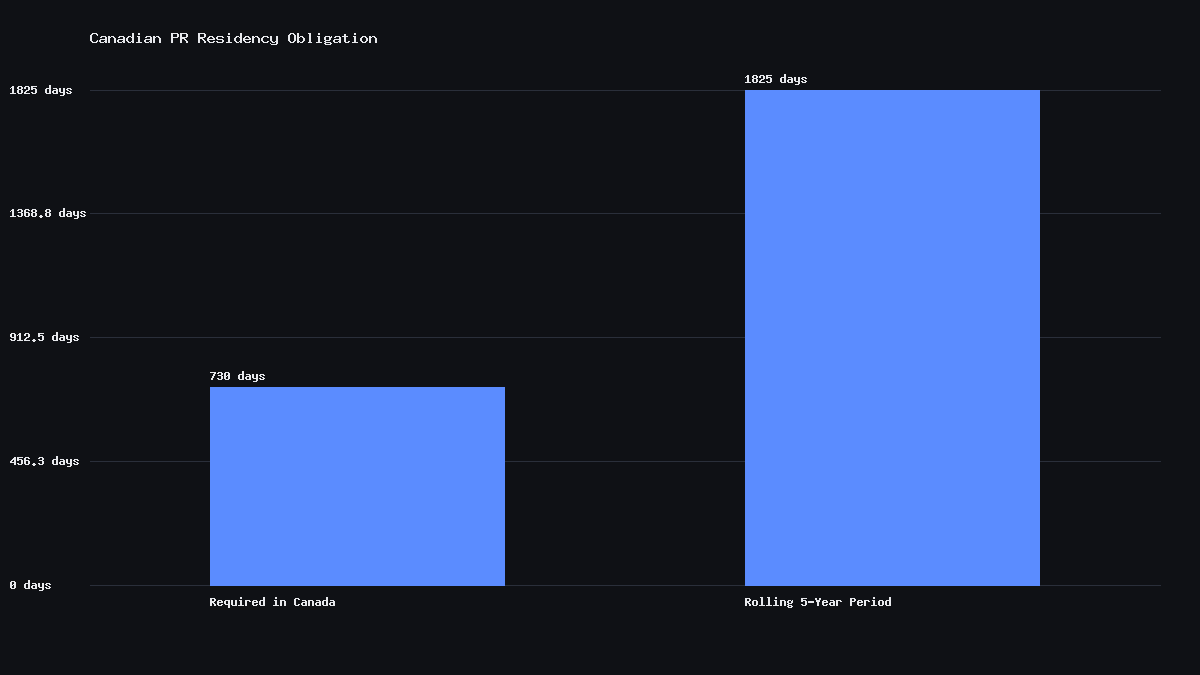
This is the part that trips up Canadian PR holders who do secure legitimate US work authorization: time spent physically living and working in the US generally does not count toward your Canadian PR residency obligation, which requires being physically present in Canada for at least 730 days within every rolling five-year period. There are narrow exceptions — for example, accompanying a Canadian citizen spouse abroad, or certain employment with a Canadian business — but working for a US employer while physically living in the US does not typically qualify.
Before accepting extended US employment, review your PR residency obligation carefully and consider how much of your five-year window you can afford to spend outside Canada without risking your status. If your PR card is due for renewal during this period, plan that separately too — see our guide on renewing your PR card, since extended time abroad complicates both residency tracking and renewal timing.