Every major Canadian bank runs a dedicated newcomer program, and every one of them advertises a cash bonus, free banking period, or both. On paper they look interchangeable. In practice, the fine print — how long the fee waiver actually lasts, what triggers the bonus, and what the account reverts to afterward — varies enough that picking the wrong one costs you real money in year two, after the honeymoon period ends and you’re back on a standard chequing account with its regular monthly fee.
What “Newcomer Banking” Actually Means
These aren’t different account types so much as a bundled onboarding offer layered on top of a bank’s regular chequing account: a temporary fee waiver, sometimes a cash bonus for direct deposit or minimum activity, and often a starter credit card with relaxed credit-history requirements since you won’t have a Canadian credit file yet. Most programs are only open to people within their first one to two years in Canada, so if you’ve already been here a while, you may no longer qualify — check the program’s eligibility window before assuming it applies to you.
Comparing the Big Five
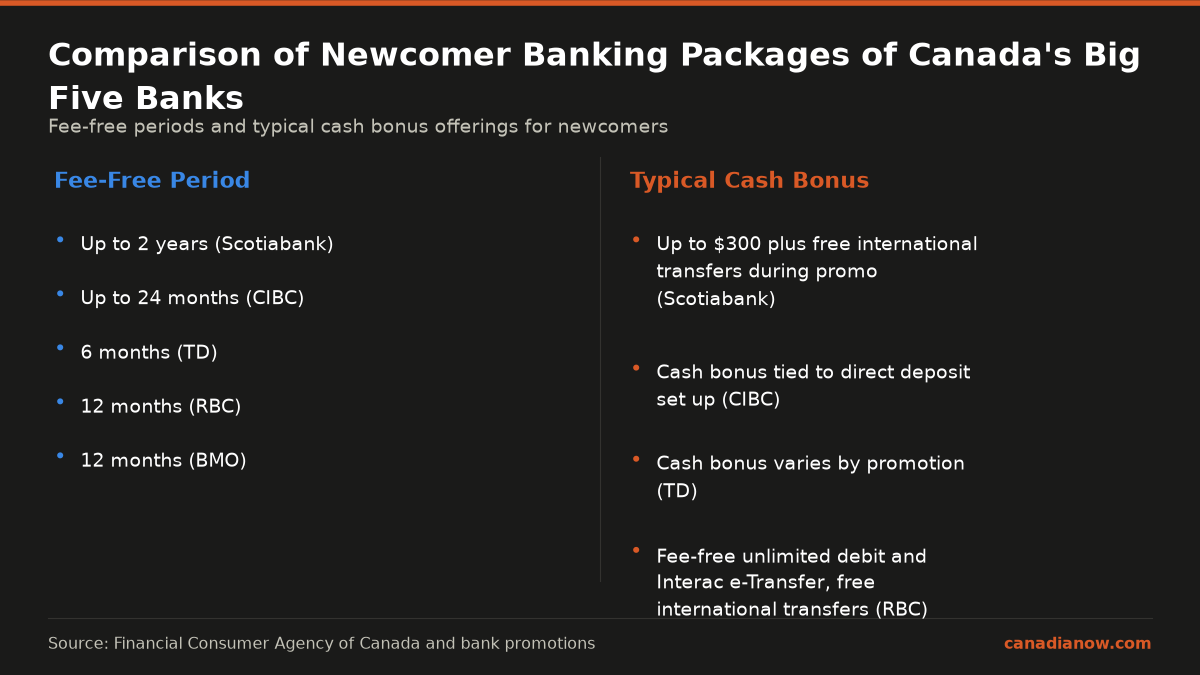
| Bank | Program | Fee-Free Period | Cash Bonus (typical) |
|---|---|---|---|
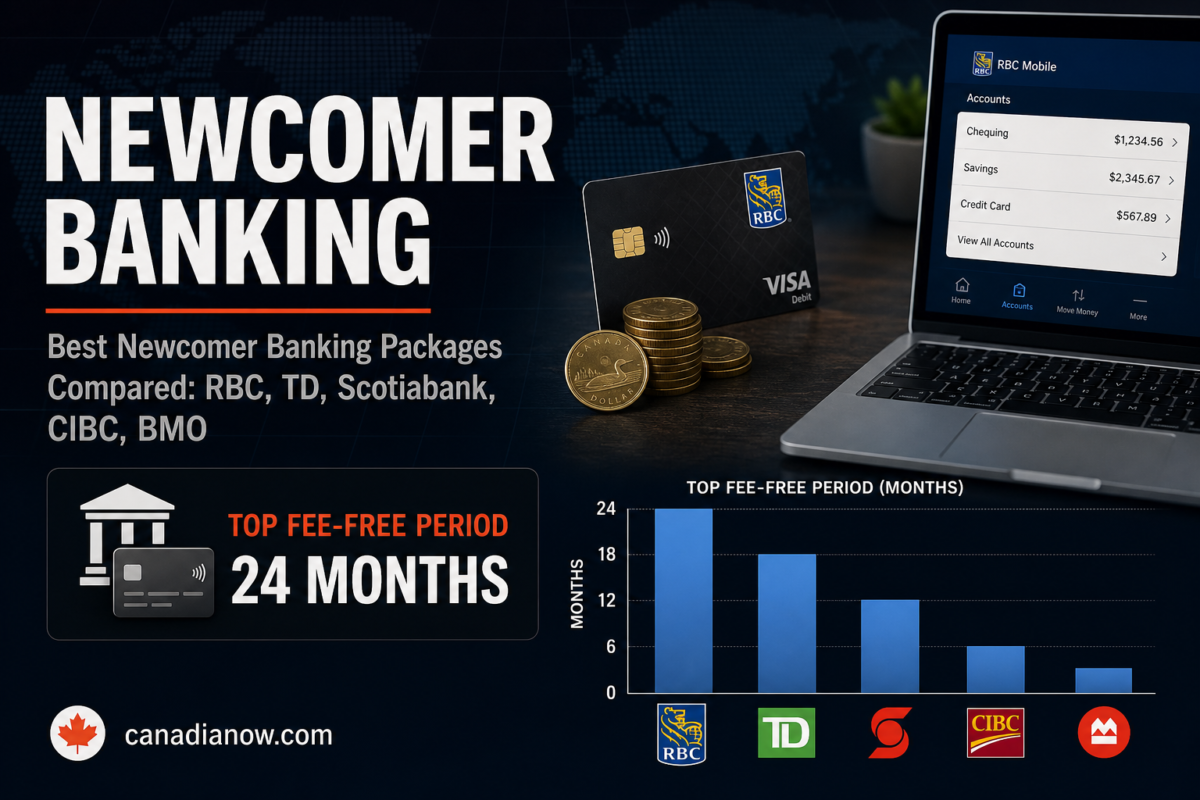
| Scotiabank | StartRight | Up to 2 years | Up to $300, plus free international transfers during the promo period |
| CIBC | Smart Account for Newcomers | Up to 24 months | Cash bonus tied to setting up direct deposit |
| TD | New to Canada Banking | 6 months | Cash bonus varies by promotion |
| RBC | Newcomer Advantage | 12 months | Fee-free unlimited debit and Interac e-Transfer; free international transfers |
| BMO | NewStart | 12 months | Cash bonus with conditions attached |
Bonus amounts and exact terms change frequently and are usually promotional rather than permanent, so treat the numbers above as a starting point for comparison, not a guarantee — confirm the live offer directly with the bank or its current promotional page before opening an account, since these campaigns get refreshed several times a year.
Fee-Free Period Length Matters More Than the Bonus
A one-time $300 bonus is a nice bump, but a two-year fee waiver on an account that would otherwise cost $16–30 a month is worth considerably more over time — often $400–700 depending on the account tier. If you’re choosing primarily on math rather than convenience, weigh the total fee waiver value against the headline cash bonus rather than defaulting to whichever number looks biggest in the ad.
What Happens When the Promo Period Ends
This is the part every bank’s marketing page glosses over. Once your fee-free window closes, the account converts to a standard chequing account at that bank’s regular monthly fee, unless you maintain whatever minimum balance or activity level waives ongoing fees — and those minimum balance thresholds are often $3,000–6,000, more than many newcomers keep sitting in a chequing account. Know this going in, and either plan to renegotiate, switch to a lower-fee account, or maintain the minimum balance once the introductory period ends, rather than being surprised by a new monthly charge a year or two after arrival.
The Starter Credit Card Piece
Most of these programs bundle a secured or newcomer-specific credit card with relaxed approval requirements, since you’ll have no Canadian credit history to qualify for a standard card. Opening one of these early and using it lightly — a recurring small bill, paid in full every month — is one of the fastest ways to start building a credit file, which affects everything from apartment applications to phone plan approvals down the line. Our guide on building Canadian credit as a newcomer covers the full first-year strategy.
One Account Isn’t Necessarily Forever
There’s no penalty for opening a newcomer account now and switching banks in a year or two once you understand your actual banking needs and have a credit history to qualify for better terms elsewhere. Treat the first account as a practical starting point rather than a permanent decision — the switching costs in Canada are generally low, and banks compete aggressively enough for return customers that a later move is rarely disruptive.