Every paycheque in Canada shows a deduction labelled CPP, and most newcomers assume it works like a retirement plan back home — pay in, collect later. That’s roughly right, but the details of who contributes, how much, and what happens if you don’t work in Canada your entire career are different enough from most countries’ systems that they’re worth understanding before your first tax season, not after.
What CPP Is and Who Has to Contribute
The Canada Pension Plan (CPP) is a mandatory, government-run retirement income program. If you’re employed in Canada and earning above a minimum threshold (excluding Quebec, which runs its own equivalent, the QPP), both you and your employer contribute automatically — there’s no opt-out for employees. Self-employed workers pay both the employee and employer portions themselves through their tax return.
Contributions are mandatory the moment you start working in Canada, regardless of your immigration status — this applies to work permit holders and permanent residents alike, not just citizens. You don’t need to have lived in Canada for any minimum period before contributions start; they begin with your first paycheque.
How Much Is Deducted From Your Paycheque
CPP contributions are calculated as a percentage of your earnings between a basic exemption amount and the year’s maximum pensionable earnings (both figures are updated annually — check current numbers on the CRA/Service Canada CPP page). Your employer matches your contribution dollar-for-dollar, and self-employed newcomers pay the combined rate. This shows up as a separate line from federal and provincial income tax on your pay stub — it’s not part of your income tax withholding, it’s a separate contribution toward a specific future benefit.
Unlike income tax, CPP contributions stop once your earnings for the year hit the maximum pensionable earnings ceiling — so if you change jobs partway through a high-earning year, you may notice deductions resume at the new employer even though you’d already hit the annual cap at the old one. This is normal and gets reconciled when you file your annual tax return.
Do You Get CPP If You Didn’t Work in Canada Your Whole Career
Yes — CPP is proportional, not all-or-nothing. Your eventual benefit amount is based on how much you contributed and for how long, not on having a full Canadian work history. Someone who immigrates at 35 and works in Canada until 65 will receive a smaller CPP payment than someone who contributed for their entire career, but they’ll still receive something, calculated from their actual contribution record.
Newcomers from countries with a social security agreement with Canada may also be able to count years worked abroad toward CPP eligibility requirements (not toward the payment amount itself, but toward qualifying for benefits at all). Canada has these agreements with dozens of countries — worth checking if you contributed to a pension system elsewhere before landing.
What Happens to CPP Contributions if You Leave Canada
Unlike some pension systems, CPP contributions are not refunded if you leave Canada permanently — they stay in the system and are simply factored into whatever CPP benefit you eventually qualify for at retirement age, even if you’re no longer a Canadian resident at that point. You don’t lose the money, but you also can’t withdraw it early or transfer it into a different country’s pension system in most cases. If you’re weighing whether working temporarily in the US or elsewhere affects your Canadian pension contributions, the short answer is that only Canadian-source employment generates CPP contributions in the first place.
CPP vs CPP2: What Changed and What It Means for You
Starting in 2024, the government introduced a second, additional tier of contributions — commonly called CPP2 — that applies to earnings between the original year’s maximum pensionable earnings and a new, higher second ceiling. This was phased in gradually and represents an enhancement to the base CPP system, not a separate plan. If your income is below the original earnings ceiling, CPP2 doesn’t apply to you at all; it only affects higher earners.
For newcomers in mid-to-senior roles, this mostly matters as a small additional deduction line that may appear separately on a pay stub. It doesn’t change how or when you become eligible for CPP — it simply means higher earners now contribute (and eventually receive) somewhat more than under the pre-2024 rules. Full technical detail on the enhancement is available on the CPP enhancement page.
One related but separate program worth knowing about: recent CPP payment date changes and one-time adjustments are sometimes announced outside the core rules covered here — see our CPP payment schedule updates for the latest disbursement dates, as distinct from how the program itself works.
When Can You Actually Start Collecting CPP?
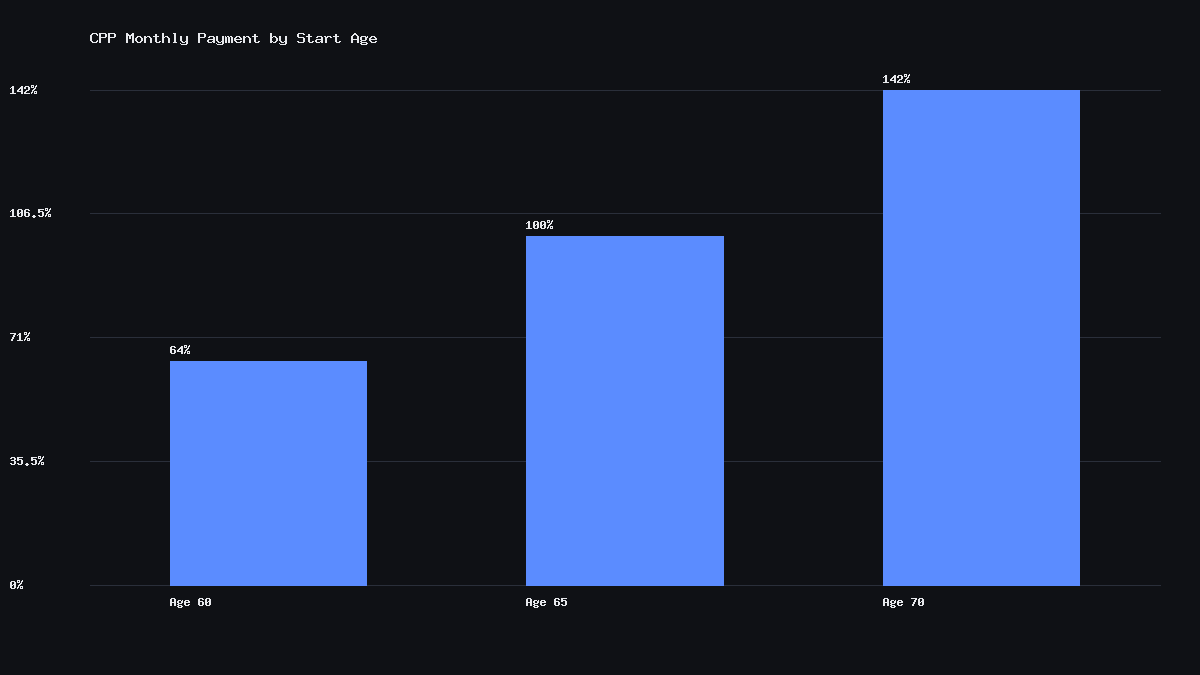
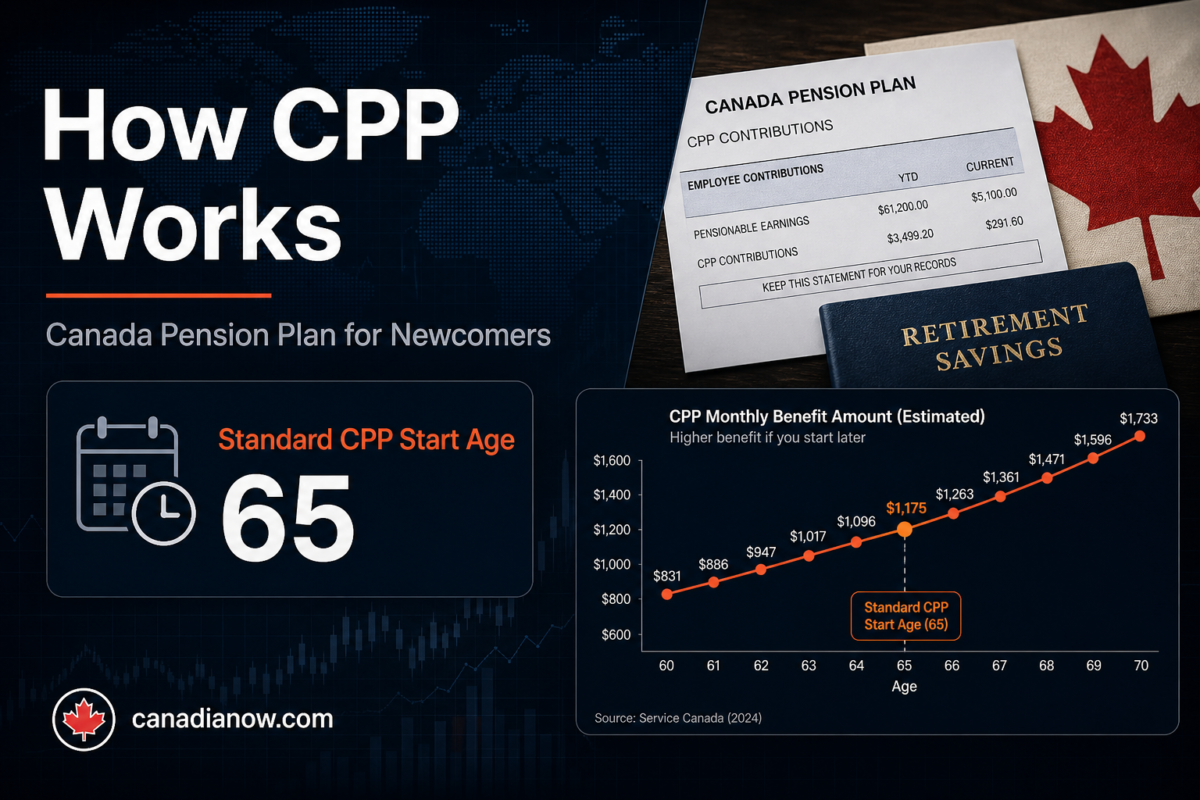
Standard CPP retirement pension starts at age 65, but there’s flexibility on both sides:
- As early as 60 — your monthly payment is permanently reduced (roughly 0.6% for each month before 65 you start).
- As late as 70 — your monthly payment is permanently increased (roughly 0.7% for each month after 65 you delay).
- CPP disability and survivor benefits are separate streams within the same program, available regardless of standard retirement age if you meet the contribution and medical criteria.
For newcomers who arrived mid-career, this flexibility matters more than it might for someone with a full 40-year contribution history — delaying a few years past 65 can meaningfully offset a shorter Canadian contribution period, since the permanent increase compounds on whatever your contribution record already supports.