Money and workTracker
Canada Tax Brackets 2026: Federal and Every Province
Canadians pay federal tax, the same everywhere, plus provincial or territorial tax set by the province they live in on December 31. Here is every 2026 bracket as published by the CRA.
- Free
- No sign-up
- Data as of CRA, 2026 tax year
Federal Tax Brackets 2026
| Taxable income | Rate |
|---|---|
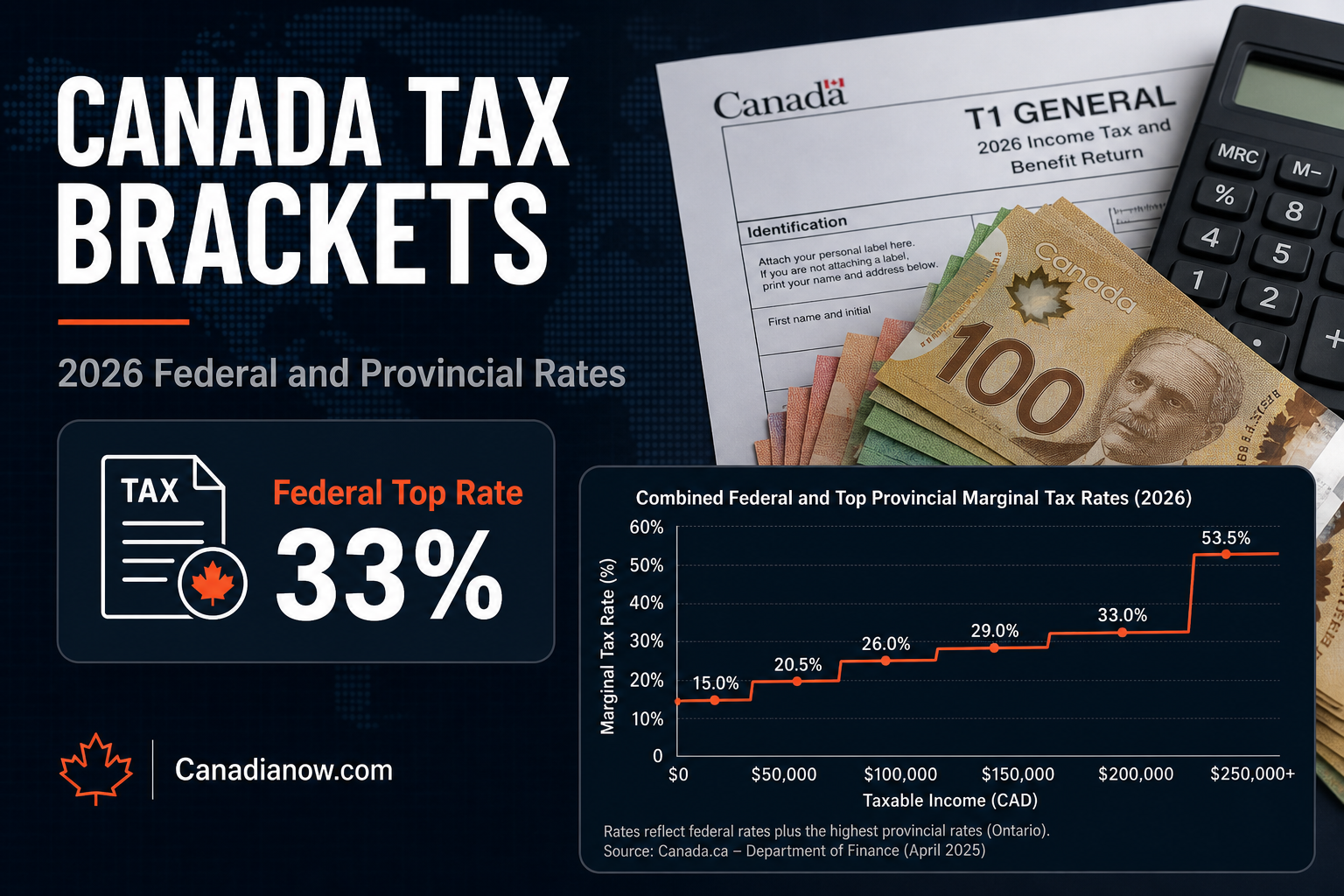
| Up to $58,523 | 14% |
| $58,523.01 to $117,045 | 20.5% |
| $117,045.01 to $181,440 | 26% |
| $181,440.01 to $258,482 | 29% |
| Over $258,482 | 33% |
Provincial and Territorial Tax Brackets 2026
| Province / territory | 2026 brackets and rates |
|---|---|
| Ontario | 5.05% up to $53,891 · 9.15% to $107,785 · 11.16% to $150,000 · 12.16% to $220,000 · 13.16% over $220,000 (plus Ontario surtax and health premium) |
| British Columbia | 5.6% up to $50,363 · 7.7% to $100,728 · 10.5% to $115,648 · 12.29% to $140,430 · 14.7% to $190,405 · 16.8% to $265,545 · 20.5% over $265,545 |
| Alberta | 8% up to $61,200 · 10% to $154,259 · 12% to $185,111 · 13% to $246,813 · 14% to $370,220 · 15% over $370,220 |
| Saskatchewan | 10.5% up to $54,532 · 12.5% to $155,805 · 14.5% over $155,805 |
| Manitoba | 10.8% up to $47,000 · 12.75% to $100,000 · 17.4% over $100,000 (Manitoba froze its brackets from 2025) |
| Quebec | Quebec residents file a separate provincial return with Revenu Québec, which publishes its own brackets; they also receive a 16.5% reduction of basic federal tax (the Quebec abatement). |
| New Brunswick | 9.4% up to $52,333 · 14% to $104,666 · 16% to $193,861 · 19.5% over $193,861 |
| Nova Scotia | 8.79% up to $30,995 · 14.95% to $61,991 · 16.67% to $97,417 · 17.5% to $157,124 · 21% over $157,124 |
| Prince Edward Island | 9.5% up to $33,928 · 13.47% to $65,820 · 16.6% to $106,890 · 17.62% to $142,520 · 19% to $200,000 · 20% over $200,000 |
| Newfoundland and Labrador | 8.7% up to $44,678 · 14.5% to $89,354 · 15.8% to $159,528 · 17.8% to $223,340 · 19.8% to $285,319 · 20.8% to $570,638 · 21.3% to $1,141,275 · 21.8% over $1,141,275 |
| Yukon | 6.4% up to $58,523 · 9% to $117,045 · 10.9% to $181,440 · 12.8% to $500,000 · 15% over $500,000 |
| Northwest Territories | 5.9% up to $53,003 · 8.6% to $106,009 · 12.2% to $172,346 · 14.05% over $172,346 |
| Nunavut | 4% up to $55,801 · 7% to $111,602 · 9% to $181,439 · 11.5% over $181,439 |
Key facts
- Federal rates in 2026: 14%, 20.5%, 26%, 29% and 33%; the second bracket starts above $58,523.
- The lowest federal rate is 14%, down from 15% before July 2025.
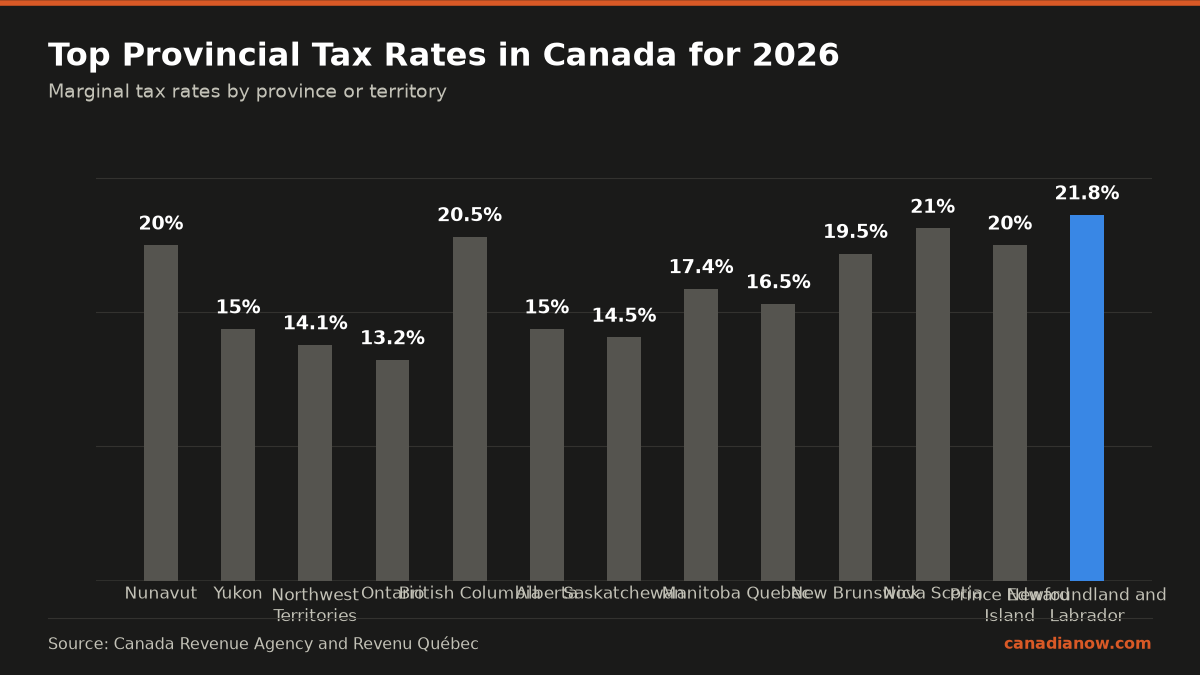
- Provincial rates range from 4% (Nunavut’s lowest) to 21.8% (Newfoundland and Labrador’s top).
- Brackets are marginal: a higher rate applies only to the dollars inside that bracket.
- You pay the rates of the province you lived in on December 31.
How do marginal tax brackets work?
Each rate applies only to the income inside its bracket, so moving into a higher bracket never reduces your take-home pay. Credits such as the basic personal amount then reduce the tax calculated.
If you earn $60,000 in Ontario, only the $1,477 above $58,523 is taxed at the 20.5% federal rate, and only the income above $53,891 at Ontario’s 9.15% rate. Everything below stays at the lower rates.
To see your actual take-home pay after both taxes, CPP and EI, use the salary calculator.
Which province’s rates apply to me?
You pay the rates of the province or territory you lived in on December 31, for the whole year, even if you moved in November.
- If your payroll address is out of date, your employer may deduct for the wrong province; the difference is settled when you file.
- Two jobs? Each employer withholds as if it were your only job, which often leaves tax owing. See how much tax is deducted.
How are newcomers taxed in their first year?
In the year you become a resident, Canada taxes your world income only from the date you arrive. The brackets apply to that income, and some credits, such as the basic personal amount, are prorated for the part of the year you lived here.
Details in the first-time tax filing guide.
When will the 2027 tax brackets be published?
Federal brackets and most provincial brackets are indexed to inflation each year. The CRA usually publishes next year’s federal thresholds in November, and we add them here when they are released.
Key dates: tax deadlines for 2027.
Brackets are copied from the CRA’s published 2026 rates. This page is general information, not tax advice.
Questions
Tax brackets FAQ
What are the federal tax brackets for 2026?
14% on income up to $58,523, 20.5% up to $117,045, 26% up to $181,440, 29% up to $258,482 and 33% above that.
Does moving into a higher bracket mean I take home less?
No. The higher rate applies only to the dollars inside that bracket, never to your whole income.
Which province has the highest top tax rate?
Among provincial rates listed, Newfoundland and Labrador’s top bracket is the highest at 21.8%, on income over $1,141,275.