An employer-specific work permit ties your right to work to one employer. When that employer threatens you, withholds your pay, controls your movements or mistreats you, the permit can feel like a trap: leave the job and you seem to lose the right to work. Canada has a permit designed for exactly this situation. It is free, it is confidential, and it does not require a police report.
If you are in danger now, call 9-1-1. If you need to talk to someone first, a settlement agency or migrant worker support organization in your province can help you prepare an application without cost.
Quick Answer
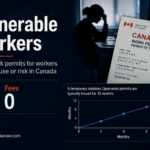
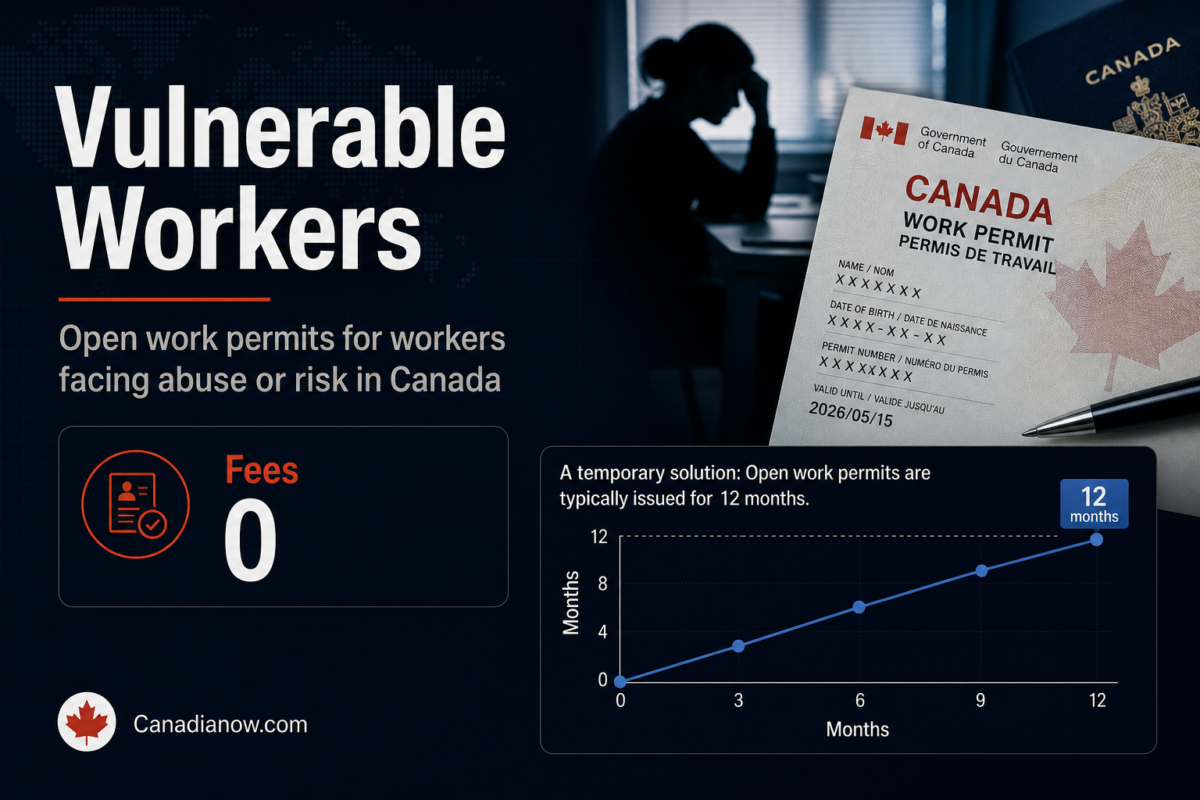
The open work permit for vulnerable workers lets a worker on an employer-specific permit who is being abused or at risk of abuse in their job get an open work permit to work for almost any other employer. You apply online from inside Canada, with a valid employer-specific permit or on maintained status after applying to extend one — even if you have already left the job. There are no fees, biometrics are normally not required, your employer is not told and does not need to consent. The permit is usually issued for about 12 months, giving you time to find new work and a longer-term permit.
This guide explains general rules. It is not legal advice. Every application is assessed by an officer on its facts. A free legal clinic or licensed RCIC can help you put your statement together.
Who Can Apply
IRCC says you can apply if:
- you are in Canada,
- you have a valid employer-specific work permit with your employer’s name on it — or you applied to extend it before it expired and are still waiting (maintained status), and
- you are experiencing abuse, or are at risk of abuse, in relation to your job — including if you have already left.
Workers on open work permits (such as a PGWP) do not need this permit — they can already change employers.
What Counts as Abuse
IRCC’s description of abuse is broad. It includes behaviour that scares, controls or isolates you, and it can be:
- Physical — assault, unsafe work you are forced to do, being denied medical care
- Sexual — harassment, unwanted touching, sexual comments or pressure
- Psychological — threats (including threats to have you deported), intimidation, humiliation, isolation
- Financial — withheld or unpaid wages, being made to pay back part of your wage, being charged recruitment or LMIA fees, fraud
Having your passport or work permit taken by your employer is a common warning sign (what the law says).
Evidence: What Helps
You do not need all of these — IRCC can approve an application based on your own statement and whatever supporting evidence you have.
| Type | Examples |
|---|---|
| Your statement | A letter of explanation (IRCC form IMM 0017) with dates, what happened, who was involved and any witnesses |
| Written records | Text messages, emails, voice notes, your own notes or diary |
| Pay records | Pay stubs, bank statements showing missing or returned wages |
| Third parties | A letter from a doctor, counsellor, settlement worker or support organization; statements from co-workers |
| Official reports (if any) | Police report, employment standards complaint, ESDC tip-line report |
How to Apply
- Apply online through IRCC’s portal — you cannot apply at a port of entry.
- Include your letter of explanation (IMM 0017) and whatever evidence you have.
- Do not pay fees — there are none for this permit.
- IRCC may contact you for an interview. Your employer is not told about your application.
Family members in Canada with you may also be able to get open work permits once you are approved.
After You Get the Permit
- Start working elsewhere — for most employers, except those on IRCC’s non-compliant employer list and certain sectors.
- Plan your next permit early. IRCC has described this permit as temporary and generally non-renewable, usually issued for about a year. Line up an LMIA-supported job, a provincial nomination or a bridging open work permit before it ends (options).
- Report the employer to ESDC if you have not — reports are confidential (how to report).
- Claim unpaid wages through your province’s employment standards office.
- Update your SIN and health card with the new permit.
FAQ
Do I need a police report?
No. Police reports and other official records help, but IRCC can approve an application without one.
Will my employer find out?
IRCC does not tell your employer about your application or ask for their consent.
Can I apply if I already quit?
Yes, as long as your employer-specific permit is still valid or you are on maintained status.
Does it cost anything?
No. There are no processing or open work permit fees.