“Permanent residence” isn’t one application — it’s the outcome of several different federal and provincial programs, each with its own eligibility rules and process, that all end in the same PR card and the same rights once you’re approved. The confusion most people run into isn’t the paperwork itself; it’s figuring out which program actually fits their profile before they start filling anything out.
What Permanent Residence Actually Gives You
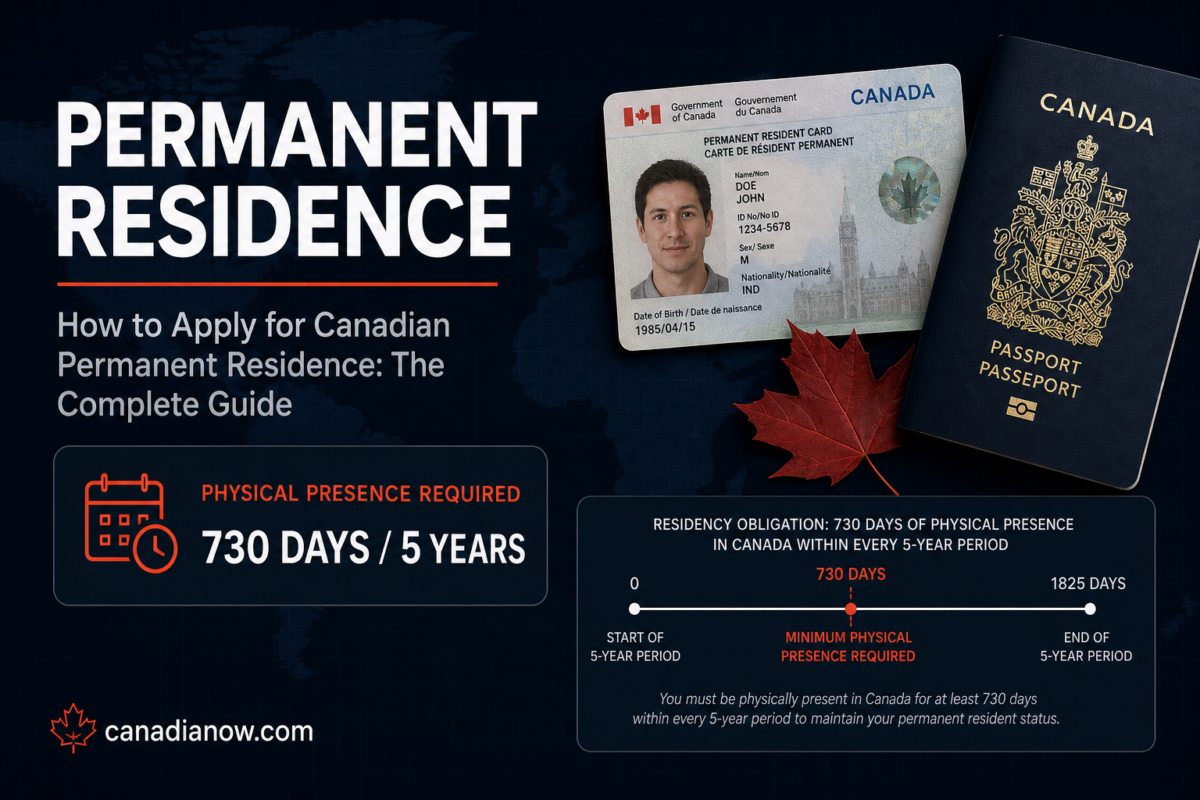
A PR card lets you live, work, and study anywhere in Canada indefinitely, access most social benefits including provincial healthcare, and build toward Canadian citizenship after meeting a physical-presence requirement. It doesn’t give you the right to vote or run for federal office, and it comes with its own obligation — you generally need to be physically present in Canada for at least 730 days within every 5-year period to keep your status, a rule that matters more than people expect once travel or work abroad enters the picture.
The Main Routes to PR
| Route | Best Fit For |
|---|---|
| Express Entry | Skilled workers with strong language scores, education, and work experience; fastest federal route when your CRS score clears the cutoff |
| Provincial Nominee Program (PNP) | Candidates targeting a specific province, or whose profile doesn’t clear the federal Express Entry cutoff on its own |
| Family sponsorship | Spouses, partners, dependent children, and parents/grandparents of a Canadian citizen or PR |
| Atlantic Immigration Program | Workers and graduates with a job offer from a designated employer in one of the four Atlantic provinces |
| Rural and Francophone pathways | Candidates willing to settle in a specific participating community, in exchange for a more direct nomination route |
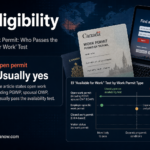
Most applicants qualify for more than one of these at once — the practical question isn’t just “am I eligible,” it’s “which of my eligible routes is actually fastest and most certain given my specific profile.”
The General Sequence, Regardless of Route
Every PR pathway follows a version of the same shape, even though the specific forms and criteria differ:
- Confirm eligibility for at least one program — this is worth doing rigorously before investing in documents, since eligibility criteria (age, education, language, work experience, or a qualifying relationship) vary sharply by route.
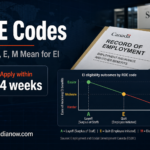
- Gather core documents: language test results, an Educational Credential Assessment if your education is foreign, police clearance certificates from every country you’ve lived in for 6+ months since age 18, and proof of funds if your route requires it.
- Submit your profile or application — for Express Entry and most PNPs, this starts as an online profile; for family sponsorship, it’s a direct application with your sponsor.
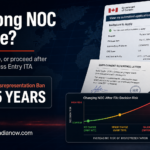
- Respond to invitations or requests — an Express Entry invitation to apply (ITA), a PNP nomination, or an IRCC request for additional documents all have firm deadlines that don’t extend for being unprepared.
- Complete biometrics and the medical exam, both required for nearly all PR applicants regardless of route.
- Wait for a decision, tracked through your IRCC secure account rather than by mail or phone in almost all cases now.
Where Applications Actually Go Wrong
The vast majority of delays trace back to a small number of preventable issues: documents that don’t match the exact format IRCC requires (employment reference letters are a frequent culprit), police certificates that expire before the application is finalized, and proof of funds that doesn’t meet the specific threshold for your family size and program. None of these are eligibility problems — they’re execution problems, and they’re avoidable with a document checklist built around your specific program rather than a generic one.
Tracking Your Application
Once submitted, check status through your IRCC secure account rather than relying on email alone — email notifications sometimes land in spam, and the account dashboard is the authoritative source IRCC itself uses. Processing times vary by program and fluctuate with application volume; check IRCC’s published processing time estimates for your specific program rather than assuming a flat timeline across all PR routes.