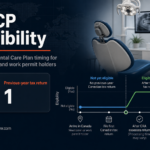
Dental care is not covered by provincial health cards, and for newcomers without workplace benefits a single filling or extraction can cost hundreds of dollars. The federal Canadian Dental Care Plan (CDCP) can cover much of that — but its eligibility runs through your tax return, which creates a gap in your first months in Canada that nobody warns you about.
Quick Answer
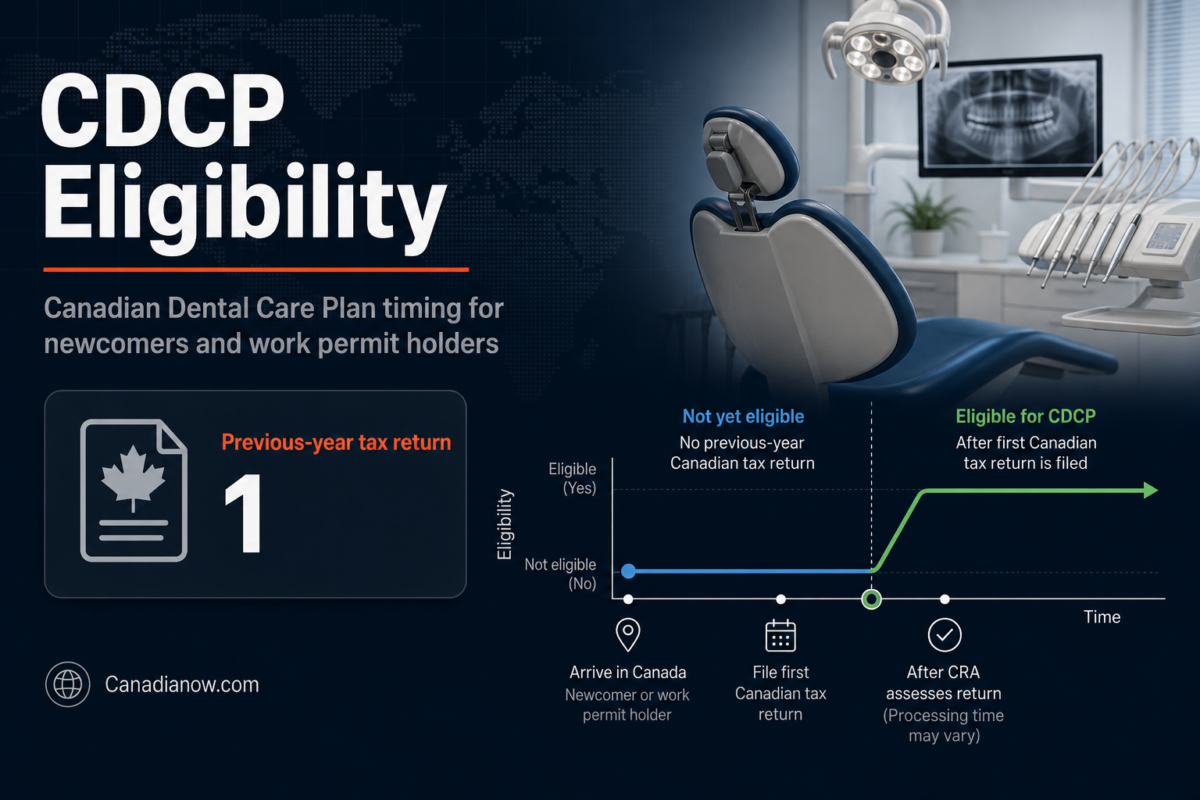
To qualify for the CDCP you must have no access to private dental insurance (including health spending accounts that cover dental), an adjusted family net income under $90,000, be a Canadian resident for tax purposes, and — the catch for newcomers — you and your spouse must have filed a Canadian tax return for the previous year. Work permit holders and students can qualify if they are tax residents. In practice, most newcomers become eligible after filing their first Canadian return, so file early and apply as soon as it is assessed.
This guide explains general rules. It is not financial advice. Eligibility is confirmed when you apply.
The Four Conditions
Official rule: Canada.ca lists these requirements:
- You cannot have access to private dental insurance or coverage, including health spending accounts that cover dental costs.
- Your adjusted family net income must be less than $90,000.
- You and your spouse or common-law partner (if applicable) must have filed your tax returns in Canada for the previous year.
- You and your spouse or common-law partner must be Canadian residents for tax purposes.
Coverage through a provincial, territorial or federal social program does not by itself disqualify you.
Your First-Year Timeline
| You arrived | Return that establishes eligibility | Realistic earliest application |
|---|---|---|
| During 2025 | 2025 return (filed early 2026) | Once the 2025 return is assessed, in 2026 |
| During 2026 | 2026 return (filed early 2027) | Once the 2026 return is assessed, in 2027 |
Interpretation: because eligibility is based on a “previous year” return, someone who arrived in 2026 generally has no return to assess until early 2027. File your first return as early as possible after January 1, even with little or no Canadian income (first tax return guide).
Before You Qualify: Options
- Workplace benefits: if your employer offers dental coverage, you are not eligible for the CDCP — but you are covered.
- Dental schools and community clinics often offer lower-cost treatment.
- Children: some provinces have public dental programs for low-income children.
- Emergencies: hospital emergency departments treat dental infections that are medical emergencies.
Temporary Residents
The CDCP tests tax residency, not immigration status. Work permit holders and international students who live in Canada and are tax residents can qualify once the other conditions are met. Visitors and people with few ties to Canada generally are not tax residents.
Keeping Coverage
Eligibility is reassessed based on your yearly tax filing. Both partners must keep filing, and you must tell the program if you gain access to private dental insurance.
FAQ
Can I get the CDCP on a work permit?
Yes, if you are a tax resident, have no private dental coverage, meet the income limit and have filed a Canadian return for the previous year.
I just arrived. Can I apply now?
Usually not until you and your spouse have filed a Canadian return for the previous year.
Does it cover everything?
No. It covers many services but may involve co-payments depending on income. Ask your dentist to confirm before treatment.