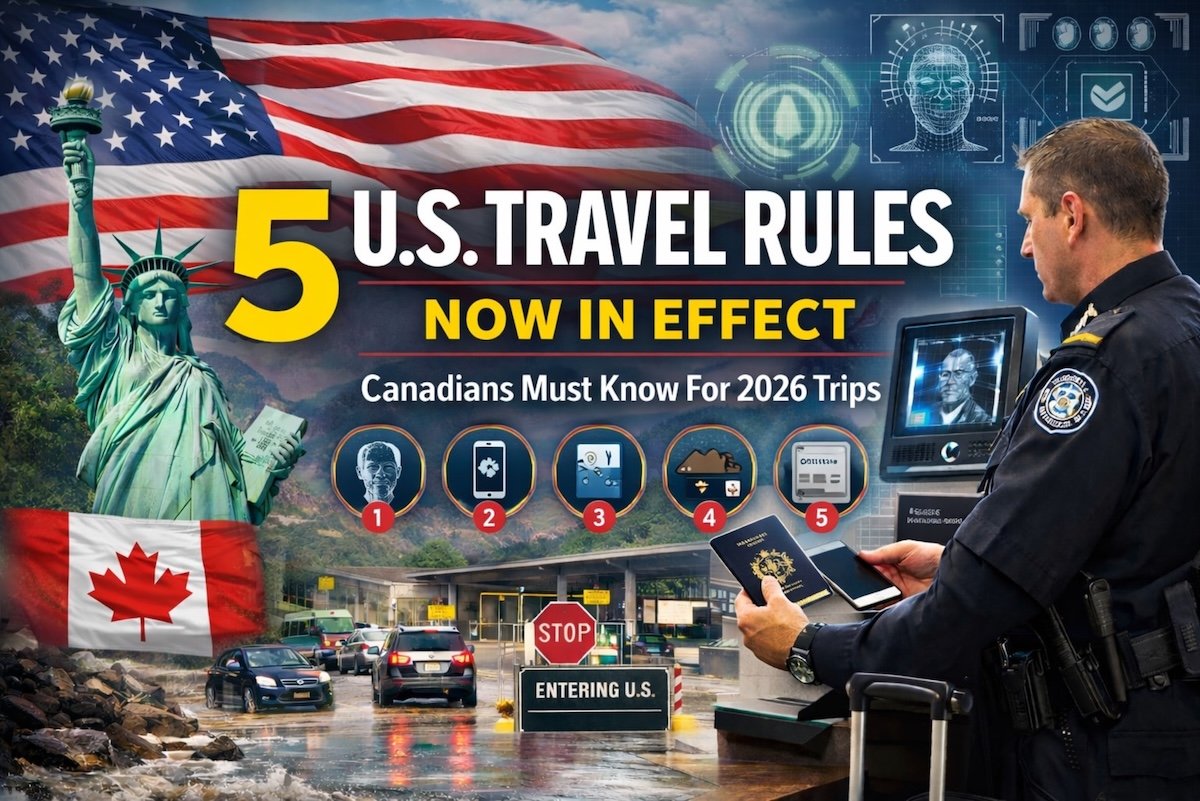
Updated July 2026. Canadians crossing into the United States now face mandatory biometric photo collection and tighter device screening — changes that took effect in late 2025 and apply broadly, with no age exemptions.
Mandatory Biometric Photo Collection
A Department of Homeland Security final rule, published in the Federal Register on October 27, 2025 and effective December 26, 2025, authorizes U.S. Customs and Border Protection to collect facial biometrics from all non-U.S. citizens on both entry and exit — at airports, land border crossings, seaports, and other authorized points of departure. The rule removed previous exemptions, including for children under 14 and adults over 79, meaning entire Canadian families can now expect to be photographed during routine border crossings.
CBP compares these photos against existing records using facial recognition technology to verify identity. Under DHS retention rules, non-U.S. citizen biometric data collected this way can be stored for up to 75 years.
Tighter Device Screening
Travellers should also expect closer scrutiny of electronic devices at ports of entry. CBP officers can request access to phones, laptops, and other devices as part of standard screening — there’s no reliable way to opt out of this at the border if asked, so it’s worth thinking ahead about what’s on your devices before you travel.
What This Means for Your Trip
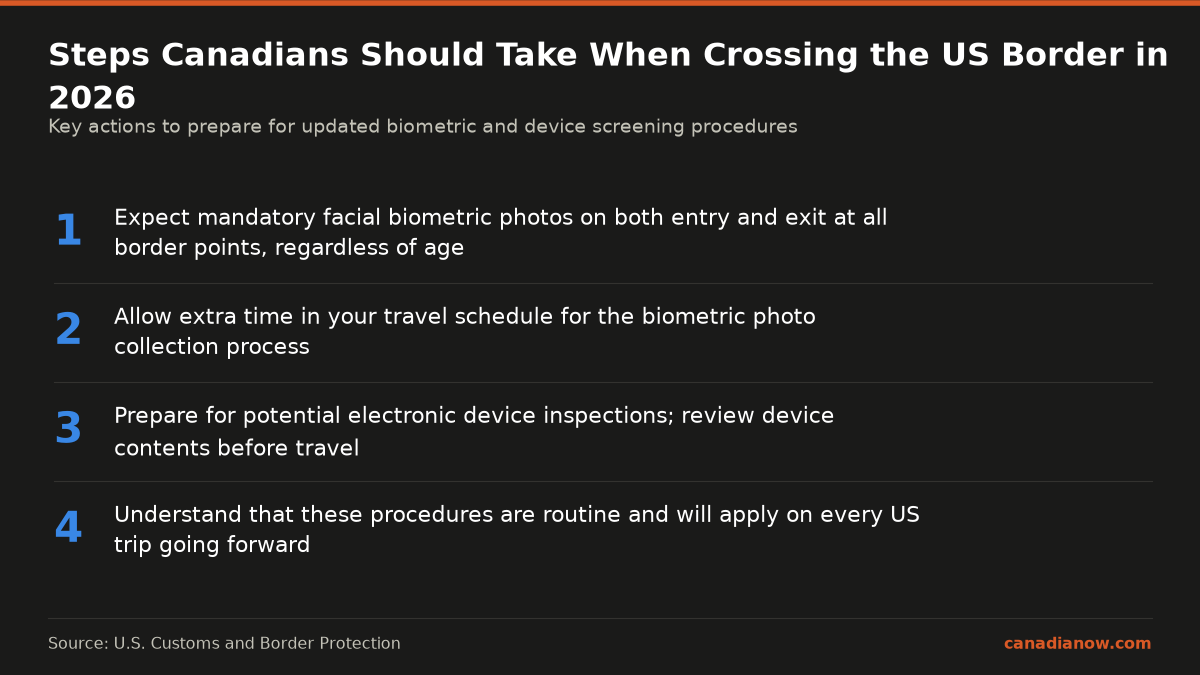
- Expect to be photographed on both entry and exit, regardless of age or how many times you’ve crossed before
- Build a few extra minutes into your border crossing time for the biometric process
- Be prepared for the possibility of a device inspection, especially at land crossings and airports
- These are standard CBP procedures now, not something unique to any particular traveller — expect them on every U.S. trip going forward
Sources: U.S. Customs and Border Protection; Global News.